Senator William Fife Knowland
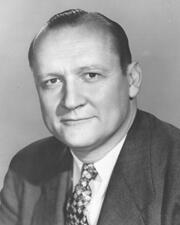
Here you will find contact information for Senator William Fife Knowland, including email address, phone number, and mailing address.
| Name | William Fife Knowland |
| Position | Senator |
| State | California |
| Party | Republican |
| Status | Former Representative |
| Term Start | August 14, 1945 |
| Term End | January 3, 1959 |
| Terms Served | 3 |
| Born | June 26, 1908 |
| Gender | Male |
| Bioguide ID | K000292 |
About Senator William Fife Knowland
William Fife Knowland (June 26, 1908 – February 23, 1974) was an American politician, newspaper publisher, and leading figure in mid‑twentieth‑century Republican politics. A member of the Republican Party, he served as a United States Senator from California from 1945 to 1959, during which time he became one of the most powerful members of the Senate. He was Senate Majority Leader from August 1953 to January 1955, following the death of Robert A. Taft, and then served as Senate Minority Leader from January 1955 to January 1959 after the Republicans lost their majority in the 1954 election. He would be the last Republican Senate Majority Leader until Howard Baker in 1981. Known for his strong interest in foreign policy and his staunch anti-communism, he played a central role in shaping national priorities and funding for Cold War policy.
Knowland was born in Alameda, California, into a politically influential family; his father, Joseph R. Knowland, was a former U.S. Representative and a prominent newspaper publisher. He attended Alameda public schools and emerged early as a student leader. Knowland, the president of the student body, graduated from Alameda High School in the Class of 1925. He then enrolled at the University of California, Berkeley, where he distinguished himself in campus politics and completed a degree in political science in three and a half years, graduating in 1929. While at Berkeley he was a member of the Zeta Psi fraternity and the Order of the Golden Bear, and his political activities as a university student drew praise from California Governor C. C. Young and University of California President William Wallace Campbell.
Knowland’s early political career developed rapidly within the Republican Party. He attended the 1932 Republican National Convention, observing from the gallery as the California delegation—which included his father, future Governor Earl Warren, film executive Louis B. Mayer, and legislator Marshall Hale—participated in the renomination of President Herbert Hoover and Vice President Charles Curtis. In November 1932 he was elected to the California State Assembly, where he served for two years. In 1934 he won election to the California State Senate, serving there for four years until 1938. Although he did not seek re-election to the state senate, he remained active in party affairs and became increasingly influential on the national scene. From 1940 to 1942 he served as chairman of the executive committee of the Republican National Committee and campaigned nationally for Wendell L. Willkie, the unsuccessful Republican nominee for president in 1940.
With the onset of World War II, Knowland entered military service. In June 1942 he was drafted into the U.S. Army. After several months as a private and then a sergeant, he attended Officer Candidate School and was commissioned a second lieutenant. He served as aide-de-camp to Brigadier General Marcellus L. Stockton Jr. and then attended military government school to study civil affairs, training that drew on his civilian background in politics and public affairs. Sent to Europe in 1944, he landed in France about a month after D‑Day. He initially served with the Forward Echelon Communications Zone headquarters in France and Belgium and later with the Fifteenth United States Army headquarters in Germany. During his military service he attained the rank of major and was assigned to civil affairs and public affairs duties consistent with his education and experience.
Knowland’s congressional career began while he was still in uniform. In 1945 he was appointed to the United States Senate from California to fill a vacancy, and he subsequently won election in his own right, serving three terms from 1945 to 1959. As a senator during a pivotal period in American and world history, he participated actively in the legislative process and represented the interests of his California constituents while also emerging as a national spokesman for the Republican right wing. His tenure coincided with the early Cold War, the Korean War, and the first stages of U.S. involvement in Southeast Asia. As a senior member of the Senate with a strong foreign policy focus, he helped set national priorities and appropriations for Cold War strategy, including policy toward Vietnam, Formosa (Taiwan), China, Korea, and NATO, as well as other major foreign policy objectives. He opposed sending American forces to support the French in Indochina and was a sharp and consistent critic of Communist China under Mao Zedong, strongly supporting the Nationalist government on Taiwan. Within his party, Knowland represented its conservative, anti-communist wing and considered some of President Dwight D. Eisenhower’s domestic and foreign policies too liberal.
Elevated to Senate Majority Leader in August 1953 after the death of Robert A. Taft, Knowland led the Republican caucus during a period of narrow majorities and intense debate over foreign and domestic policy. After the Republicans lost control of the Senate in the 1954 elections, he continued in a leadership role as Senate Minority Leader from January 1955 to January 1959. In civil rights legislation, he supported the landmark Civil Rights Act of 1957, voting in favor of the measure and helping to secure its passage as the first major federal civil rights law since Reconstruction. Throughout his Senate service, he was regarded as a forceful debater and a disciplined party leader, though his hard-line positions sometimes put him at odds with more moderate Republicans and with the Eisenhower administration.
In 1958 Knowland made a fateful decision to leave the Senate and run for Governor of California rather than seek re-election. His father, who cherished the Senate seat and had himself been denied California’s other Senate seat in 1914, was deeply shaken by the move. In what became known as the “Big Switch,” Knowland secured the Republican nomination for governor after a bruising intra-party struggle with incumbent Governor Goodwin J. Knight; as part of the arrangement, Knight agreed to run for Knowland’s U.S. Senate seat while Knowland sought the governorship. Many observers believed Knowland hoped to use the governorship to control the California Republican delegation in 1960 and to position himself to block Richard Nixon’s presidential nomination and secure it for himself. A central issue in the 1958 campaign was Proposition 18, a proposed right-to-work initiative. Knowland endorsed the measure in emphatic terms, but Proposition 18 proved highly unpopular, and his strong support for it damaged his candidacy. In the general election he was decisively defeated by the Democratic nominee, California Attorney General Edmund G. “Pat” Brown, by 1,029,165 votes. The election marked a sweeping setback for California Republicans; after dominating state politics for more than half a century, many of the party’s leading figures, including Knight, were defeated for statewide office. Among Joseph R. Knowland’s protégés, Representative John J. Allen Jr. lost his House seat to Jeffery Cohelan, and Alameda County Supervisor Kent D. Pursel lost his race for the State Senate to John W. Holmdahl. To help pay off some of his son’s campaign debts, Joseph R. Knowland was forced to sell the Oakland Tribune’s radio station, KLX, to Crowell Collier Broadcasting. Knowland’s defeat effectively ended his prospects for national office and all but erased any realistic chance of his becoming the Republican presidential nominee in 1960. He never again ran for elective office.
Following his departure from the Senate, Knowland returned full-time to journalism and business. He succeeded his father as editor-in-chief and publisher of the Oakland Tribune, the influential East Bay newspaper that had long been a power center in California Republican politics. In this role he continued to shape public opinion and remained an important voice in state and national affairs, even as his formal political career had come to a close. His stewardship of the Tribune extended the Knowland family’s media legacy and maintained the paper’s prominence in California civic life.
Knowland’s personal life spanned long-standing family ties and later marital difficulties. He married Helen Davis Herrick, whom he had met in the sixth grade, on New Year’s Eve in 1926. The couple had three children: Emelyn K. Jewett, Joseph William Knowland, and Estelle Knowland. After more than four decades of marriage, they were divorced on March 15, 1972, citing irreconcilable differences, a discreet reference to his extramarital affairs. On April 29, 1972, he married Ann Dickson, with whom he had two stepchildren, Kay and Steve Sessinghaus, but the marriage quickly foundered, and the two were estranged by the end of that year.
William Fife Knowland died on February 23, 1974. His papers are preserved at the Bancroft Library at the University of California, Berkeley, and his career is documented in the records of the United States Congress, the archives of the Oakland Tribune, and various oral histories and political collections. His long tenure in the Senate, his leadership roles in Congress, and his prominence in California journalism and Republican politics made him a significant figure in mid‑twentieth‑century American public life.