Representative William Leroy La Follette
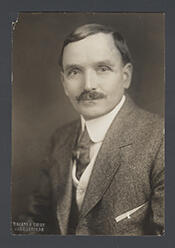
Here you will find contact information for Representative William Leroy La Follette, including email address, phone number, and mailing address.
| Name | William Leroy La Follette |
| Position | Representative |
| State | Washington |
| District | 4 |
| Party | Republican |
| Status | Former Representative |
| Term Start | April 4, 1911 |
| Term End | March 3, 1919 |
| Terms Served | 4 |
| Born | November 30, 1860 |
| Gender | Male |
| Bioguide ID | L000006 |
About Representative William Leroy La Follette
William Leroy La Follette (November 30, 1860 – December 20, 1934) was an American politician and farmer who served as a four-term member of the United States House of Representatives from the State of Washington. A member of the Republican Party and of the prominent La Follette family, he represented Washington’s 3rd Congressional District from March 4, 1911, to March 3, 1915, and the 4th Congressional District from March 4, 1915, to March 3, 1919. During his tenure, he participated actively in the legislative process in the House of Representatives and represented the interests of his constituents during a significant period in American history.
La Follette was born on November 30, 1860, in Thorntown, Boone County, Indiana, into a family that would become well known in American public life. He was a cousin of Robert M. La Follette Sr., the influential progressive senator and governor of Wisconsin, and thus part of a wider political family network that would shape regional and national politics in the late nineteenth and early twentieth centuries. His early years were spent in the Midwest, where he was exposed to the agrarian economy and the social and political issues affecting rural communities, experiences that would later inform his public service.
As a young man, La Follette moved west, eventually settling in what would become the State of Washington. There he engaged primarily in agricultural pursuits, including farming and fruit growing, and became involved in local business and community affairs. His work as a farmer and his familiarity with the challenges facing settlers and agricultural producers in the Pacific Northwest helped establish his reputation as a practical, community-minded leader. Through these activities he developed a base of support that would later facilitate his entry into elective office.
La Follette’s political career reached its height with his election to the United States House of Representatives as a Republican from Washington. He first won election to represent Washington’s 3rd Congressional District, taking office on March 4, 1911. He served in that capacity through two consecutive terms, from 1911 to 1915, contributing to the legislative work of the House during the administrations of Presidents William Howard Taft and Woodrow Wilson. Following redistricting and political changes within the state, he was elected to represent Washington’s 4th Congressional District, serving from March 4, 1915, to March 3, 1919. Over these four terms in Congress, La Follette participated in debates and votes on issues central to the era, including questions of economic regulation, agricultural policy, and the nation’s role in world affairs as the United States moved toward and through World War I.
Throughout his congressional service, La Follette was recognized as a representative closely attuned to the concerns of his largely rural and small-town constituency. His background in agriculture and local enterprise informed his approach to legislation affecting land use, transportation, and markets for farm products. As a member of the House of Representatives during a transformative period in American political and economic life, he took part in the democratic process at the federal level and contributed to shaping policies that affected both his district in Washington and the broader nation.
After leaving Congress in 1919, La Follette returned to private life in Washington State. He resumed his agricultural and business interests, remaining a respected figure in his community and within the extended La Follette family network. Although no longer in public office, his earlier service in the House and his role in representing a developing region of the Pacific Northwest continued to be recognized as part of the broader La Follette legacy in American politics.
William Leroy La Follette died on December 20, 1934. His life spanned a period of rapid change in the United States, from the post–Civil War era through the First World War and into the Great Depression. Remembered as a Republican representative from Washington who served four consecutive terms in Congress, he left a record of participation in the legislative process during a formative era in both his state’s and the nation’s history.