Senator William Ramsey Laird
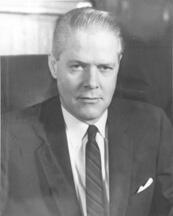
Here you will find contact information for Senator William Ramsey Laird, including email address, phone number, and mailing address.
| Name | William Ramsey Laird |
| Position | Senator |
| State | West Virginia |
| Party | Democratic |
| Status | Former Representative |
| Term Start | March 13, 1956 |
| Term End | January 3, 1957 |
| Terms Served | 1 |
| Born | June 2, 1916 |
| Gender | Male |
| Bioguide ID | L000025 |
About Senator William Ramsey Laird
William Ramsey Laird III (June 2, 1916 – January 7, 1974) was a Democratic United States senator from West Virginia who served briefly in the mid-1950s and was long active in law, education, banking, and civic affairs in his adopted state. Born in Keswick, California, he was educated in the public schools before pursuing formal military and collegiate training that would shape his later professional and public life.
Laird attended Greenbrier Military School in Lewisburg, West Virginia, a preparatory institution that combined academic instruction with military discipline. He went on to study at King College in Bristol, Tennessee, and later enrolled at West Virginia University, from which he graduated in 1944. His education was interrupted by the global conflict of the Second World War, during which he served in the United States Navy. This wartime service coincided with the completion of his legal studies, and in 1944 he was admitted to the bar and commenced the practice of law in West Virginia.
Following World War II, Laird established himself as an attorney and businessman in the Upper Kanawha Valley. He practiced law in Fayette County and became involved in a range of public and private boards. By the mid-1950s he had emerged as a significant figure in state civic life. In 1955 he was appointed a member of the West Virginia Board of Education, reflecting his interest in public schooling and educational policy. At the same time, he served on the board of directors of the Merchants National Bank in Montgomery, West Virginia, and on the board of the Upper Kanawha Valley Development Association, organizations that were central to the region’s economic and community development. He was also a member of the board of trustees of the Laird Foundation in Montgomery, further underscoring his engagement in philanthropic and local institutional affairs.
Laird’s growing prominence led to his appointment as West Virginia state tax commissioner in 1955. In that capacity, he was responsible for overseeing the administration of state tax laws and revenue collection during a period of postwar economic adjustment. He served as tax commissioner from 1955 to 1956, resigning the post when he was called to federal office. His experience in state government, combined with his legal background and service on educational and financial boards, positioned him as a trusted Democratic figure capable of assuming higher responsibilities.
On March 13, 1956, Laird was appointed to the United States Senate to fill the vacancy caused by the death of Senator Harley M. Kilgore. A member of the Democratic Party, he served in the Senate from March 13, 1956, to November 6, 1956, during a significant period in American history marked by the early stages of the civil rights movement and the intensification of Cold War tensions. Although his tenure was brief—constituting one term of service in the context of the unexpired seat—he participated in the legislative process and represented the interests of West Virginia constituents in the upper chamber of Congress. He chose not to be a candidate for election to fill the vacancy and thus concluded his Senate service at the end of that appointed term.
After leaving the Senate, Laird resumed the practice of law in Fayetteville and Montgomery, West Virginia. He continued his involvement in local business, educational, and civic endeavors, maintaining his role as a regional leader in the Upper Kanawha Valley. His post-congressional career reflected a return to the community-based work that had characterized his life before his appointment to the Senate, combining legal practice with ongoing participation in institutional and philanthropic boards.
William Ramsey Laird III died in Montgomery, West Virginia, on January 7, 1974. He was interred in Huse Memorial Park in Fayetteville, West Virginia, a community closely associated with his legal and civic activities. He was the father of three children, including William Laird IV, and left a legacy of service that spanned military duty in World War II, state and local leadership, and a period of representation in the United States Senate on behalf of the people of West Virginia.