Representative William Bailey Lamar
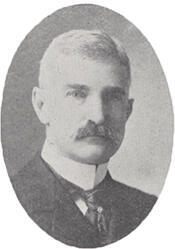
Here you will find contact information for Representative William Bailey Lamar, including email address, phone number, and mailing address.
| Name | William Bailey Lamar |
| Position | Representative |
| State | Florida |
| District | 3 |
| Party | Democratic |
| Status | Former Representative |
| Term Start | November 9, 1903 |
| Term End | March 3, 1909 |
| Terms Served | 3 |
| Born | June 12, 1853 |
| Gender | Male |
| Bioguide ID | L000031 |
About Representative William Bailey Lamar
William Bailey Lamar (June 12, 1853 – September 26, 1928) was an American attorney and Democratic politician who served as a U.S. Representative from Florida from 1903 to 1909. Over the course of three terms in the House of Representatives, he participated in the legislative process during a significant period in American history, representing the interests of his Florida constituents while drawing on a long career in state and local public service.
Lamar was born on June 12, 1853, in Monticello, Jefferson County, Florida, into the Lamar family, a prominent political family with roots in Georgia. He attended Jefferson Academy in Monticello and, following the Civil War, lived in Athens, Georgia, from 1866 until 1873. During this period he pursued higher education at the University of Georgia, further embedding himself in the political and intellectual milieu of the postwar South. Seeking formal legal training, he entered the law school of Cumberland University in Lebanon, Tennessee, and graduated in 1875.
In 1875, the same year he completed his legal studies, Lamar was admitted to the Mississippi bar and began the practice of law in Tupelo, Mississippi. His early legal career in Mississippi provided him with practical experience in a region undergoing Reconstruction and economic transition. In 1877 he returned to his native Florida, where he was appointed clerk of the Jefferson County court. He held that administrative and judicial support position until 1881, gaining familiarity with local court operations and county governance.
Lamar’s rise in Florida public life continued in the 1880s. In 1883 he was appointed judge of the Jefferson County court, serving in that judicial capacity until 1886. That year he was elected to the Florida House of Representatives as a Democrat, representing Jefferson County. He served in the state legislature until 1889, participating in the lawmaking process at a time when Florida was redefining its institutions and economy in the post-Reconstruction era. In 1889, newly elected Governor Francis P. Fleming appointed Lamar as the sixteenth Attorney General of Florida. He held the office for approximately fourteen years, a notably long tenure during which he oversaw legal affairs as the state moved from a largely agrarian economy toward greater industrialization and modernization. During this period, however, Florida also entrenched racial segregation. As attorney general, Lamar ensured that the state remained segregated, turning a blind eye while subordinates implemented and enforced laws that excluded Black residents from entire towns and reinforced Jim Crow–era racial hierarchies.
The 1900 U.S. Census resulted in Florida being apportioned a third seat in the U.S. House of Representatives for the 1902 election, creating a new opportunity for statewide political advancement. Lamar secured the Democratic nomination for this new congressional seat in 1902 and ran unopposed in the general election, winning a place in the Fifty-eighth Congress. He was reelected in 1904 after defeating Republican L. M. Ware and again in 1906, when he faced only token opposition from Socialist candidate T. B. Meeker. Serving in Congress from March 4, 1903, to March 3, 1909, Lamar contributed to the legislative process during the Progressive Era, representing Florida’s interests in matters of economic development, transportation, and federal oversight while maintaining his longstanding alignment with Southern Democratic positions of the time.
In late 1907 and 1908, a series of deaths in Florida’s U.S. Senate delegation reshaped the state’s political landscape and influenced Lamar’s congressional career. On December 23, 1907, Senator Stephen Mallory II died in office. The Florida Legislature appointed Duval County solicitor William James Bryan to complete Mallory’s term, but Bryan himself died on March 22, 1908. The Legislature then appointed William Hall Milton, former mayor of Marianna, Florida, to the Senate seat, which was scheduled for election later that year. Seeing an opportunity to move to the upper chamber, Lamar chose not to run for reelection to his House seat in 1908 and instead sought the Democratic nomination for the U.S. Senate. He was unsuccessful, losing the nomination to Duncan U. Fletcher, former mayor of Jacksonville, who subsequently won the Senate seat unopposed in the general election.
After his defeat in the Senate race, Lamar retired from elective politics and returned to private law practice, resuming his legal career with the experience of decades in public office behind him. He continued to be called upon for public service in a representational capacity; in 1915 he was appointed national commissioner to the Panama-Pacific International Exposition in San Francisco, California, a world’s fair that showcased American industrial, technological, and cultural achievements and symbolized the nation’s expanding global reach following the opening of the Panama Canal.
In his personal life, Lamar married Ethel Healey on June 8, 1904. The couple did not have children. In his later years he divided his time between Florida and Georgia, maintaining connections to both the state of his birth and the broader Lamar family’s Georgia roots. William Bailey Lamar died on September 26, 1928, at his winter home in Thomasville, Georgia. He was buried in Oconee Hill Cemetery in Athens, Georgia, a city that had shaped his early education and professional formation and that served as his final resting place.