Representative William Henry Lamport
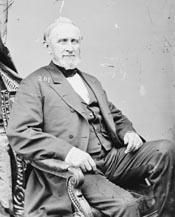
Here you will find contact information for Representative William Henry Lamport, including email address, phone number, and mailing address.
| Name | William Henry Lamport |
| Position | Representative |
| State | New York |
| District | 26 |
| Party | Republican |
| Status | Former Representative |
| Term Start | March 4, 1871 |
| Term End | March 3, 1875 |
| Terms Served | 2 |
| Born | May 27, 1811 |
| Gender | Male |
| Bioguide ID | L000042 |
About Representative William Henry Lamport
William Henry Lamport (May 27, 1811 – July 21, 1891) was a Republican member of the United States House of Representatives from New York who served two terms in Congress from 1871 to 1875. Over the course of a long public career in upstate New York, he held a series of local and county offices before representing his district at the national level during a significant period in American history following the Civil War.
Lamport was born on May 27, 1811, in Brunswick, Rensselaer County, New York. In 1826 he moved with his parents to Gorham, Ontario County, New York, a rural community in the Finger Lakes region. He attended the public schools there and engaged in agricultural pursuits, establishing himself as a farmer. His early life in Gorham, rooted in agriculture and local civic life, provided the foundation for his later involvement in public affairs and gave him firsthand familiarity with the concerns of small-town and farming constituents.
Lamport’s public career began in local government in Ontario County. He served as Supervisor of the town of Gorham in 1848 and 1849, a position that placed him on the county Board of Supervisors and involved oversight of town finances and administration. He subsequently served as Sheriff of Ontario County from 1850 to 1853, an office that combined law enforcement responsibilities with duties related to the county courts and the administration of justice. In 1855 he advanced to state-level office as a member of the New York State Assembly, representing the 1st District of Ontario County. His service in the Assembly brought him into the broader political currents of mid-nineteenth-century New York, at a time when the emerging Republican Party was consolidating its strength in the state.
In 1864 Lamport moved from Gorham to the nearby county seat of Canandaigua, New York, a growing commercial and political center in Ontario County. There he continued his involvement in local affairs and was elected president of the village of Canandaigua in 1866 and 1867, effectively serving as the chief municipal officer. In that role he oversaw village governance during the immediate post–Civil War years, a period marked by economic adjustment and the reintegration of veterans into civic and economic life. His leadership in both town and village offices helped to solidify his reputation as a capable local administrator and Republican leader.
Lamport was elected as a Republican to the Forty-second and Forty-third Congresses, serving in the U.S. House of Representatives from March 4, 1871, to March 3, 1875. Representing a New York district anchored in Ontario County, he participated in the legislative process during the later Reconstruction era, when Congress addressed issues of national reconciliation, economic development, and federal oversight in the former Confederate states. As a member of the House of Representatives, he contributed to the work of the Republican majority and represented the interests of his constituents in upstate New York. He was not a candidate for renomination in 1874, concluding his congressional service after two terms in office.
Following his retirement from Congress, Lamport returned to private life in Canandaigua. He remained a respected figure in the community where he had long resided and where he had previously served in village leadership. He lived there until his death on July 21, 1891, in Canandaigua, Ontario County, New York. William Henry Lamport was interred in West Avenue Cemetery in Canandaigua, closing a life marked by steady advancement from local farmer and town official to state legislator and, ultimately, member of the United States House of Representatives.