Representative William Chester Lankford
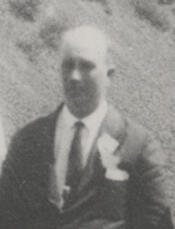
Here you will find contact information for Representative William Chester Lankford, including email address, phone number, and mailing address.
| Name | William Chester Lankford |
| Position | Representative |
| State | Georgia |
| District | 11 |
| Party | Democratic |
| Status | Former Representative |
| Term Start | May 19, 1919 |
| Term End | March 3, 1933 |
| Terms Served | 7 |
| Born | December 7, 1877 |
| Gender | Male |
| Bioguide ID | L000082 |
About Representative William Chester Lankford
William Chester Lankford (December 7, 1877 – December 10, 1964) was an American politician, judge, and lawyer who represented Georgia in the United States House of Representatives from 1919 to 1933. A member of the Democratic Party, he served seven consecutive terms in Congress during a transformative period in American history that encompassed the aftermath of World War I, the prosperity of the 1920s, and the onset of the Great Depression. Over the course of his public career, he was active at the municipal, judicial, and federal levels, and later held a position in the federal civil service.
Lankford was born in the Camp Creek community of Clinch County, Georgia, in 1874, a rural area in the southeastern part of the state. He pursued his early education in the regional school systems before enrolling at the Jasper Normal Institute in Jasper, Florida, from which he graduated in 1897. Seeking further training in both pedagogy and business, he attended the Georgia Normal College and Business Institute in Abbeville, Georgia, completing his studies there in 1900. Intending to enter the legal profession, he then studied law at the University of Georgia School of Law in Athens and graduated with a Bachelor of Laws (LL.B.) degree in 1901, gaining admission to the bar shortly thereafter.
In 1901, Lankford moved to Douglas, Georgia, in Coffee County, where he commenced the practice of law. He quickly became involved in local affairs and emerged as a civic leader in the growing town. In 1906, he was elected mayor of Douglas, reflecting the confidence of the local electorate in his leadership and legal expertise. The following year, in 1907, he joined the Douglas city Board of Education, where he contributed to the oversight and development of the local school system. He remained a member of the board until 1918, a period in which public education in Georgia was undergoing gradual modernization and expansion.
Lankford’s legal and judicial career advanced in parallel with his municipal service. On January 1, 1908, he became judge of the city court in Douglas, presiding over local civil and criminal matters. He held this judicial office for more than eight years, gaining a reputation as an experienced jurist. On May 1, 1916, he resigned from the judgeship to seek higher office, becoming a candidate for the United States House of Representatives that year. His 1916 campaign was unsuccessful, but it established him as a figure of statewide political prominence within the Democratic Party, which then dominated Georgia politics.
Undeterred by his initial defeat, Lankford ran again for Congress in 1918. He was elected as a Democrat to the 66th United States Congress to represent Georgia’s 11th congressional district, taking his seat when the new Congress convened in March 1919. He was subsequently reelected to that seat for six additional terms, serving continuously from 1919 to 1933. During his seven terms in the House of Representatives, Lankford participated in the legislative process at a time when the federal government addressed issues such as postwar economic adjustment, agricultural policy, Prohibition, and the early responses to the Great Depression. As a member of the House, he represented the interests of his largely rural and agricultural constituency in southeastern Georgia, working within the Democratic majority that shaped much of the domestic policy of the era. His congressional service concluded after he was unsuccessful in his bid for renomination in 1932.
After leaving Congress in March 1933, Lankford returned to Georgia and resumed the practice of law, drawing on his long experience as an attorney, judge, and legislator. He later reentered public service at the federal level in a non-elective capacity. From January 1935 through October 1942, he was employed in the General Accounting Office (now the Government Accountability Office) in Washington, D.C., where he contributed to the federal government’s oversight and auditing functions during the New Deal period and the early years of World War II. This role extended his public career beyond elective office and into the professional civil service.
In his later years, Lankford lived in Georgia, maintaining ties to the communities where he had built his career. He died on December 10, 1964, in Twin Lakes, Georgia. He was interred in Douglas Cemetery in Douglas, Georgia, the city where he had first established his law practice, served as mayor, and begun his long trajectory in public life.