Representative William Mershon Lanning
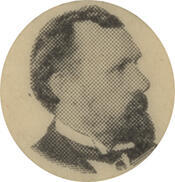
Here you will find contact information for Representative William Mershon Lanning, including email address, phone number, and mailing address.
| Name | William Mershon Lanning |
| Position | Representative |
| State | New Jersey |
| District | 4 |
| Party | Republican |
| Status | Former Representative |
| Term Start | November 9, 1903 |
| Term End | March 3, 1905 |
| Terms Served | 1 |
| Born | January 1, 1849 |
| Gender | Male |
| Bioguide ID | L000084 |
About Representative William Mershon Lanning
William Mershon Lanning (January 1, 1849 – February 16, 1912) was an American lawyer, jurist, and Republican Party politician who represented New Jersey’s 4th congressional district in the United States House of Representatives from 1903 to 1904. He later served as a United States District Judge of the United States District Court for the District of New Jersey and as a United States Circuit Judge of the United States Court of Appeals for the Third Circuit and the United States Circuit Courts for the Third Circuit. His single term in Congress and subsequent federal judicial service took place during a significant period in American history, and he participated actively in the legislative and judicial processes while representing the interests of his New Jersey constituents.
Lanning was born in Ewingville, Ewing Township, Mercer County, New Jersey, on January 1, 1849. He was educated locally and graduated from the Lawrenceville School in 1866. Immediately after completing his schooling, he embarked on a career in education, reflecting both the opportunities and civic expectations of post–Civil War New Jersey.
From 1866 to 1880, Lanning was employed as a teacher in the public schools of Mercer County and at the Trenton Academy. During this period he read law, preparing for admission to the bar through legal apprenticeship rather than formal law school, as was common at the time. He was admitted to the bar in 1880 and commenced the practice of law in Trenton, New Jersey, establishing himself in the city where he would spend the remainder of his professional life.
Lanning quickly entered public service at the local level. He was elected city solicitor for Trenton, serving from 1884 to 1887. In 1887 he was appointed judge of the city district court, a position he held until 1891, when the office was abolished by legislative action and he was thereby legislated out of office. He continued to play a role in state and local governance as a member of a commission to frame township laws and as a member of the constitutional commission of 1894, which undertook work related to the structure and operation of New Jersey’s state government. Expanding his activities into the financial sector, he served as president of the Mechanics’ National Bank of Trenton in 1899, further solidifying his standing in the civic and business life of the community.
In 1902, Lanning was elected as a Republican to the United States House of Representatives for the 58th Congress, representing New Jersey’s 4th congressional district. He served from March 4, 1903, to June 6, 1904. During this one term in office, he was a member of the House of Representatives at a time of expanding federal authority and economic change, and he contributed to the legislative process as part of the Republican majority. His service in Congress, though relatively brief, occurred during a significant period in American history, and he participated in the democratic process while representing the interests of his New Jersey constituents. He resigned his seat on June 6, 1904, to accept a federal judicial appointment.
Lanning received a recess appointment from President Theodore Roosevelt on June 1, 1904, to a seat on the United States District Court for the District of New Jersey vacated by Judge Andrew Kirkpatrick. Roosevelt formally nominated him to the same position on December 6, 1904. The United States Senate confirmed his nomination on December 13, 1904, and he received his commission that same day. Lanning served as a United States District Judge until May 24, 1909, when his service on that court terminated due to his elevation to the federal appellate bench.
On May 6, 1909, President William Howard Taft nominated Lanning to a joint seat on the United States Court of Appeals for the Third Circuit and the United States Circuit Courts for the Third Circuit, filling the vacancy created by the departure of Judge George M. Dallas. The Senate confirmed him on May 18, 1909, and he received his commission the same day. He served concurrently on the Court of Appeals and the Circuit Courts until December 31, 1911, when the Circuit Courts were abolished by Congress, after which he continued to serve solely on the Court of Appeals for the Third Circuit. His service as a federal appellate judge continued until his death.
Lanning died in Trenton, New Jersey, on February 16, 1912, while still in active judicial service. He was interred in Presbyterian Cemetery in Ewing Township, Mercer County, New Jersey, near his birthplace. In 1914, an elementary school built on Pennington Road (New Jersey Route 31) in Ewing was named in his honor, reflecting the community’s recognition of his contributions as an educator, lawyer, legislator, and judge. The school was closed and the building sold to a private institution in the mid-1990s, but as of 2014 the structure remained standing and continued to bear Lanning’s name.