Senator William Lindsay
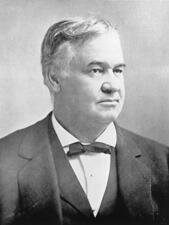
Here you will find contact information for Senator William Lindsay, including email address, phone number, and mailing address.
| Name | William Lindsay |
| Position | Senator |
| State | Kentucky |
| Party | Democratic |
| Status | Former Representative |
| Term Start | August 7, 1893 |
| Term End | March 3, 1901 |
| Terms Served | 2 |
| Born | September 4, 1835 |
| Gender | Male |
| Bioguide ID | L000327 |
About Senator William Lindsay
William Lindsay, a Democratic politician who represented Kentucky in the United States Senate from 1893 to 1901, was born on September 4, 1835, in Lexington, Rockbridge County, Virginia. He spent his early years in rural Virginia, where he received a basic education in the common schools. In his youth he moved westward, part of the broader mid‑nineteenth‑century migration into the border states, eventually settling in Kentucky, the state with which his public career would be closely identified.
Lindsay pursued legal studies after his arrival in Kentucky, reading law in the traditional manner rather than attending a formal law school, as was common in that era. He was admitted to the bar and began practicing law, establishing himself professionally in his adopted state. His legal training and growing reputation at the bar provided the foundation for his entry into public life, as the practice of law was a principal avenue into politics in nineteenth‑century America.
Lindsay’s political career developed within the Democratic Party, which dominated Kentucky politics in the post–Civil War period. Before his service in the United States Senate, he held various state offices that advanced his prominence as a public figure and legislator, though his national reputation would ultimately rest on his work in Congress. By the early 1890s, his experience as a lawyer and state politician had made him a logical choice for higher office, and he emerged as a leading Democratic figure in Kentucky at a time of significant political and economic change in the United States.
On February 15, 1893, William Lindsay entered national office as a United States Senator from Kentucky, elected as a Democrat to fill a vacancy and subsequently to serve a full term. He served in the Senate until March 3, 1901, completing two terms in that body. His tenure coincided with a consequential period in American history, spanning the economic turmoil of the 1890s, the debates over currency and tariffs, and the nation’s emergence onto the world stage at the close of the nineteenth century. As a member of the Senate, Lindsay participated in the legislative process and represented the interests of his Kentucky constituents, contributing to deliberations on the major political and economic questions of his day. Within the Democratic Party, he was part of the broader effort to shape national policy during an era marked by industrialization, regional tensions, and shifting party coalitions.
Lindsay’s service in Congress placed him at the center of the democratic process at a time when the Senate played a particularly prominent role in national governance. He was involved in the consideration of legislation affecting both Kentucky and the nation as a whole, working within the committee system and on the Senate floor to advance Democratic positions and respond to the concerns of his state. His eight years in the Senate marked the culmination of his public career, and they secured his place in the political history of Kentucky as one of the state’s representatives in the upper chamber during a transformative period.
After leaving the Senate in 1901, Lindsay returned to private life, resuming his legal and civic activities away from elective office. He remained a respected elder statesman within Kentucky’s Democratic circles, his long experience in law and politics lending weight to his views on public affairs even after his formal legislative career had ended. William Lindsay died on October 15, 1909, in Frankfort, Kentucky. He was interred in Frankfort Cemetery, leaving behind a record of service that linked his early Virginia origins to a prominent role in Kentucky’s political life and to participation in the national legislative debates of the late nineteenth century.