Representative William Seelye Linton
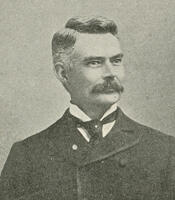
Here you will find contact information for Representative William Seelye Linton, including email address, phone number, and mailing address.
| Name | William Seelye Linton |
| Position | Representative |
| State | Michigan |
| District | 8 |
| Party | Republican |
| Status | Former Representative |
| Term Start | August 7, 1893 |
| Term End | March 3, 1897 |
| Terms Served | 2 |
| Born | February 4, 1856 |
| Gender | Male |
| Bioguide ID | L000341 |
About Representative William Seelye Linton
William Seelye Linton (February 4, 1856 – November 22, 1927) was an American businessman and politician who served two terms in the U.S. House of Representatives from Michigan from 1893 to 1897. A member of the Republican Party, he contributed to the legislative process during a significant period in American history, representing the interests of his constituents in the House of Representatives and participating actively in the democratic process.
Linton was born on February 4, 1856, and came of age in the decades following the Civil War, a time of rapid industrial and political change in the United States. He established himself as a businessman before entering public life, building a reputation as a capable and energetic figure in his community. His early experiences in commerce and local affairs helped shape his later political career, grounding his public service in the practical concerns of economic development and civic improvement.
Linton married Ida M. Lowry, a native of Romeo, Michigan. Much of her life was spent in Saginaw, Michigan, both before and after their marriage, and Saginaw became the center of the family’s social and civic life. The couple had three children: Ray, the eldest; a younger son; and Elsie, their only daughter. The Linton household was closely connected to the city’s civic institutions and fraternal organizations, reflecting both William and Ida Linton’s engagement with their community.
Before his election to Congress, Linton emerged as a “man of affairs” in Saginaw, holding some of the most honorable places of trust in the gift of his city. He was entrusted with important local responsibilities and became a prominent figure in municipal affairs, where his leadership and business experience were highly regarded. In addition to his civic roles, he was active in fraternal life, being prominent in Masonic circles and serving as an officer of the organization known as the Independent Order of Foresters. These positions underscored his standing as a respected community leader and broadened his network of influence across the region.
Linton’s growing prominence in business and local government led to his election as a Republican to the U.S. House of Representatives from Michigan. He served two consecutive terms in Congress from 1893 to 1897, a period marked nationally by economic upheaval, debates over monetary policy, and the realignment of political forces in the Gilded Age. During his tenure, he took part in the legislative work of the House, contributing to deliberations and decisions that affected both Michigan and the nation. His service in Congress reflected the concerns of his constituents and the priorities of the Republican Party in an era of industrial expansion and political reform.
After leaving Congress in 1897, Linton returned to his business and civic pursuits, remaining a figure of influence in his community. He continued to be associated with the same circles of trust and responsibility that had characterized his earlier career, maintaining his involvement in local affairs and fraternal organizations. His later years were spent largely in Michigan, where he remained connected to the city and state that had shaped his public life.
William Seelye Linton died on November 22, 1927. His life spanned a transformative period in American history, from the post–Civil War era through the early twentieth century, and his career as a businessman, civic leader, and two-term Republican Representative from Michigan left a record of service rooted in local trust, national legislative experience, and sustained engagement with the institutions of his community.