Representative Bill Luther
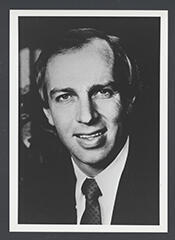
Here you will find contact information for Representative Bill Luther, including email address, phone number, and mailing address.
| Name | Bill Luther |
| Position | Representative |
| State | Minnesota |
| District | 6 |
| Party | Democratic |
| Status | Former Representative |
| Term Start | January 4, 1995 |
| Term End | January 3, 2003 |
| Terms Served | 4 |
| Born | June 27, 1945 |
| Gender | Male |
| Bioguide ID | L000521 |
About Representative Bill Luther
William Paul Luther (born June 27, 1945) is an American politician and lawyer from Minnesota who served as a Representative from Minnesota in the United States Congress from January 3, 1995, to January 3, 2003. A member of the Minnesota Democratic-Farmer-Labor Party (DFL), affiliated nationally with the Democratic Party, he represented Minnesota’s 6th congressional district for four consecutive terms and contributed to the legislative process during a significant period in American history, serving in the 104th, 105th, 106th, and 107th Congresses.
Luther was born in Fergus Falls, Minnesota, and raised in the state he would later represent in both the legislature and Congress. He attended the University of Minnesota, where he received a Bachelor of Science degree in 1967. He continued his studies at the University of Minnesota Law School, earning a Juris Doctor in 1970. Trained as a lawyer, he entered the legal profession in Minnesota, establishing the foundation for a public career that would combine legal expertise with legislative service.
Luther’s early public service began at the state level. From 1974 to 1975, he served on the Minnesota Governor’s Council on Consumer Affairs, where he worked on issues related to consumer protection and public policy. He was elected to the Minnesota House of Representatives, serving from 1975 to 1976, and then to the Minnesota Senate, where he served from 1977 to 1994. Over nearly two decades in the Minnesota Legislature, Luther developed a reputation as a moderate Democrat, reflecting a pragmatic approach to policy and an effort to balance the interests of his constituents with broader party priorities.
In 1994, Luther was elected to the United States House of Representatives from Minnesota’s 6th congressional district, defeating Republican Tad Jude in a closely contested race in which each candidate received 50 percent of the vote and Luther prevailed. He took office on January 3, 1995. He was reelected in 1996, again defeating Tad Jude by a margin of 56 percent to 44 percent. In 1998 and 2000, he won reelection against Republican John Kline, prevailing 50 percent to 46 percent in 1998 and 50 percent to 48 percent in 2000. During his four terms in Congress, Luther represented a district based in the northern suburbs of the Twin Cities and participated actively in the democratic process, advocating for the interests of his constituents and maintaining the centrist profile he had established in state politics.
Luther’s congressional career was significantly affected by redistricting following the 2000 census. Although Minnesota neither gained nor lost a congressional seat, its map was extensively redrawn. The 6th District, which Luther represented, was shifted slightly north and became markedly more Republican in its political composition. After considering his options, Luther chose not to run in the newly configured 6th District and instead sought election in the newly created 2nd District, centered in the southern suburbs and containing roughly 39 percent of his former territory. In the 2002 election for the 2nd District, he faced a rematch with John Kline, his Republican opponent from 1998 and 2000.
The 2002 campaign became controversial when one of Luther’s supporters, Sam Garst, filed as a candidate under the banner of the “No New Taxes Party.” This candidacy was widely characterized as a “false flag” effort, undertaken in retaliation for a National Republican Congressional Committee advertisement supporting Kline that accused Luther of being soft on crime. Luther later acknowledged that his campaign was aware of Garst’s candidacy and its purpose. The episode drew substantial criticism, and Luther’s campaign never fully recovered from the political fallout. In the general election, he was defeated by Kline, receiving 42 percent of the vote to Kline’s 53 percent, ending his service in the House on January 3, 2003.
After leaving Congress, Luther remained active in public and political life. In 2006, he entered the DFL Party primary for Minnesota Attorney General after the party’s endorsed candidate, Matt Entenza, withdrew from the race. In the three-way primary, Luther finished third, receiving 21 percent of the vote, behind Lori Swanson, who won with 42 percent, and Steve Kelley, who received 37 percent. Although unsuccessful, this campaign reflected Luther’s continued engagement with statewide legal and policy issues and his ongoing commitment to public service.
In later years, Luther’s experience in Congress and his legal background led to further responsibilities in federal ethics oversight. In 2021, he was appointed a member of the Office of Congressional Ethics, a nonpartisan, independent body charged with reviewing and overseeing outside ethics complaints against members of the U.S. House of Representatives. As of 2025, he is serving as co-chair of the office’s board, continuing his long career in public service by helping to uphold ethical standards and accountability in the legislative branch.