Senator William John McConnell
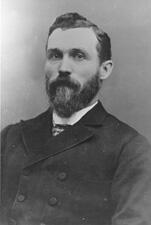
Here you will find contact information for Senator William John McConnell, including email address, phone number, and mailing address.
| Name | William John McConnell |
| Position | Senator |
| State | Idaho |
| Party | Republican |
| Status | Former Representative |
| Term Start | January 1, 1890 |
| Term End | March 3, 1891 |
| Terms Served | 1 |
| Born | September 18, 1839 |
| Gender | Male |
| Bioguide ID | M000357 |
About Senator William John McConnell
William John McConnell (September 18, 1839 – March 30, 1925) was an American merchant, rancher, lawman, and Republican politician who became one of Idaho’s earliest United States Senators and later its third governor. He served as a Senator from Idaho in the United States Congress from 1889 to 1891, representing the new state as one of its first U.S. Senators after Idaho achieved statehood in July 1890, and he held the governorship from 1893 until 1897. His single term in the Senate and two terms as governor coincided with a formative period in Idaho’s political development and with major national economic and political upheavals.
McConnell was born in Michigan and educated in the public schools of that state. As a young man he headed west, first working as a freight wagon driver and eventually reaching California. There he supported himself in a variety of frontier occupations, including miner, store clerk, cowboy, and teacher. In 1862 he moved to Oregon, where he again taught school, and the following year he followed the gold rush into the Idaho Territory. On the way to the gold fields near Idaho City, he perceived greater opportunity in agriculture than in prospecting. With two associates he claimed farmland near Horseshoe Bend along the Payette River, where they dug the first significant irrigation ditch in that area and began raising vegetables. In 1863 McConnell led a pack train loaded with produce over the mountains to Placerville, selling the crops at what contemporaries described as “fabulous” prices.
At the time, Idaho Territory was barely a year old and effective law enforcement was minimal. When settlers along the Payette River began losing horses and mules to thieves, McConnell emerged as the leading organizer of a vigilance committee to combat stock theft. The committee’s activities, later recounted in detail in a history he published, significantly reduced crime in the region and, according to contemporary accounts, ended horse theft problems for local farmers. McConnell neither apologized for nor sought forgiveness for the vigilantes’ actions, asserting their necessity in the absence of formal law. His prominence in this extralegal effort did not prevent his appointment in 1865 as a Deputy United States Marshal for Idaho Territory, a post he held for two years before returning to California at the end of his term.
Around 1867 McConnell married Louisa Brown. Their first child was born in California, where McConnell owned or worked in a general store and raised cattle. About 1871 the family moved north to Oregon, eventually settling in Yamhill County. There he again operated a general store and engaged in cattle ranching, building the local prominence that led to his election to the Oregon State Senate in 1882. In that body he was chosen as president of the senate, marking his emergence as a significant Republican figure in Pacific Northwest politics. By about 1879 he had begun investing in the growing town of Moscow in what was then Idaho Territory, and in 1884 he moved his family there. The general store he opened with a partner in Moscow was widely regarded as one of the finest in the region, and he soon became active in territorial affairs, representing Latah County at the Idaho Constitutional Convention that framed the basic law for eventual statehood.
After Idaho became a state on July 3, 1890, McConnell was selected as one of its first United States Senators. In practice his service in the Senate began earlier, in 1889, as Idaho moved toward admission and arranged its initial representation in Congress. He served only a short term, from 1889 until March 1891, a period deliberately structured to bring Idaho’s Senate seats into alignment with the regular federal election cycle. For a time the new state had three Senators-elect—McConnell, Fred Dubois, and William H. “Judge” Clagett—and the U.S. Senate was required to decide which of the latter two to seat alongside McConnell; it chose Dubois. During his single term, McConnell, as a member of the Republican Party, participated in the legislative process at a moment when the nation was grappling with issues of western development, silver policy, and the integration of new states into the Union, and he represented the interests of his Idaho constituents in the upper chamber.
McConnell’s Senate term ended in March 1891, and he soon turned his attention to state executive office. Running as the Republican candidate for governor, he won election in 1892 in a three-way contest that reflected the political fragmentation of the era. He prevailed with only a plurality of 40.6 percent of the vote, as Democratic and Populist candidates together drew about 58 percent and a Prohibition Party candidate received approximately 1.3 percent. After this first gubernatorial victory he withdrew from active involvement in his Moscow mercantile business and moved to Boise, the state capital. In 1895 his daughter Mary (often called Mamie) married Boise attorney William E. Borah, who would later be elected to six terms in the United States Senate from Idaho, serving from 1907 to 1940. Mary Borah lived to the age of 105, dying in 1976. McConnell himself was closely associated with the development of higher education in the state; along with Willis Sweet, he was a leading advocate for locating the University of Idaho in Moscow, and a university residence hall completed in 1957 was named in his honor.
As governor from 1893 to 1897, McConnell confronted the complex task of consolidating Idaho’s new state institutions. He took office as a minority governor—his party having won only a plurality—which complicated his efforts to secure legislative support. Under his administrations, Idaho abolished a “test oath” that had effectively disenfranchised many of the state’s Mormon voters, thereby broadening political participation. His tenure also coincided with Idaho’s decision in 1896 to grant women the right to vote, making it the fourth state in the nation to extend suffrage to women. McConnell’s government began building the administrative framework necessary to undertake irrigation projects under the federal Carey Act, laying the groundwork for what would become one of the most successful state programs in the nation for reclaiming arid lands through irrigation.
McConnell’s governorship unfolded amid the severe national economic downturn known as the Panic of 1893, during which several major railroads and more than 500 banks failed. The depression intensified labor unrest, particularly in the silver-mining districts of the Coeur d’Alene region of northern Idaho. The repeal of the Sherman Silver Purchase Act, which had required the federal government to buy a fixed quantity of silver each month, triggered a collapse in silver prices that squeezed mining companies, prompted layoffs, and led to wage cuts. These developments fueled bitter conflict between labor unions and mine operators, including episodes of violence. McConnell responded by threatening the use of troops to preserve order, reflecting both the gravity of the situation and the limited tools available to state authorities in an era of intense industrial strife. Although personally sympathetic to the “Free Silver” cause that was popular in the mining West, he refused to bolt the Republican Party over the issue.
McConnell chose not to seek a third term as governor, recognizing that mainstream Republicans were likely to fare poorly in the 1896 elections amid the national realignment over silver and economic policy. As anticipated, a coalition of Democrats, Populists, and Silver Republicans swept Idaho’s 1896 state elections, leaving regular Republicans with only one seat in the legislature. Nationally, however, Republican William McKinley defeated Democratic–Populist candidate William Jennings Bryan in the presidential contest. McConnell’s loyalty to the Republican ticket, despite his Free Silver leanings, was rewarded with a federal appointment in the Bureau of Indian Affairs, where he served from 1897 until 1901. Later he returned to federal service as an Immigration Service inspector, a position he held from 1909 until his death in 1925, continuing his long engagement with public administration and federal policy.
William John McConnell died on March 30, 1925. His memorial service in Moscow, Idaho, was held in the auditorium of the University of Idaho’s administration building and was attended by many of the state’s leading figures, underscoring his stature in Idaho’s early political history. He and his wife, Louisa Brown McConnell (1846–1930), are buried in Moscow Cemetery. Through his roles as frontier settler, territorial lawman, merchant, state legislator, U.S. Senator, governor, and later federal official, McConnell helped shape Idaho’s transition from a sparsely governed territory to a fully integrated state within the Union.