Representative William Watson McIntire
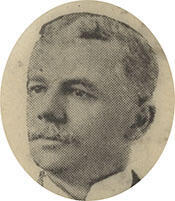
Here you will find contact information for Representative William Watson McIntire, including email address, phone number, and mailing address.
| Name | William Watson McIntire |
| Position | Representative |
| State | Maryland |
| District | 4 |
| Party | Republican |
| Status | Former Representative |
| Term Start | March 15, 1897 |
| Term End | March 3, 1899 |
| Terms Served | 1 |
| Born | June 30, 1850 |
| Gender | Male |
| Bioguide ID | M000480 |
About Representative William Watson McIntire
William Watson McIntire (June 30, 1850 – March 30, 1912) was a U.S. Representative from Maryland’s 4th congressional district and a prominent Republican politician in Baltimore at the turn of the twentieth century. He served one term in the United States Congress from 1897 to 1899, during a significant period in American political and economic history, and was known for his work on federal appropriations and naval affairs affecting Maryland.
McIntire was born in Chambersburg, Pennsylvania, on June 30, 1850. In his childhood he moved with his parents to Washington County, Maryland, where he was raised. He attended both public and private schools and learned the trade of machinist, acquiring practical technical skills that preceded his later professional and political career. He pursued further education at Hagerstown Academy, laying the academic foundation that would enable him to enter the legal profession.
In July 1872, McIntire moved to Baltimore, Maryland, which became the principal base of his professional and political life. In 1874 he received an appointment in the United States Railway Mail Service, a position he held for more than a decade until his resignation in 1885. During this period he continued his education, studying law in Baltimore and graduating from the University of Maryland School of Law. After completing his legal studies, he was admitted to the bar in Baltimore and began the practice of law, combining his legal work with increasing involvement in Republican Party politics.
McIntire’s political career developed rapidly at the local level. He was elected as a Republican to the Baltimore City Council, serving in 1887 and 1888. His organizational skills and party loyalty led to further responsibilities, and in the campaign of 1895 he served as treasurer of the Maryland Republican State and city committees. By the mid-1890s he was regarded as a prominent Republican figure in Maryland, active in both municipal and state party affairs and well positioned for higher office.
In 1896, McIntire was elected as a Republican to the Fifty-fifth Congress from Maryland’s 4th congressional district, serving from March 4, 1897, to March 3, 1899. His election contributed to an all-Republican Congressional delegation from Maryland that year. During his single term in the U.S. House of Representatives, McIntire participated in the legislative process and represented the interests of his Baltimore-area constituents at a time of industrial expansion and growing federal involvement in infrastructure and defense. He is generally credited with obtaining the first federal appropriation for a new Custom House in Baltimore, an important commercial facility for the port city, and with helping to defeat a bill that would have moved the United States Naval Academy from Annapolis to a Northern city, thereby preserving one of Maryland’s most significant federal institutions. A member of the Republican Party, he contributed to the work of Congress during his one term in office. He was an unsuccessful candidate for reelection in 1898 to the Fifty-sixth Congress and left Congress at the expiration of his term in 1899.
After his congressional service, McIntire remained active in business and public affairs. He served as General Agent of the United States Life Insurance Company between 1905 and 1912, a position that reflected his standing in the business community and his experience in administration and public relations. His continued prominence in Baltimore civic life led to further public responsibilities in the city’s infrastructure and public works.
In 1911, following the death of General Peter Leary Jr., McIntire was strongly advanced as a candidate to fill the vacancy on the Baltimore Sewerage Commission. Mayor J. Barry Mahool appointed him to the commission, and the appointment proved so popular that the Baltimore City Council suspended its rules to confirm him unanimously. While serving on the Sewerage Commission, McIntire died suddenly on March 30, 1912. He was stricken by apoplexy while fishing for pike alone on a boat in the Gunpowder River in Baltimore County, Maryland. Friends brought him to shore, but he died later that evening without regaining consciousness. His remains were returned to his city residence the following day, and he was interred in Loudon Park Cemetery in Baltimore, closing a career that had spanned local, state, and national public service.