Representative William McMahon McKaig
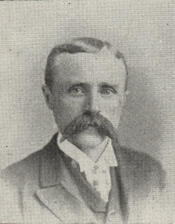
Here you will find contact information for Representative William McMahon McKaig, including email address, phone number, and mailing address.
| Name | William McMahon McKaig |
| Position | Representative |
| State | Maryland |
| District | 6 |
| Party | Democratic |
| Status | Former Representative |
| Term Start | December 7, 1891 |
| Term End | March 3, 1895 |
| Terms Served | 2 |
| Born | July 29, 1845 |
| Gender | Male |
| Bioguide ID | M000488 |
About Representative William McMahon McKaig
William McMahon McKaig (July 29, 1845 – June 6, 1907) was an American lawyer and Democratic politician who represented Maryland in the United States House of Representatives from 1891 to 1895. Over the course of a public career that spanned municipal, state, and national office, he was a prominent figure in the civic and political life of Cumberland and Allegany County in the late nineteenth century.
McKaig was born in Cumberland, Allegany County, Maryland, on July 29, 1845. He was educated in local institutions, attending the Carroll School and the Allegany County Academy, which provided him with a classical and preparatory education typical of aspiring professionals of his era. Growing up in western Maryland during the Civil War and Reconstruction periods, he came of age in a region marked by both industrial development and political realignment, conditions that would shape his later legal and political pursuits.
After completing his early schooling, McKaig studied law and was admitted to the Allegany County bar in 1868. He began the practice of law in Cumberland, establishing himself in the local legal community. In 1873 he moved to the Colorado Territory, a period that reflected the broader national trend of east-to-west migration and economic opportunity in the post–Civil War years. His stay in the West was temporary, however, and he later returned to Maryland, where he resumed his legal practice and reengaged in the civic affairs of his native city.
McKaig’s formal public career began at the municipal level. In 1876 he was appointed city attorney of Cumberland, a position that placed him at the center of the city’s legal and administrative matters. The following year, in 1877, he was elected to the Maryland House of Delegates, marking his entry into state-level politics. After several years devoted primarily to his law practice and local affairs, he returned to state office when he was elected to the Maryland State Senate in 1887. His rise in public life continued when he was elected mayor of Cumberland in 1890, giving him executive responsibility for the governance and development of the growing industrial city.
In 1890, capitalizing on his experience in both municipal and state government, McKaig was elected as a Democrat to the United States House of Representatives from Maryland’s sixth congressional district. He served in the Fifty-second and Fifty-third Congresses from March 4, 1891, to March 3, 1895. During his two terms in Congress, McKaig participated in the legislative process at a time of significant national debate over economic policy, tariffs, and monetary issues in the closing years of the Gilded Age. As a member of the House of Representatives, he represented the interests of his western Maryland constituents and contributed to the work of the Democratic majority during part of his tenure. He chose not to be a candidate for renomination in 1894, thereby concluding his congressional service after two terms.
Following his departure from Congress in March 1895, McKaig returned to Cumberland and resumed the practice of law. He remained a respected figure in the community, drawing on his long experience in public office and his established legal career. He continued to live in Cumberland until his death there on June 6, 1907. William McMahon McKaig was interred in Rose Hill Cemetery in Cumberland, Maryland, closing a life closely tied to the city and state he had served in various capacities for several decades.