Representative William Arthur McKeighan
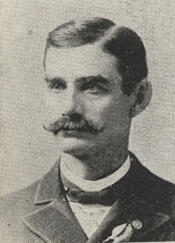
Here you will find contact information for Representative William Arthur McKeighan, including email address, phone number, and mailing address.
| Name | William Arthur McKeighan |
| Position | Representative |
| State | Nebraska |
| District | 5 |
| Party | Populist |
| Status | Former Representative |
| Term Start | December 7, 1891 |
| Term End | March 3, 1895 |
| Terms Served | 2 |
| Born | January 19, 1842 |
| Gender | Male |
| Bioguide ID | M000498 |
About Representative William Arthur McKeighan
William Arthur McKeighan (January 19, 1842 – December 15, 1895) was an American politician and a Representative from Nebraska in the United States Congress from 1891 to 1895. A prominent member of the Populist Party, he emerged from agrarian and reform movements in the late nineteenth century to play a notable role in national politics during a period of economic change and political realignment.
McKeighan was born in Millville, Cumberland County, New Jersey, on January 19, 1842. In 1848 he moved with his parents to Fulton County, Illinois, part of the broader westward migration of the era as families sought new opportunities in the expanding Midwest. He spent his youth in Illinois, where he was raised in a rural environment that would shape his later identification with agricultural interests and farmers’ organizations.
With the outbreak of the American Civil War, McKeighan enlisted in the Union Army, joining the 11th Regiment Illinois Volunteer Cavalry in September 1861. He served throughout the conflict, and at the close of the war he was stationed on a farm near Pontiac, Illinois. This experience reinforced his connection to agricultural life, and after leaving military service he decided to take up farming as his principal occupation. He remained in Illinois for a number of years, working the land and gaining firsthand familiarity with the economic challenges facing small farmers in the postwar period.
In 1880 McKeighan moved west again, this time to Nebraska, where he settled near Red Cloud in Webster County and continued farming. As economic pressures on farmers intensified in the 1880s, he became increasingly active in agrarian reform efforts. He took a leading interest in organizing and promoting the Farmers’ Alliance, a movement that sought to address issues such as railroad rates, credit access, and monetary policy on behalf of rural producers. His growing prominence in local affairs led to his election as probate judge of Webster County, a judicial and administrative office he held from 1885 to 1887.
McKeighan’s involvement in the Farmers’ Alliance and related reform causes naturally drew him into partisan politics. Aligning with the emerging People’s Party, commonly known as the Populist Party, he ran unsuccessfully for the U.S. House of Representatives in 1888. Undeterred by this initial defeat, he stood again in 1890 and was elected as a Populist to represent Nebraska’s 2nd congressional district in the Fifty-second Congress. Following the reapportionment that resulted from the 1890 census, Nebraska’s congressional districts were reorganized, and McKeighan ran for the newly created 5th congressional district in 1892. He was elected to the Fifty-third Congress, thus serving two consecutive terms in the House of Representatives from March 4, 1891, to March 3, 1895.
During his congressional service, McKeighan represented the interests of his agrarian and reform-minded constituents at a time of significant economic and political tension in the United States. As a member of the House of Representatives, he participated in the legislative process during debates over issues central to the Populist program, including monetary policy, railroad regulation, and relief for indebted farmers. His tenure coincided with the broader rise of third-party movements challenging the dominance of the Republican and Democratic parties in the late nineteenth century. Running for reelection in 1894, he was defeated, bringing his congressional career to a close after two terms.
After leaving Congress, McKeighan remained in Nebraska. His later life was brief, as he died in Hastings, Nebraska, on December 15, 1895. He was interred in Red Cloud Cemetery in Red Cloud, Nebraska, near the community where he had farmed and first entered public life. His career reflected the aspirations and frustrations of Midwestern and Plains farmers in the Gilded Age and placed him among the notable Populist figures who carried agrarian concerns into the national legislative arena.