Representative William Robertson McKenney
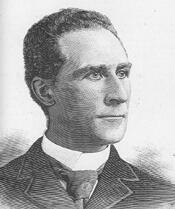
Here you will find contact information for Representative William Robertson McKenney, including email address, phone number, and mailing address.
| Name | William Robertson McKenney |
| Position | Representative |
| State | Virginia |
| District | 4 |
| Party | Democratic |
| Status | Former Representative |
| Term Start | December 2, 1895 |
| Term End | March 3, 1897 |
| Terms Served | 1 |
| Born | December 2, 1851 |
| Gender | Male |
| Bioguide ID | M000502 |
About Representative William Robertson McKenney
William Robertson McKenney (December 2, 1851 – January 3, 1916) was a Virginia lawyer, municipal official, and Democratic U.S. Representative from Virginia who served in the United States Congress from 1895 to 1897. Born in Petersburg, Virginia, he was the son of Robert Armstrong McKenney and Virginia Bland Robertson McKenney. He grew up in a community that would remain the center of his professional and political life and was educated in local institutions before pursuing higher education.
McKenney attended McCabe’s University School in Petersburg and subsequently enrolled at the University of Virginia in Charlottesville. There, he initially taught school and then entered the university’s law department. He graduated from the law school of the University of Virginia in June 1876. Shortly thereafter, he was admitted to the bar and commenced the practice of law in Petersburg, establishing himself as a member of the local legal community. On December 2, 1878, he married Clara J. Pickrell. The couple had several children, including Anne Pickrell McKenney, William Robertson McKenney Jr., Clara Justine McKenney, and Virginia Spotswood McKenney, and the family maintained close ties to Petersburg throughout their lives.
In addition to his legal practice, McKenney became active in local government and Democratic Party politics. In 1888 he was elected president of the city council of Petersburg, a position in which he served for six years, helping to oversee municipal affairs during a period of post-Reconstruction adjustment and urban development. His growing prominence within the Democratic Party led to his selection as a delegate to the Democratic National Convention in 1892. He also served as a member of the Democratic State executive committee, participating in the organization and strategy of the party at the state level. Unlike many of his contemporaries among University of Virginia alumni, McKenney supported the establishment of a coordinate college for women at the university, reflecting a measure of advocacy for expanded educational opportunities for women within the framework of his time.
McKenney’s congressional career arose from the closely contested politics of Virginia’s late nineteenth-century elections. A member of the Democratic Party, he was elected to the U.S. House of Representatives in 1894 with 48.05 percent of the vote, defeating Republican Robert Taylor Thorp, Independents J. Haskins Hobson and Lee Thornton, and Populist B. R. Horner. He presented his credentials as a Democratic Member-elect to the Fifty-fourth Congress and took his seat on March 4, 1895. During his single term in office, he participated in the legislative process and represented the interests of his Virginia constituents in the House of Representatives during a significant period in American history marked by economic and political realignments. His service in Congress, however, was cut short when Thorp successfully contested the election results. As a consequence, McKenney served from March 4, 1895, until May 2, 1896, when he was succeeded by Robert T. Thorp, who was seated in his place.
Following his departure from Congress, McKenney returned to Petersburg and resumed the practice of law. He continued to be regarded as a respected figure in the community, known both for his earlier municipal leadership and his brief tenure in national office. His professional life remained centered on legal work, and he maintained his engagement with civic affairs in his hometown, though he did not return to elective office at the federal level.
William Robertson McKenney died in Petersburg on January 3, 1916. He was interred in Blandford Cemetery, a historic burial ground in the city. His legacy in Petersburg extended beyond his lifetime through the actions of his family. In 1923, his widow, Clara J. McKenney, deeded property to the city of Petersburg for the establishment of a public library to serve as a memorial to her husband, known as the William R. McKenney Library. Reflecting the segregated practices of the era, the basement of the building was designated for Black citizens and the upper floors for White citizens.
The library later became a focal point in the civil rights movement in Petersburg. In February and March 1960, the segregated facilities were the site of protests during which the Rev. Wyatt Tee Walker, the Rev. R. G. Williams, Mrs. Cassie L. Walker, and a number of college and high school students were arrested. McKenney’s daughter, Virginia McKenney Claiborne, wrote two letters to Mayor Walter Edens urging the city council to desegregate the library. The effort ultimately succeeded, and the William R. McKenney Library became the first integrated public building in Petersburg. In late 2021, plans were announced to transform the former library building into an African American history museum, extending the historical significance of the institution founded in McKenney’s memory.