Senator William Henry McMaster
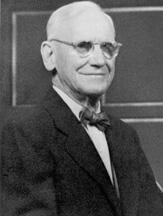
Here you will find contact information for Senator William Henry McMaster, including email address, phone number, and mailing address.
| Name | William Henry McMaster |
| Position | Senator |
| State | South Dakota |
| Party | Republican |
| Status | Former Representative |
| Term Start | December 7, 1925 |
| Term End | March 3, 1931 |
| Terms Served | 1 |
| Born | May 10, 1877 |
| Gender | Male |
| Bioguide ID | M000563 |
About Senator William Henry McMaster
William Henry McMaster (May 10, 1877 – September 14, 1968) was an American politician and banker who served as the tenth Governor of South Dakota from 1921 until 1925 and as a United States Senator from South Dakota from 1925 to 1931. A member of the Republican Party, he played a notable role in state and national politics during the early decades of the twentieth century, contributing to the legislative process during one full term in the United States Senate and guiding South Dakota through a period of economic and political change.
McMaster was born to Samuel and Sara (Woodsum) McMaster in Ticonic, Iowa, on May 10, 1877. After the death of his father in 1880, the family moved to Sioux City, Iowa, where his mother supported the household and McMaster helped contribute to the family income by delivering the morning edition of the Sioux City Journal. He attended the public schools of Sioux City and graduated from Sioux City High School. Demonstrating early ambition and discipline, he pursued higher education at Beloit College in Wisconsin, from which he received a Bachelor of Arts degree in 1899.
Immediately after completing his studies, McMaster briefly entered the field of education and athletics. In 1899 he served as head football coach at the Oshkosh Normal School, later known as the University of Wisconsin–Oshkosh. Shortly thereafter he moved west to South Dakota, where he began the banking and public service career that would form the foundation of his political life. Settling in Gayville, South Dakota, he entered the banking industry and became cashier of the Bank of Gayville, a position that gave him prominence in local business circles and introduced him to the financial concerns of a largely agricultural region.
McMaster’s involvement in local affairs soon led to elective office. He was elected Gayville city treasurer in 1905 and was re-elected in 1907, gaining experience in municipal finance and administration. Expanding his public service to the state level, he was elected to the South Dakota House of Representatives from Yankton County in 1910. Two years later, in 1912, he won election to the South Dakota State Senate, where he was re-elected in 1914. During these legislative years he became identified with Republican policies and with efforts to address the needs of farmers and small communities in a period of progressive reform and political realignment.
In 1916 McMaster sought statewide office as lieutenant governor. He won the Republican nomination by defeating fellow State Senator E. C. Miller and former State Representative T. S. Everitt in the primary, and then prevailed in the general election over Democratic nominee State Senator Andrew S. Anderson with 55 percent of the vote. He was re-elected lieutenant governor in 1918 by a wide margin, receiving 52 percent of the vote to Nonpartisan League nominee A. L. Putnam’s 27 percent and Democratic nominee C. C. Siderius’s 20 percent. In 1920, when Governor Peter Norbeck chose to run for the United States Senate rather than seek another term, McMaster entered the race to succeed him. He defeated perennial candidate Richard O. Richards in the Republican primary and then faced Nonpartisan League nominee Mark P. Bates and Democratic nominee William W. Howes in the general election. Benefiting from a divided opposition, he was elected the tenth Governor of South Dakota in a landslide with approximately 56 percent of the vote, and he won re-election in 1922 in another three-way race, though by a narrower margin, securing about 45 percent of the vote.
As governor from 1921 to 1925, McMaster focused on fiscal and economic policy in a largely rural state coping with post–World War I agricultural difficulties. He oversaw revisions to the state tax code, worked to provide state-guaranteed credit to support farmers and local enterprise, and opposed what he regarded as excessive gasoline taxes, successfully fighting efforts to raise them. His administration reflected a blend of traditional Republican fiscal conservatism and responsiveness to the economic pressures facing South Dakota’s citizens. After two terms, he declined to seek a third term in 1924 and instead turned his attention to national office.
In 1924 McMaster ran for the United States Senate from South Dakota. In the Republican primary he defeated the incumbent senator, Thomas Sterling, and in the general election he won a plurality of about 44 percent of the vote against Democratic nominee Ulysses Simpson Grant Cherry and several independent candidates. He took his seat in the United States Senate on March 4, 1925, and served one term, leaving office on March 3, 1931. His tenure in the Senate coincided with a significant period in American history, encompassing the later years of the prosperous 1920s and the onset of the Great Depression. As a senator, William Henry McMaster participated in the democratic process, represented the interests of South Dakota constituents, and contributed to the legislative work of the chamber as a Republican voice on issues affecting agriculture, finance, and national policy. In 1930 he sought re-election but was narrowly defeated by Governor William J. Bulow, marking the close of his congressional service.
Following his departure from the Senate, McMaster retired from elective politics and returned to the banking profession. He became an officer of the Dixon National Bank in Dixon, Illinois, continuing his long association with financial institutions and maintaining an active role in community and business affairs. In his later years he divided his time between Illinois and South Dakota, retaining ties to the state he had served for decades in various capacities. William Henry McMaster died at the age of 91 on September 14, 1968, in Yankton, South Dakota, and was interred in Oakwood Cemetery in Dixon, Lee County, Illinois.