Representative William Sarsfield McNary
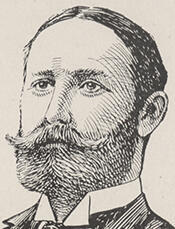
Here you will find contact information for Representative William Sarsfield McNary, including email address, phone number, and mailing address.
| Name | William Sarsfield McNary |
| Position | Representative |
| State | Massachusetts |
| District | 10 |
| Party | Democratic |
| Status | Former Representative |
| Term Start | November 9, 1903 |
| Term End | March 3, 1907 |
| Terms Served | 2 |
| Born | March 29, 1863 |
| Gender | Male |
| Bioguide ID | M000584 |
About Representative William Sarsfield McNary
William Sarsfield McNary (March 29, 1863 – June 26, 1930) was an American Democratic politician who served two terms as a U.S. Representative from Boston, Massachusetts, from 1903 to 1907 and exercised tremendous influence over the Massachusetts Democratic Party. A prominent figure in state and local politics before and after his congressional service, he was deeply involved in party organization and in the civic and commercial life of Boston.
McNary was born on March 29, 1863, in Abington, Massachusetts. He attended the public schools of Abington and later moved to Boston, where he graduated from the Boston English High School. His early education in the public school system and at one of Boston’s leading secondary institutions prepared him for a career that combined journalism, business, and politics in the rapidly growing New England metropolis.
After completing his schooling, McNary entered the field of journalism. From 1880 to 1892 he worked for The Boston Commercial Bulletin, a business-oriented publication, serving successively as reporter and managing editor. During and after his years in journalism, he also engaged in the insurance business and dealt in real estate, activities that established him in Boston’s commercial community and provided a base of contacts and experience that would support his later political career.
McNary’s formal political career began at the municipal level. He served as a member of the City of Boston Common Council in 1887 and 1888, participating in the governance of a city undergoing rapid industrial and demographic change. He then advanced to state office, serving in the Massachusetts House of Representatives from 1889 to 1890 and in the Massachusetts Senate from 1891 to 1892. While a state senator, he was chosen as an alternate delegate to the 1892 Democratic National Convention, signaling his growing prominence within the party. In July 1893, following the resignation of Robert Grant from the Boston Water Board, McNary was appointed to fill the vacancy and served on the board until 1894, further extending his experience in public administration.
McNary quickly became a central figure in Democratic politics in Massachusetts. In 1892 he secured the Democratic nomination for the U.S. House of Representatives from Massachusetts’s 10th congressional district, a district centered on the heavily Irish Catholic industrial neighborhoods of South Boston, Roxbury, and Dorchester and considered one of the most Democratic areas in an otherwise overwhelmingly Republican state. In the general election, however, State Senator Michael McEttrick, running as an independent Democrat, prevailed in a three-way contest against McNary and Republican Harrison Atwood. In 1894 McNary again obtained the Democratic nomination to challenge McEttrick, but in another three-way race Atwood, the Republican candidate, was elected. Despite these setbacks, McNary’s influence within the party continued to grow. In 1898 he was elected secretary of the Massachusetts Democratic State Committee, and in 1900 he returned to the Massachusetts House of Representatives and was elected chairman of the Massachusetts Democratic Party. He was also elected a delegate to the Democratic National Conventions of 1900 and 1904, underscoring his statewide and national party standing.
By the early twentieth century McNary had consolidated substantial control over the Massachusetts Democratic Party apparatus. In 1902, when incumbent Irish-born Representative Henry F. Naphen of Boston’s 10th district sought renomination, McNary used his position as party chair to force Naphen into retirement. Facing the prospect of a divisive intraparty battle against the powerful chairman, Naphen chose to withdraw quietly from the race. With the nomination secured, McNary won an easy victory in the general election over Republican William W. Towle by a plurality of 6,195 votes. He was reelected in 1904, defeating Republican nominee J. B. Crawford by 6,471 votes. As a Democratic member of the United States House of Representatives, McNary served from March 4, 1903, to March 3, 1907, representing Boston and participating in the legislative process during a significant period in American history marked by industrial expansion, urbanization, and the early Progressive Era. He served two full terms in Congress and chose to retire in 1906 rather than seek a third term.
Although he left Congress in 1907, McNary remained active in politics. In 1910 he attempted to regain his former seat in the House of Representatives by challenging incumbent Democratic Congressman Joseph F. O’Connell in the primary. In that contest McNary finished third; the nomination was won by Boston City Councilor James Michael Curley, who would later become one of Boston’s most famous political figures. This defeat effectively ended McNary’s pursuit of elective federal office, though he continued to exert influence in public affairs and business.
Following his retirement from Congress, McNary devoted increased attention to his business interests in Boston. He formed The Drake and Hershey Company, a firm dealing in furniture, and became involved in banking and finance. In 1915 he was one of the founders of the Hanover Trust and served as one of its directors, reflecting his stature in the city’s commercial and financial circles. At the same time, he continued to hold important appointive positions in state and local government. In 1912 Governor Eugene Foss appointed him to the Massachusetts Harbor and Land Commission, on which he served as chairman for four years, overseeing matters related to the development and regulation of the Commonwealth’s coastal and harbor resources. He also served as an associate member of the Boston Port Directors for two years, further contributing to the management of Boston’s maritime infrastructure. In 1916 Governor Samuel McCall appointed McNary as a member of the Waterways and Public Lands Commission, extending his long involvement in public works and land and water resource administration.
William Sarsfield McNary died in Boston, Massachusetts, on June 26, 1930. He was interred in St. Joseph’s Cemetery in West Roxbury, Massachusetts. Throughout his life he combined journalism, business, and public service, and as a legislator, party leader, and officeholder at the municipal, state, and federal levels, he played a significant role in the development of the Massachusetts Democratic Party and in the civic life of Boston during the late nineteenth and early twentieth centuries.