Representative William O. Mills
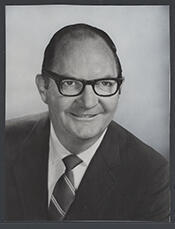
Here you will find contact information for Representative William O. Mills, including email address, phone number, and mailing address.
| Name | William O. Mills |
| Position | Representative |
| State | Maryland |
| District | 1 |
| Party | Republican |
| Status | Former Representative |
| Term Start | January 21, 1971 |
| Term End | January 3, 1975 |
| Terms Served | 2 |
| Born | August 12, 1924 |
| Gender | Male |
| Bioguide ID | M000779 |
About Representative William O. Mills
William Oswald Mills Sr. (August 12, 1924 – May 24, 1973) was a Republican U.S. congressman who represented the 1st congressional district of Maryland from May 25, 1971, until his death in Easton, Maryland, on May 24, 1973. A member of the Republican Party during his congressional tenure, he served in the United States House of Representatives during a significant period in American history, contributing to the legislative process over two terms in office and participating in the democratic governance of his district.
Mills was born in Bethlehem, Caroline County, Maryland, on August 12, 1924. He attended the public schools of Caroline County and graduated from Federalsburg High School in 1941. Raised on the Eastern Shore of Maryland, his early life was shaped by the rural communities he would later represent in Congress. His education in local public schools and his high school graduation on the eve of U.S. involvement in World War II set the stage for his immediate entry into military service.
In 1942, during World War II, Mills enlisted in the United States Army. He served in Europe as part of General George S. Patton’s Third Army and took part in the crossing of the Rhine River in Germany, one of the pivotal campaigns of the European theater. For his service and valor, he was awarded the Bronze Star. Following the war, he returned to Maryland and entered the private sector, beginning a long association with the Chesapeake & Potomac Telephone Company. From 1946 to 1962, he worked his way up through the company, ultimately serving as manager of its offices in Easton, Preston, and Cambridge, Maryland, gaining administrative and managerial experience and building strong ties throughout the Eastern Shore.
Mills’s political career began in earnest in the early 1960s. In 1962, he joined the staff of Congressman Rogers C. B. Morton, who represented Maryland’s 1st congressional district. At that time, Mills was a Democrat, but his political alignment evolved over the decade, and he became a Republican in 1970. As a congressional staff member, he gained detailed knowledge of legislative work, constituent services, and the political concerns of the district. His close association with Morton, who became his political mentor, positioned him as a natural successor when Morton’s career advanced to the executive branch.
When President Richard M. Nixon appointed Rogers Morton as United States Secretary of the Interior in 1971, a vacancy arose in Maryland’s 1st congressional district. Mills ran in the special election to fill the seat and, having by then joined the Republican Party, won the election. He entered the 92nd Congress on May 25, 1971, and was subsequently returned to office, serving in Congress from 1971 to 1975 as recorded in contemporary accounts, though his actual tenure ended with his death in 1973. As a member of the House of Representatives, Mills represented the interests of his Eastern Shore constituents and participated in the legislative process during a turbulent era marked by the Vietnam War, domestic unrest, and growing concern over political ethics and campaign finance.
Mills’s final years were marked by both personal tragedy and political controversy. In 1972, three of his congressional aides were killed in a car accident, an event reported to have deeply affected him. At the same time, his mentor and predecessor, Rogers Morton, was suffering from cancer, adding to Mills’s emotional strain. On May 19, 1973, it was publicly revealed that Mills had received an undisclosed $25,000 gift from the finance committee of President Nixon’s re-election campaign during the 1971 special election. This payment was part of approximately $900,000 in unaccounted donations identified by the General Accounting Office. Under applicable law, if he had been convicted of illegal activity related to the contribution, he could have faced a $1,000 fine and up to one year in prison.
Although Mills initially maintained that he had done nothing wrong, he became increasingly anxious that the revelation of the campaign contribution would destroy his political career. On the morning of May 24, 1973, he was found dead at a stable near his home in Easton, Maryland, at the age of 48. He had sustained an apparent self-inflicted gunshot wound to the left side of his chest, and a 12-gauge shotgun and spent casing were found by his side. In the aftermath, at least seven suicide notes were discovered, including one to his son urging him always to be honest and another addressed to his constituents. In one note, he wrote that he could not prove his innocence and saw no solution other than taking his own life. Despite his fears, Maryland authorities indicated soon after his death that he might not have violated the state’s new campaign finance law, which did not fully take effect until July 1971, two months after his special election, and there were no clear indications that state officials intended to pursue an investigation.
William Oswald Mills Sr. was buried at Hillcrest Cemetery in Federalsburg, Maryland, close to the communities where he had been raised and had built his career. His death placed him among the members of the United States Congress who died in office in the latter half of the twentieth century and has been noted in discussions of federal political scandals and the evolving regulation of campaign finance in the United States.