Senator William Hall Milton
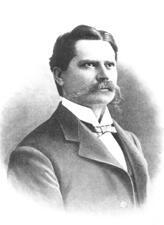
Here you will find contact information for Senator William Hall Milton, including email address, phone number, and mailing address.
| Name | William Hall Milton |
| Position | Senator |
| State | Florida |
| Party | Democratic |
| Status | Former Representative |
| Term Start | March 27, 1908 |
| Term End | March 3, 1909 |
| Terms Served | 1 |
| Born | March 2, 1864 |
| Gender | Male |
| Bioguide ID | M000788 |
About Senator William Hall Milton
William Hall Milton (March 2, 1864 – January 4, 1942) was a Democratic U.S. Senator from Florida who served in the United States Congress from 1908 to 1909. Over the course of his public life he held a variety of local, state, and federal positions, and as a member of the Senate he participated in the legislative process during a significant period in American history, representing the interests of his Florida constituents.
Milton was born on March 2, 1864, in Marianna, Jackson County, Florida, into a family with deep political roots in the state; he was a grandson of John Milton, who served as governor of Florida during the Civil War. He attended local schools in Marianna and grew up in the Reconstruction-era South, an experience that shaped his early understanding of politics, law, and public service. His upbringing in a politically active family provided him with early exposure to civic affairs and the workings of government in a state still recovering from the Civil War.
After completing his early education, Milton studied law and was admitted to the bar, beginning the legal career that would underpin his later public service. He established himself professionally in Florida, practicing law and engaging in business and civic activities in his home region. Through his legal work and local involvement, he developed a reputation that led to increasing responsibilities in public life and laid the groundwork for his entry into elective and appointive office.
Milton’s broader political career included service at the state level before his time in the United States Senate. As a member of the Democratic Party, which dominated Florida politics in this era, he became part of the state’s governing establishment. His work in state and local affairs, combined with his legal background, positioned him as a viable candidate when vacancies and opportunities arose in federal office. By the early twentieth century he was recognized as a figure capable of representing Florida’s interests in Washington.
Milton entered the United States Senate in 1908, serving from that year until 1909. His tenure, though limited to one term in office, came during a transformative period in American political and economic life, as the nation confronted issues of industrial regulation, financial reform, and regional development. As a Senator from Florida, he contributed to the legislative process, participated in the democratic deliberations of the chamber, and represented the concerns of his state’s citizens, including matters related to the South’s post-Reconstruction economy and the emerging importance of Florida’s agriculture and transportation links.
Following his service in Congress, Milton returned to private life and continued to be identified with public and civic affairs in Florida. Drawing on his experience as a lawyer and former Senator, he remained engaged in legal and community matters and retained a respected place in the state’s political history. His post-Senate years reflected the common pattern of early twentieth-century public figures who moved between law, business, and intermittent public service while maintaining influence in regional affairs.
William Hall Milton died on January 4, 1942, closing a life that spanned from the final year of the Civil War through the early years of the Second World War. Remembered primarily for his service as a Democratic U.S. Senator from Florida from 1908 to 1909, he also stands as a representative of a generation of Southern political leaders whose careers bridged the Reconstruction era and the modernizing United States of the early twentieth century.