Representative William James Moxley
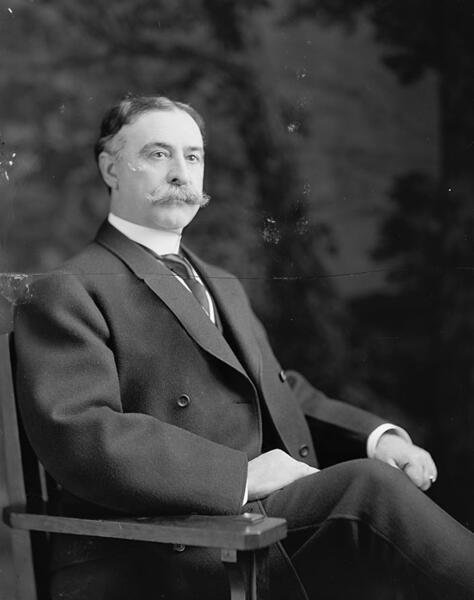
Here you will find contact information for Representative William James Moxley, including email address, phone number, and mailing address.
| Name | William James Moxley |
| Position | Representative |
| State | Illinois |
| District | 6 |
| Party | Republican |
| Status | Former Representative |
| Term Start | March 15, 1909 |
| Term End | March 3, 1911 |
| Terms Served | 1 |
| Born | May 22, 1851 |
| Gender | Male |
| Bioguide ID | M001053 |
About Representative William James Moxley
William James Moxley (May 22, 1851 – August 4, 1938) was an Irish-born American businessman and politician who served as a Republican Representative from Illinois in the United States Congress from 1909 to 1911. He was born in County Cork, Ireland, and later emigrated to the United States, eventually settling in Chicago, Illinois, where he built his career and entered public life. His early years in Ireland and subsequent immigration to America placed him among the many nineteenth-century Irish immigrants who contributed to the economic and political development of major American cities.
After arriving in the United States, Moxley established himself in Chicago, Illinois, which became his permanent home and the base of his professional and political activities. Although detailed records of his formal education are limited, his later prominence in business and politics suggests that he acquired practical training and experience in the commercial life of Chicago during a period of rapid urban and industrial growth. As an immigrant in a major Midwestern city, he would have been part of a diverse and expanding population that shaped Chicago’s economic and civic institutions in the late nineteenth and early twentieth centuries.
Before entering Congress, Moxley became known in Chicago as a successful businessman, a background that informed his later public service. His involvement in local affairs and the Republican Party reflected the broader pattern of upward mobility among immigrant communities in Chicago, where business success often translated into political opportunity. Through these activities he developed the connections and reputation that led to his selection as a candidate for national office.
Moxley’s congressional career began when he was elected as a Republican to represent Illinois’s 6th congressional district. He served one term in the United States House of Representatives from 1909 to 1911, a period that coincided with the presidency of William Howard Taft and the later phase of the Progressive Era. As a member of the House of Representatives, William James Moxley participated in the democratic process, contributed to the legislative work of the Sixty-first Congress, and represented the interests of his constituents in Illinois’s 6th district. His service in Congress occurred during a significant period in American history, marked by debates over tariff policy, regulation of business, and other reforms that reflected the tensions of a rapidly modernizing nation.
During his term, Moxley aligned with the Republican Party, which at the time was grappling with internal divisions between conservative and progressive elements. Within this context, he took part in deliberations and votes on national policy issues that affected both his urban district in Chicago and the broader country. Although he served only a single term and left office in 1911, his tenure placed him among the cohort of early twentieth-century legislators who navigated the challenges of industrialization, urbanization, and reform.
After leaving Congress, Moxley returned to private life in Chicago. He resumed his business and civic activities, remaining part of the city’s established community of former officeholders and public figures. His later years were spent in the city that had shaped his career, and where he had, in turn, contributed to public life through both his commercial endeavors and his service in the national legislature.
William James Moxley died in Chicago, Illinois, on August 4, 1938. His life traced a path from County Cork, Ireland, to the halls of the United States Congress, reflecting the opportunities and responsibilities assumed by many immigrants who rose to positions of influence in American political life. As a one-term Republican representative from Illinois’s 6th congressional district, serving from 1909 to 1911, he left a record of participation in the legislative process during a formative era in the nation’s history.