Representative William Thomas Murphy
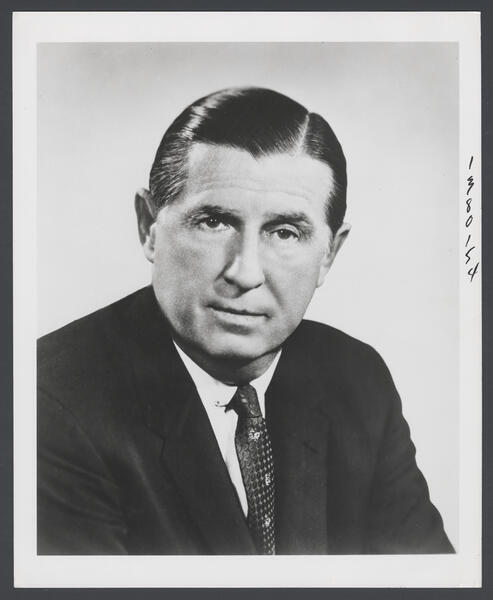
Here you will find contact information for Representative William Thomas Murphy, including email address, phone number, and mailing address.
| Name | William Thomas Murphy |
| Position | Representative |
| State | Illinois |
| District | 3 |
| Party | Democratic |
| Status | Former Representative |
| Term Start | January 7, 1959 |
| Term End | January 3, 1971 |
| Terms Served | 6 |
| Born | August 7, 1899 |
| Gender | Male |
| Bioguide ID | M001104 |
About Representative William Thomas Murphy
William Thomas Murphy (August 7, 1899 – January 29, 1978) was an American politician and lawyer who represented Illinois in the United States House of Representatives from 1959 to 1971. A lifelong resident of the Chicago area and a member of the Democratic Party, he became a prominent figure in mid‑twentieth‑century urban politics and national legislative debates, particularly on civil rights and housing.
Murphy was born on August 7, 1899, in Chicago, Illinois. He grew up in the city during a period of rapid industrial expansion and demographic change that would later shape both his local political career and his work in Congress. As a young man, he served in the First World War, joining the ranks of Americans mobilized for overseas service during the final phase of the conflict. His wartime experience, coming at the close of his youth, preceded his pursuit of higher education and entry into professional life.
After returning from military service, Murphy attended Loyola University Chicago, from which he graduated before embarking on a career in law and public service. His education at Loyola, a major Jesuit institution in the city, provided him with legal training and exposure to the civic and social issues affecting Chicago’s working- and middle-class neighborhoods. This background helped prepare him for the responsibilities of elected office and informed his later engagement with questions of social justice, urban development, and civil rights.
Murphy’s early political career was rooted in Chicago municipal government. He served as a Chicago Alderman, participating in the governance of one of the nation’s largest cities and gaining firsthand experience with the challenges of urban infrastructure, housing, labor, and race relations. His work on the City Council placed him within the broader Democratic political organization that dominated Chicago politics in the mid‑twentieth century and provided a platform for his eventual election to national office.
In 1958, Murphy was elected as a Democrat to the U.S. House of Representatives from Illinois’s 3rd congressional district, beginning his first term on January 3, 1959. He served six consecutive terms, remaining in office until January 3, 1971. His tenure in Congress coincided with a significant period in American history, marked by the civil rights movement, major federal social programs, and economic restructuring in industrial cities. As a member of the House of Representatives, Murphy participated in the legislative process and represented the interests of his constituents during these transformative years.
Murphy’s 3rd district, based in and around Chicago, underwent profound cultural and economic shifts during his time in Congress. The area experienced frequent civil rights marches and demonstrations, reflecting growing demands for racial equality and fair housing. At the same time, the closure of steel mills in the southern parts of Chicago signaled the beginning of industrial decline and economic dislocation for many working families. Demographically, the district’s black minority population grew from about 20 percent in 1960 to more than 40 percent by the end of the decade, intensifying debates over segregation, housing policy, and access to public services.
Within this context, Murphy emerged as an active supporter of civil rights, particularly in the area of open housing. He joined civil rights leader Martin Luther King Jr. in advocating for fair and nondiscriminatory housing practices in Chicago and at the national level. His support for open housing legislation contributed to the broader congressional effort that culminated in the passage of the Fair Housing Act of 1968, a landmark federal law prohibiting discrimination in the sale, rental, and financing of housing. Through this work, Murphy aligned himself with the national civil rights agenda while responding directly to the evolving needs and demands of his increasingly diverse constituency.
After leaving Congress in 1971, Murphy withdrew from national office as the political and social landscape of Chicago and the country continued to evolve. He remained identified with the Democratic Party and with the generation of urban legislators who had navigated the transition from the postwar era to the tumultuous 1960s. William Thomas Murphy died of cancer at Oak Park Hospital in the Chicago area on January 29, 1978, at the age of 78. His career reflected the trajectory of a Chicago‑based public servant who moved from local governance to national office during a period of profound change in American urban life and civil rights.