Representative William Elmer Neal
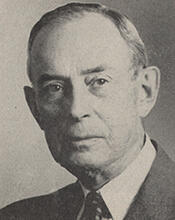
Here you will find contact information for Representative William Elmer Neal, including email address, phone number, and mailing address.
| Name | William Elmer Neal |
| Position | Representative |
| State | West Virginia |
| District | 4 |
| Party | Republican |
| Status | Former Representative |
| Term Start | January 3, 1953 |
| Term End | January 3, 1959 |
| Terms Served | 2 |
| Born | October 14, 1875 |
| Gender | Male |
| Bioguide ID | N000017 |
About Representative William Elmer Neal
William Elmer Neal (October 14, 1875 – November 12, 1959) was a physician and U.S. Representative from West Virginia who served in the United States Congress from 1953 to 1959. A member of the Republican Party, he contributed to the legislative process during two terms in office, participating in the democratic process and representing the interests of his constituents during a significant period in American history.
Born on October 14, 1875, Neal came of age in the post-Reconstruction era, a time of rapid industrialization and social change in the United States. Details of his early family life and upbringing are not extensively documented in public sources, but his later professional and political career reflects the trajectory of a well-educated professional entering public service in the early twentieth century. His decision to pursue medicine placed him within a respected and increasingly scientific profession at a time when modern medical education and practice were being standardized across the country.
Neal trained as a physician and established himself in medical practice before entering national politics. As a physician, he would have been engaged in the diagnosis and treatment of illness in an era that saw major advances in public health, bacteriology, and clinical care. His medical background likely informed his understanding of public health issues, social welfare concerns, and the needs of working families in his region. Through his professional work, he developed standing in his community and familiarity with the concerns of ordinary citizens, experience that later underpinned his appeal as a congressional candidate.
By the early 1950s, Neal had turned to elective office at the national level. Running as a Republican from West Virginia, he was elected to the United States House of Representatives and began his congressional service in 1953. His tenure in Congress coincided with the administration of President Dwight D. Eisenhower and with the early years of the Cold War, the Korean War armistice, and the beginnings of the modern civil rights movement. Within this context, Neal participated in the legislative process, contributing to debates and votes on domestic and foreign policy measures that shaped mid‑twentieth‑century American life.
During his two terms in the House of Representatives, from 1953 to 1959, Neal represented his West Virginia constituents in a period marked by economic transition, the expansion of federal programs, and heightened concern over national security. As a member of the Republican Party, he aligned with a congressional majority that emphasized fiscal responsibility, infrastructure development, and a strong stance against international communism, while also responding to the specific needs of a state heavily influenced by coal, manufacturing, and rural communities. His role in Congress required balancing national priorities with local interests, and he took part in the routine but essential work of committee deliberations, floor debate, and constituent service.
Neal’s congressional service concluded in 1959, ending six years in the House. After leaving office, he returned to private life, carrying with him the combined legacy of a medical career and national legislative service. His later years came at a time when many of the issues that had defined his congressional tenure—Cold War tensions, economic development, and the early stirrings of civil rights reform—continued to evolve on the national stage.
William Elmer Neal died on November 12, 1959. His life spanned from the late nineteenth century into the modern postwar era, and his dual careers as physician and legislator reflected the broader American tradition of professionals entering public service. Through his medical practice and his two terms in Congress from 1953 to 1959, he contributed to both the health and the governance of his community and his state.