Representative William Neville
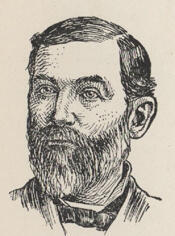
Here you will find contact information for Representative William Neville, including email address, phone number, and mailing address.
| Name | William Neville |
| Position | Representative |
| State | Nebraska |
| District | 6 |
| Party | Populist |
| Status | Former Representative |
| Term Start | December 4, 1899 |
| Term End | March 3, 1903 |
| Terms Served | 2 |
| Born | December 29, 1843 |
| Gender | Male |
| Bioguide ID | N000056 |
About Representative William Neville
William Neville was an American politician who served as a Representative from Nebraska in the United States Congress from 1899 to 1903. Born in 1843, he lived through the Civil War era and the profound economic and political transformations of the late nineteenth century, experiences that helped shape his later public career. He was associated with the Populist Party, a political movement that emerged in response to the grievances of farmers and laborers in the rapidly industrializing United States.
Details of Neville’s early life indicate that he came of age in a period marked by sectional conflict, westward expansion, and the beginnings of large-scale agrarian unrest. Growing up in the mid-nineteenth century, he would have witnessed the dislocations of the Civil War and Reconstruction, as well as the subsequent push for settlement and development in the American West. These formative years provided the backdrop for his eventual move into public life and his identification with the concerns of rural communities and small producers.
Neville’s education prepared him for a professional career at a time when formal schooling was becoming increasingly important for entry into law and politics. Like many men of his generation who entered public office, he likely pursued legal or related studies that enabled him to participate effectively in civic affairs and to understand the complex economic and constitutional issues that confronted the nation in the Gilded Age. His intellectual and professional development positioned him to engage with the legal and policy questions that were central to the Populist movement.
Before his election to Congress, Neville built a reputation in Nebraska as a public figure attuned to the needs of his community. Nebraska, a predominantly agricultural state, was deeply affected by fluctuating commodity prices, railroad freight rates, and credit conditions, all of which became central issues for Populist politicians. Neville’s alignment with the Populist Party reflected his commitment to addressing these concerns through political action, including advocacy for monetary reform, regulation of corporate power, and greater responsiveness of government to ordinary citizens.
William Neville’s service in Congress occurred during a significant period in American history, when debates over imperialism, economic policy, and political reform were at the forefront of national life. Elected as a member of the Populist Party, he served two terms in the House of Representatives from 1899 to 1903, representing the interests of his Nebraska constituents in the Fifty-sixth and Fifty-seventh Congresses. During these years, the United States confronted the aftermath of the Spanish–American War, the question of governing new overseas territories, and continuing domestic disputes over the gold standard, tariffs, and the regulation of large corporations. As a member of the House, Neville contributed to the legislative process, participated in the democratic deliberations of the chamber, and worked to give voice to the agrarian and reformist perspectives that had propelled the Populist movement to national prominence.
Within Congress, Neville’s role as a Populist placed him in a complex political environment dominated by Republicans and Democrats, requiring cooperation and coalition-building to advance his priorities. He took part in debates and votes that reflected the Populist platform’s emphasis on economic fairness, political reform, and greater accountability of public institutions. His presence in the House underscored the continuing influence of third-party movements at the turn of the century and the persistence of agrarian discontent even as the Populist Party itself began to wane as an independent force.
After leaving Congress in 1903, Neville’s later years unfolded against the backdrop of the Progressive Era, when many of the reforms championed by Populists—such as regulation of railroads and corporations, direct election of senators, and various democratic reforms—began to find broader acceptance in American politics. Although no longer serving in the national legislature, his earlier work in Congress and his association with the Populist cause linked him to this wider trajectory of reform. William Neville died in 1909, closing a life that spanned from the antebellum period through the dawn of modern American political and economic institutions, and that included notable service as a two-term Representative from Nebraska during a transformative era in the nation’s history.