Representative William Ignatius Nolan
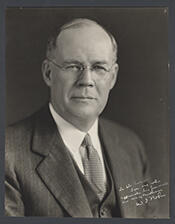
Here you will find contact information for Representative William Ignatius Nolan, including email address, phone number, and mailing address.
| Name | William Ignatius Nolan |
| Position | Representative |
| State | Minnesota |
| District | 5 |
| Party | Republican |
| Status | Former Representative |
| Term Start | April 15, 1929 |
| Term End | March 3, 1933 |
| Terms Served | 2 |
| Born | May 14, 1874 |
| Gender | Male |
| Bioguide ID | N000128 |
About Representative William Ignatius Nolan
William Ignatius Nolan (May 14, 1874 – August 3, 1943) was a Minnesota politician and Republican member of the United States House of Representatives who served in Congress from 1929 to 1933. Over a public career spanning more than four decades, he held multiple state and federal offices and played a prominent role in Minnesota’s legislative and executive branches during the early twentieth century.
Nolan was born on May 14, 1874, in Saint Paul, Minnesota. In his youth he entered military service with the Minnesota National Guard, in which he served from 1891 to 1896. This early experience in uniform preceded and helped frame his long involvement in public affairs, though details of his civilian occupations in these early years are less fully documented than his later political career.
Nolan’s state legislative career began in the Minnesota House of Representatives, where he first served from 1903 to 1907. After a brief interval out of office, he returned to the House from 1911 to 1913 and again from 1917 to 1923. During this final stretch of service he rose to a position of leadership, serving as Speaker of the Minnesota House of Representatives from 1919 to 1923. At the start of the 41st Minnesota Legislature he secured the speakership by defeating the Nonpartisan League candidate John A. Urness, reflecting the broader partisan and ideological contests of the period. His legislative work in these years coincided with the post–World War I era and the early 1920s, when Minnesota was experiencing significant political realignments and economic change.
Following his long tenure in the state legislature, Nolan advanced to statewide executive office. He served as Lieutenant Governor of Minnesota from 1925 to 1929, acting as the presiding officer of the state senate and playing a supporting role in the administration of state government. In 1927 he was appointed chairman of the Minnesota Reforestation Commission, a position that placed him at the center of early conservation and land-management efforts in the state, as Minnesota sought to address the environmental and economic consequences of earlier logging and land-use practices.
Nolan entered national office when he was elected as a Republican to the 71st Congress to fill the vacancy caused by the resignation of Representative Walter Newton. He took his seat in the U.S. House of Representatives on July 17, 1929, representing Minnesota in the federal legislature. He was reelected to the 72nd Congress and served continuously until March 4, 1933, completing two terms. His service in Congress coincided with a significant period in American history, encompassing the onset of the Great Depression following the stock market crash of 1929. As a member of the House of Representatives during this crisis, Nolan participated in the legislative process and represented the interests of his Minnesota constituents while the federal government grappled with unprecedented economic and social challenges.
In 1932 Nolan was an unsuccessful candidate for reelection to the 73rd Congress, losing his bid to continue in the House as political currents shifted during the early New Deal era. He remained active in politics, however, and continued to seek public office, making further but unsuccessful attempts to secure the Republican nomination in 1934, 1936, and 1938. After leaving Congress he resumed his profession as a lecturer, drawing on his extensive experience in state and national government to address public and civic audiences.
Nolan returned to statewide office late in his life. In 1942 he was elected State railroad and warehouse commissioner of Minnesota, a regulatory position overseeing important aspects of the state’s transportation and commercial infrastructure. He held this office until his death in Winona, Minnesota, on August 3, 1943. William Ignatius Nolan was buried in Lakewood Cemetery, leaving a record of service that extended from the Minnesota National Guard in the 1890s through legislative leadership, the lieutenant governorship, and two terms in the United States Congress.