Senator William North
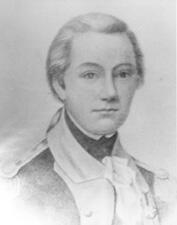
Here you will find contact information for Senator William North, including email address, phone number, and mailing address.
| Name | William North |
| Position | Senator |
| State | New York |
| Party | Federalist |
| Status | Former Representative |
| Term Start | January 1, 1798 |
| Term End | March 3, 1799 |
| Terms Served | 1 |
| Gender | Male |
| Bioguide ID | N000142 |
About Senator William North
William North (1755 – January 3, 1836) was an American soldier, legislator, and Federalist statesman who served briefly as a United States Senator from New York during a formative period in the early republic. Born in 1755 at Pemaquid, in what is now Maine, he was the son of Captain John North, an Irish immigrant and British colonial officer, and Elizabeth Pitson, a native of Boston. Through his father’s earlier marriage to Elizabeth Lewis, he had two half‑siblings, Joseph and Mary North. Captain John North held a series of important provincial posts, serving as lieutenant commander of Fort Frederick between 1744 and 1756, in charge of Fort St. George from 1756 to 1763, and as a judge of the Court of Common Pleas for the county beginning in 1760. After his father’s death in 1763, William North moved with his mother to Boston, Massachusetts, where his upbringing shifted from a frontier military environment to the commercial and intellectual life of a major colonial port.
In Boston, North received a classical education at the Boston Latin School, which he attended from 1764 to 1770. Following his schooling, he entered mercantile employment, working in a merchant’s office in Boston. He remained in this commercial position until the fall of 1774, when the British closure of the port in response to colonial resistance effectively ended his work there and helped propel him toward a military career. The political and economic tensions surrounding the port’s closure formed the backdrop to his transition from colonial clerk to Continental Army officer as the American Revolution commenced.
North entered the Continental Army in 1775 and initially served under Benedict Arnold in the ill‑fated expedition to Canada that year; although he volunteered, he was reportedly too ill to take an active part in the campaign. On May 9, 1776, he was commissioned a second lieutenant in Captain John Gill’s company of Colonel Thomas Craft’s regiment of train artillery. In May 1777 he was appointed a captain in Colonel Henry Jackson’s 16th Massachusetts Regiment, with which he participated in the Battle of Monmouth. According to his son, the captain’s commission “went with my father in his bosom through the War of the Revolution,” underscoring his enduring commitment to the cause. In 1778 he met Baron Friedrich Wilhelm von Steuben, and in 1779 he became Steuben’s aide‑de‑camp, playing a significant role in introducing and enforcing Steuben’s system of drill and discipline in the Continental Army. North later accompanied Steuben to Virginia and was present at the siege of Yorktown and the surrender of Lord Cornwallis in 1781. On Steuben’s recommendation, he was appointed Inspector of the Troops under General Henry Knox in 1784, and on October 20, 1786, by act of Congress, he was commissioned a major in the 2nd United States Regiment, a temporary force raised in response to Shays’ Rebellion. After the war he settled in Duanesburg, New York, where he established his home and married into one of New York’s leading families.
On October 14, 1787, in New York, North married Mary Duane (b. 1762), daughter of James Duane, the 44th Mayor of New York City and a United States District Judge for the District of New York appointed by President George Washington. The couple had six children: Frederic William Steuben North (1788–1789), Marie North (1780–1812), James Duane North (1791–1792), Elizabeth North (1792–1845), William Augustus Steuben North (1793–1845), and Adelia North (1797–1878). His close association with Baron Steuben extended beyond military service: North and fellow aide‑de‑camp Captain Benjamin Walker were formally adopted by Steuben and made his heirs. Some historians have suggested that Steuben’s “extraordinary intense emotional relationships” with North and Walker may have been romantic, though the limited historical record prevents certainty. North named two of his children in honor of the Baron—Frederic William Steuben North and William Augustus Steuben North—and after Steuben’s death he divided the property bequeathed to him among his military companions. North’s relationship with Benjamin Walker was also notably close; despite a falling out between 1811 and 1813, Walker remained his most intimate friend until their deaths and served as a sponsor at the baptism of North’s daughter Adelia. During his Revolutionary service, North’s household also included Caesar Russell, an African American private in the 4th Massachusetts Regiment, who served as his personal servant while he was aide‑de‑camp to Steuben. George Washington, in recommending officers for appointment, counted North “among the most intelligent and active Officers of the late American Army.”
North’s civil and political career in New York developed alongside his military reputation. He was a member of the New York State Assembly from Albany County in 1792, 1794, and 1795; from the combined district of Albany and Schenectady Counties in 1796; and from Schenectady County in 1810. He served as Speaker of the Assembly in 1795, 1796, and again in 1810, reflecting his prominence within the Federalist Party and his influence in state politics. During this period he also engaged in infrastructure and internal improvement projects. He was a commissioner and director of the Great Western Turnpike Company, established by the New York State Legislature on March 15, 1799, to construct a road from Albany to Cherry Valley, and from 1810 to 1816 he served as a member of the first Erie Canal Commission, contributing to the early planning of what would become one of the most significant transportation projects in the United States. Parallel to his legislative service, North continued to hold important military appointments in the early national army. On July 19, 1798, he was appointed adjutant general of the United States Army with the rank of brigadier general. In March 1799, after eight months of largely inactive duty, Congress added the role of assistant inspector general to his responsibilities. As inspector general, Alexander Hamilton—who had worked closely with North during the Revolutionary War—requested that North serve as his chief of staff, and North assisted Hamilton in efforts to reform and strengthen the army during the Quasi‑War with France. He began revising the army’s general regulations in the winter of 1799–1800, but in May 1800 Congress abolished his and other staff appointments as tensions with France subsided, and he was discharged in June of that year. In March 1812 he was again appointed adjutant general of the Army, but he declined the post, likely reflecting the strong opposition to the War of 1812 among Federalists in New York.
William North’s service in the United States Congress occurred during a significant period in American history. A committed Federalist, he was appointed to the United States Senate from New York to fill the vacancy created by the resignation of Senator John Sloss Hobart. North took his seat on May 5, 1798, and served until August 17, 1798, when James Watson was elected and qualified to succeed him. During this single term of service in the Senate, he participated in the legislative process at a time of mounting international tension and domestic partisan conflict. As a member of the Federalist Party, North supported the Alien and Sedition Acts and other measures aimed at countering the Democratic‑Republican opposition and addressing perceived internal and external threats during the Quasi‑War with France. He also favored the establishment of a provisional army in response to the crisis with France, consistent with his longstanding belief in a strong national defense and a disciplined regular force. In representing New York in the Senate, he took part in the democratic process and sought to advance the interests of his constituents within the broader framework of Federalist policies.
In his later life, North remained a respected figure in both military and civic circles. He was an original member of the Society of the Cincinnati, reflecting his status among the veteran officers of the Revolutionary War. His residence in Duanesburg, the General William North House, later gained recognition for its historical significance and was listed on the National Register of Historic Places in 1987. North continued to be associated with the development of New York’s transportation infrastructure through his work on the Great Western Turnpike and his earlier role on the Erie Canal Commission, helping to lay foundations for the state’s economic expansion. He spent his final years dividing his time between his country estate and the city. William North died in New York City on January 3, 1836. He was buried in the crypt beneath Christ Episcopal Church in Duanesburg, New York, leaving a legacy as a Revolutionary officer, Federalist legislator, and early advocate of national military organization and internal improvements. His life is documented in sources including the Biographical Directory of the United States Congress, Franklin Benjamin Hough’s “The New York Civil List,” the Political Graveyard, and records of the Society of the Cincinnati and the American Revolution Institute.