Representative William Dale Owen
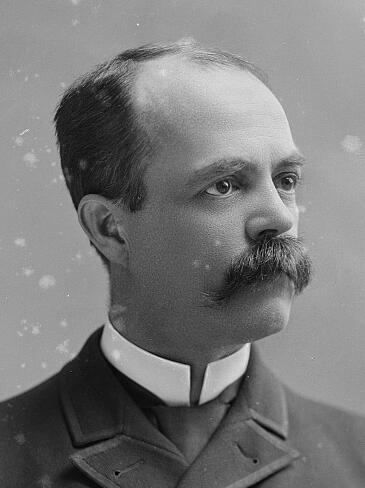
Here you will find contact information for Representative William Dale Owen, including email address, phone number, and mailing address.
| Name | William Dale Owen |
| Position | Representative |
| State | Indiana |
| District | 10 |
| Party | Republican |
| Status | Former Representative |
| Term Start | December 7, 1885 |
| Term End | March 3, 1891 |
| Terms Served | 3 |
| Born | September 6, 1846 |
| Gender | Male |
| Bioguide ID | O000155 |
About Representative William Dale Owen
William Dale Owen was an American politician who served as a Republican Representative from Indiana in the United States Congress from 1885 to 1891. Details of his early life, including his exact date and place of birth, family background, and upbringing, are not reliably documented in standard reference sources, and available online encyclopedic entries either do not cover him or misdirect to unrelated individuals. As a result, the record of his formative years remains fragmentary, and no authoritative account of his childhood environment or early influences can be drawn from current public biographical compilations.
Similarly, specific information about Owen’s formal education—such as the institutions he attended, degrees earned, or fields of study—is not clearly preserved in widely accessible historical or encyclopedic records. It is therefore not possible to state with confidence where he was educated or how his schooling may have shaped his later public career. What can be inferred from his subsequent service, however, is that he possessed the level of literacy, legal and civic understanding, and public-speaking ability typical of nineteenth-century members of Congress, suggesting a solid, if undocumented, educational foundation.
By the time Owen emerged in the historical record as a public figure, he was affiliated with the Republican Party in Indiana during a period of rapid economic, social, and political change in the United States. The 1880s were marked by industrial expansion, labor unrest, debates over tariffs and monetary policy, and the continuing aftermath of Reconstruction. Within this context, Owen’s political alignment placed him in a party that generally favored protective tariffs, economic development, and a strong national government. Although detailed accounts of his pre-congressional professional life—such as whether he practiced law, engaged in business, or held local or state office—are not reliably documented in standard encyclopedic sources, his successful election to Congress indicates that he had established a reputation sufficient to secure the confidence of voters in his Indiana district.
William Dale Owen was elected as a Republican to the United States House of Representatives from Indiana and served three consecutive terms, from 1885 to 1891. His tenure thus spanned the Forty-ninth, Fiftieth, and Fifty-first Congresses, a significant period in American history characterized by contentious legislative debates over economic policy, federal regulation, veterans’ issues, and civil service reform. As a member of the House of Representatives, Owen participated in the democratic process at the federal level and contributed to the legislative work of Congress, representing the interests of his Indiana constituents in national deliberations. During these years, the House considered measures related to interstate commerce, tariff schedules, and the evolving role of the federal government in an increasingly industrial and interconnected nation, and Owen took part in this broader legislative environment as one of Indiana’s Republican voices.
Owen’s service from 1885 to 1891 coincided with the presidencies of Grover Cleveland and Benjamin Harrison, a period that saw shifting partisan control and closely contested national elections. Within this dynamic setting, his three-term tenure reflected both personal political durability and the relative strength of Republican support in his district. While specific committee assignments, sponsored bills, or recorded speeches attributable to Owen are not clearly delineated in commonly available reference works, the fact of his repeated reelection indicates that his performance in office was acceptable to his electorate and that he maintained an active role in representing their concerns in Washington, D.C.
After leaving Congress in 1891, the public record of William Dale Owen’s later life is sparse in standard encyclopedic sources, and reliable details about his subsequent career, personal activities, or date and place of death are not readily available. It is not clear whether he returned to a prior profession, remained involved in politics at the state or local level, or retired from public life altogether. The absence of comprehensive documentation in widely consulted references, and the presence of unrelated individuals under similar names in some online resources, underscore the limitations of the surviving record. Nonetheless, Owen’s six years in the House of Representatives secure his place in the history of Indiana’s congressional delegation and in the broader narrative of late nineteenth-century American governance.