Representative William N. Patman
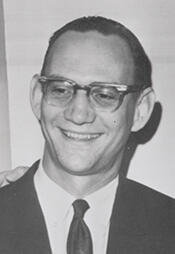
Here you will find contact information for Representative William N. Patman, including email address, phone number, and mailing address.
| Name | William N. Patman |
| Position | Representative |
| State | Texas |
| District | 14 |
| Party | Democratic |
| Status | Former Representative |
| Term Start | January 5, 1981 |
| Term End | January 3, 1985 |
| Terms Served | 2 |
| Born | March 26, 1927 |
| Gender | Male |
| Bioguide ID | P000104 |
About Representative William N. Patman
William Neff Patman (March 26, 1927 – December 9, 2008) was an American politician and attorney who served from 1981 to 1985 as a Democratic member of the United States House of Representatives for Texas’s 14th congressional district. A member of the Democratic Party, he was part of a prominent political family as the son of Wright Patman, who represented Texas in the U.S. House of Representatives from 1929 to 1976. Over the course of his career, William Neff Patman held positions at the local, state, and federal levels and contributed to the legislative process during two terms in Congress.
Patman was born in Texarkana, Texas, on March 26, 1927. He attended public schools in Texarkana and in Washington, D.C., reflecting his family’s residence in the nation’s capital during his father’s long congressional service. He later enrolled at Kemper Military School in Boonville, Missouri, a now-closed military preparatory institution, from which he graduated in 1944. His early education combined exposure to both Texas and Washington political life with the discipline of a military school environment.
Following his graduation from Kemper, Patman served in the United States Marine Corps as a private first class from 1945 to 1946, entering military service near the end of World War II. After his active duty in the Marine Corps, he continued to build a record of public service and international experience, working as a diplomatic courier for the United States Foreign Service from 1949 to 1950. He later joined the United States Air Force Reserve, in which he served as a captain from 1953 to 1966, extending his military association over more than a decade while he pursued his legal and political career.
Patman pursued higher education at the University of Texas at Austin, where he completed his legal studies and graduated in 1953. Later that year, he was admitted to the State Bar of Texas, formally beginning his career as an attorney. From 1953 to 1955, he served as a legal examiner for the Texas Railroad Commission, an important regulatory body overseeing the state’s oil, gas, and transportation interests. He then practiced law at the local level as the city attorney for Ganado, Texas, from 1955 to 1960, providing legal counsel to the municipality and gaining experience in local government administration.
In 1960, Patman successfully sought election to the Texas State Senate from District 18, taking office in 1961. He served in the Texas Senate for two decades, remaining in that body until 1981. During his tenure, he was a delegate to state Democratic Party conventions and became known as an active participant in state legislative affairs. On November 22, 1963, when President John F. Kennedy was assassinated in Dallas, Patman was riding in the fifteenth vehicle of the presidential motorcade, placing him in close proximity to one of the most consequential events in modern American history. In 1979, he gained further notice as a member of the so‑called “Killer Bees,” a group of twelve quorum-busting Democratic state senators who went into hiding in an Austin garage apartment for four and a half days to block legislative action, an episode that drew statewide and national attention to Texas politics.
In 1980, Patman was elected to the United States House of Representatives from Texas’s 14th congressional district, succeeding to the seat his father had once represented in an earlier configuration. He took office in January 1981 and served two terms, remaining in Congress until January 1985. As a member of the House of Representatives during a significant period in American history marked by the beginning of the Reagan administration and shifting national priorities, he participated in the democratic process and represented the interests of his Texas constituents. During his service in Congress, he contributed to the legislative process as part of the Democratic caucus, drawing on his extensive experience in state government and his family’s long-standing involvement in national politics.
After leaving Congress in 1985, Patman returned to private life, carrying with him a record of service that spanned military duty, diplomatic work, local legal practice, two decades in the Texas Senate, and two terms in the U.S. House of Representatives. He died of cancer in Houston, Texas, on December 9, 2008, at the age of 81.