Senator William Bliss Pine
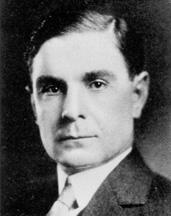
Here you will find contact information for Senator William Bliss Pine, including email address, phone number, and mailing address.
| Name | William Bliss Pine |
| Position | Senator |
| State | Oklahoma |
| Party | Republican |
| Status | Former Representative |
| Term Start | December 7, 1925 |
| Term End | March 3, 1931 |
| Terms Served | 1 |
| Born | December 30, 1877 |
| Gender | Male |
| Bioguide ID | P000360 |
About Senator William Bliss Pine
William Bliss Pine (December 30, 1877 – August 25, 1942) was an American businessman, oil producer, and Republican politician who represented Oklahoma in the United States Senate from 1925 to 1931. His single term in the Senate coincided with a significant period in American history, spanning the latter half of the 1920s and the onset of the Great Depression, during which he participated in the legislative process and represented the interests of his Oklahoma constituents.
Pine was born on December 30, 1877, in Illinois. During his youth he moved with his family to Kansas, where he spent much of his early life. In Kansas he entered the workforce at a young age, gaining practical experience that would later inform his business career. His early years in the Midwest exposed him to agricultural and small-town economic concerns that would later shape his political outlook, particularly his interest in policies affecting farmers and rural communities.
Seeking new opportunities in the early twentieth century, Pine moved from Kansas to Oklahoma, which was then experiencing rapid development following statehood in 1907. Settling in the state, he became a prominent businessman and oil producer, participating in the burgeoning petroleum industry that was transforming Oklahoma’s economy. His success in business established him as a figure of local prominence and provided the financial and social foundation for his entry into public life. Through his work in oil and related enterprises, he developed a reputation as a capable and energetic entrepreneur.
Pine’s business standing and civic involvement led him into politics as a member of the Republican Party. In the early 1920s he emerged as a statewide political figure and, capitalizing on the strength of the Republican Party in Oklahoma during that decade, he sought federal office. He was elected to the United States Senate from Oklahoma and took his seat on March 4, 1925. During his term, which lasted until March 3, 1931, he contributed to the legislative process at a time marked by post–World War I adjustments, agricultural distress, and the economic expansion and subsequent collapse that framed the late 1920s.
As a United States senator, Pine was generally regarded as economically conservative, reflecting his business background and Republican affiliation. At the same time, he was considered progressive in his agricultural positions, often supporting measures intended to assist farmers and address the chronic problems of low prices and farm debt that afflicted rural constituencies in Oklahoma and across the nation. In this way he combined a cautious approach to federal spending and economic regulation with a willingness to back targeted relief and support for agricultural interests, aligning himself with the concerns of many of his constituents in a predominantly agrarian state.
Pine’s Senate service came to an end with the political upheaval brought on by the Great Depression. The economic crisis that began with the stock market crash of 1929 severely undermined public confidence in Republican leadership at both the national and state levels. In Oklahoma, the Great Depression virtually destroyed the Republican Party, contributing significantly to Pine’s failure to secure reelection in 1930. Like many Republican officeholders of the period, he was turned out of office as voters shifted their support toward Democratic candidates who promised more expansive federal intervention in the economy.
Although his Senate career ended in 1931, Pine remained active in Oklahoma politics and public affairs. Continuing to identify with the Republican Party despite its weakened position in the state, he sought a return to high office during the New Deal era. In 1934 he was an unsuccessful candidate for governor of Oklahoma, running in a political climate still dominated by economic hardship and Democratic ascendancy. After this defeat, he largely returned to his business interests, maintaining his role as a notable figure in Oklahoma’s oil and commercial circles.
William Bliss Pine died on August 25, 1942. By the time of his death, he was remembered as one of the early twentieth-century leaders who helped shape Oklahoma’s political and economic development, combining a career in the oil industry with service in the United States Senate during a transformative era in both state and national history.