Senator William Plumer
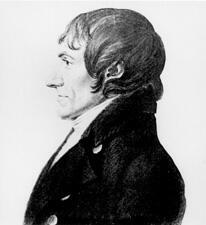
Here you will find contact information for Senator William Plumer, including email address, phone number, and mailing address.
| Name | William Plumer |
| Position | Senator |
| State | New Hampshire |
| Party | Federalist |
| Status | Former Representative |
| Term Start | January 1, 1802 |
| Term End | March 3, 1807 |
| Terms Served | 1 |
| Born | June 25, 1759 |
| Gender | Male |
| Bioguide ID | P000393 |
About Senator William Plumer
William Plumer (June 25, 1759 – December 22, 1850) was an American lawyer, Baptist lay preacher, and politician from Epping, New Hampshire, who became a prominent figure in both state and national politics in the early republic. Born in Epping in the Province of New Hampshire, he came of age during the Revolutionary era and developed an early interest in public affairs and religious life. Although details of his childhood are sparse, his later prominence as a lay preacher and public official suggests a youth marked by self-education, religious engagement, and growing involvement in the civic life of his community.
Plumer pursued the study of law and was admitted to the bar, establishing himself as an attorney in New Hampshire. Alongside his legal practice, he became a Baptist lay preacher, reflecting the strong religious currents of the period and his own commitment to moral and civic reform. His dual roles as lawyer and preacher placed him at the intersection of legal, religious, and political discourse in the new nation and helped build the reputation that would carry him into elective office. On the personal front, in 1788 he married Sarah “Sally” Fowler of Newmarket, New Hampshire. The couple had six children—William, Sally, Samuel, George Washington, John Jay, and Quintus. Their son William Plumer Jr. later became an author and attorney and served in the United States House of Representatives from 1819 to 1825, extending the family’s influence in national politics.
Plumer’s political career developed first in New Hampshire state politics, where he aligned with the Federalist Party in the early years of the republic. His legal background and oratorical skills as a preacher made him a natural participant in legislative debates and public policy discussions. By the turn of the nineteenth century he had become sufficiently prominent to be elected to the United States Senate from New Hampshire. His rise reflected both his personal abilities and the broader Federalist strength in New England during the early national period.
William Plumer served as a Senator from New Hampshire in the United States Congress from 1801 to 1807. A member of the Federalist Party, he contributed to the legislative process during one term in office, representing the interests of his state during a significant period in American history marked by the transition from Federalist to Democratic-Republican dominance at the national level. More precisely, he is most notable for his service as a Federalist in the United States Senate from 1802 to 1807, during which he participated in the democratic process, engaged in debates over the scope of federal power, and helped shape policy in the early years of the Jefferson administration. As a member of the Senate, Plumer represented New Hampshire’s constituents at a time when issues such as foreign relations, commerce, and the evolving structure of the federal government were at the forefront of national concern.
After leaving the Senate, Plumer’s political allegiance shifted in keeping with the changing party landscape of the era. He became associated with the Democratic-Republican Party and emerged as a leading figure in New Hampshire politics under that banner. He is most notable at the state level for serving as the seventh governor of New Hampshire as a Democratic-Republican, holding the office first from 1812 to 1813 and again from 1816 to 1819. His governorships spanned the years of the War of 1812 and the subsequent “Era of Good Feelings,” a time when questions of state-federal relations, militia organization, and economic recovery were central. As governor, Plumer played a key role in guiding New Hampshire through wartime pressures and postwar adjustment, while also participating in the broader realignment of American political parties.
In his later years, Plumer remained an influential elder statesman in New Hampshire. His long life allowed him to witness and reflect upon the transformation of the United States from a fragile confederation to a more consolidated republic. He continued to be remembered as both a religiously minded lay preacher and a seasoned public servant who had held high office in both the federal and state governments. William Plumer died on December 22, 1850, leaving a legacy that encompassed his work as an attorney, his service in the United States Senate, his multiple terms as governor of New Hampshire, and the continuation of his family’s public service through his son, Congressman William Plumer Jr.