Representative W. R. Poage
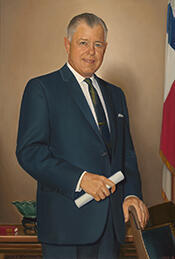
Here you will find contact information for Representative W. R. Poage, including email address, phone number, and mailing address.
| Name | W. R. Poage |
| Position | Representative |
| State | Texas |
| District | 11 |
| Party | Democratic |
| Status | Former Representative |
| Term Start | January 5, 1937 |
| Term End | January 3, 1979 |
| Terms Served | 21 |
| Born | December 28, 1899 |
| Gender | Male |
| Bioguide ID | P000398 |
About Representative W. R. Poage
William Robert Poage (December 28, 1899 – January 3, 1987) was a Texas politician and long-serving member of the United States House of Representatives, where he represented Texas as a Democrat from 1937 to 1979. Over the course of 21 consecutive terms, he won election to the House 21 times and served a total of 41 years, making him one of the more enduring figures in mid‑twentieth‑century congressional history. His tenure in Congress spanned the New Deal, World War II, the Cold War, the civil rights era, and the early years of modern American conservatism.
Poage was born on December 28, 1899, in Waco, McLennan County, Texas, and spent his formative years in Central Texas. He grew up in a region shaped by agriculture and small‑town life, influences that would later define his legislative priorities. Details of his early family life and upbringing are less extensively documented than his public career, but his roots in rural Texas and familiarity with farming communities helped shape his political identity as an advocate for agricultural interests and rural development.
Poage pursued higher education in Texas before entering public service. He attended Baylor University in Waco, where he studied law and prepared for a career that combined legal training with politics. His education coincided with a period of significant change in Texas and the nation, as the state’s economy evolved and national debates over economic reform and federal power intensified. This environment helped orient Poage toward the Democratic Party, which dominated Texas politics in the early twentieth century and provided his eventual path into elective office.
Before his election to Congress, Poage established himself in Texas politics, building a reputation as a reliable representative of agricultural and rural concerns. By the mid‑1930s, as the New Deal reshaped the relationship between the federal government and the states, he sought national office. In 1936, he was elected to the United States House of Representatives, taking his seat in January 1937. Over the next four decades, he participated actively in the legislative process and represented the interests of his Texas constituents during a period of profound national transformation. During his time in office, he was diagnosed with Ménière’s disease, an inner ear disorder that eventually left him deaf in one ear, but he continued to serve despite this significant health challenge.
In Congress, Poage became closely identified with agricultural policy and rural issues. He supported acts designed to help the rural residents of his district, including the farm price supports of the Franklin D. Roosevelt Administration, which were central to New Deal efforts to stabilize farm incomes and agricultural markets. Reflecting both his regional background and his committee influence, he played a key role in shaping legislation affecting farmers, ranchers, and rural communities. He also sponsored the Humane Slaughter Act of 1958, which established federal standards intended to reduce animal suffering in slaughterhouses, and he authored legislation that eventually became the Animal Welfare Act of 1966, the foundational federal law regulating the treatment of animals in research, exhibition, transport, and commerce.
Poage’s most prominent institutional role came through his long association with the House Committee on Agriculture. Rising through the ranks over many years, he ultimately became chairman of the Committee on Agriculture in 1967, a position he held until 1975. As chairman, he exercised substantial influence over farm policy, commodity programs, and rural development initiatives. His tenure ended when he was removed from the chairmanship in 1975 in a revolt by the House Democratic Caucus against the traditional seniority system. Many members of the Caucus considered Poage too conservative for the direction they wished to take, and he was replaced by Representative Tom Foley of Washington, who would later become Speaker of the House. This episode reflected broader generational and ideological shifts within the Democratic Party during the 1970s.
On civil rights and social policy, Poage’s record was complex and often controversial. He was one of the majority of the Texas delegation who declined to sign the 1956 Southern Manifesto, a document opposing the Supreme Court’s decision in Brown v. Board of Education and the desegregation of public schools. Despite this refusal to join the formal manifesto, he consistently opposed major federal civil rights measures. He voted against the Civil Rights Acts of 1957, 1960, 1964, and 1968, as well as against the 24th Amendment to the U.S. Constitution, which abolished the poll tax in federal elections, and the Voting Rights Act of 1965. His resistance to Great Society antipoverty initiatives was also marked by racially charged language; when lobbied by the Lyndon B. Johnson administration to support war on poverty legislation for the opportunities and services it would provide, Poage responded, “Oh, I see! You’re talking’ about the niggers!” This remark, along with his voting record, placed him firmly among the more conservative Southern Democrats of his era on issues of race and social welfare.
Poage retired from Congress at the end of his term in 1979, concluding more than four decades of continuous service in the House of Representatives. In later years, he remained associated with Texas and with the legacy of his long congressional career, particularly in the field of agricultural policy. He died on January 3, 1987, in Waco, Texas, at the age of 87. His career left a complex legacy: he was a powerful advocate for farmers and rural communities and a key figure in federal agricultural legislation, while also being a consistent opponent of landmark civil rights and antipoverty measures that reshaped American society in the mid‑twentieth century.