Senator William Campbell Preston
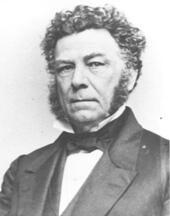
Here you will find contact information for Senator William Campbell Preston, including email address, phone number, and mailing address.
| Name | William Campbell Preston |
| Position | Senator |
| State | South Carolina |
| Party | Whig |
| Status | Former Representative |
| Term Start | December 2, 1833 |
| Term End | March 3, 1843 |
| Terms Served | 2 |
| Born | December 27, 1794 |
| Gender | Male |
| Bioguide ID | P000519 |
About Senator William Campbell Preston
William Campbell Preston (December 27, 1794 – May 22, 1860) was a United States senator from South Carolina, a leading Southern orator, and a member first of the Nullifier Party and later of the Whig Party. Born in Philadelphia, Pennsylvania, he was the son of Francis Preston, a prosperous businessman and politician, and Sarah Buchanan Campbell, daughter of Revolutionary War General William Campbell. He was closely connected to a prominent political family and was a cousin of William Ballard Preston, William Preston, and Angelica Singleton Van Buren, the daughter-in-law of President Martin Van Buren. Preston would later become a significant political figure in South Carolina and the only Whig ever to represent that state in the United States Senate. A slaveowner and vocal opponent of abolitionism, he was deeply aligned with the pro-slavery and states’ rights politics of the antebellum South.
Preston received a privileged education, beginning with private tutors during his childhood. He enrolled at Washington University (later Washington and Lee University) in Lexington, Virginia, and subsequently transferred to South Carolina College in Columbia, South Carolina (later the University of South Carolina). He graduated from South Carolina College in 1812, where he was a member of the Euphradian Society, one of the college’s literary and debating societies that helped shape his skills as an orator. After completing his studies in the United States, he traveled extensively in Europe, broadening his education and perspective before turning to the formal study of law.
Continuing his education abroad, Preston studied law at the University of Edinburgh in Scotland, a leading center of legal and philosophical training in the early nineteenth century. He returned to the United States in 1819 and was admitted to the bar of Virginia in 1820. Preston practiced law in Virginia for approximately two years before relocating in 1822 to Columbia, South Carolina, which would remain his principal home for the rest of his life. His legal practice in Columbia, combined with his family connections and growing reputation as a gifted speaker, provided the foundation for his entry into public life.
Preston’s political career began in South Carolina, where he first sought national office as a candidate for the Twenty-Second Congress, though he was unsuccessful in that bid. He soon gained a place in state politics and was elected to the South Carolina House of Representatives, in which he served from 1828 to 1834. During this period, South Carolina was at the center of the Nullification Crisis, and Preston aligned himself with the Nullifier Party, which advocated the doctrine that a state could nullify federal laws it deemed unconstitutional. His stance reflected the increasingly assertive states’ rights and pro-slavery ideology of the South Carolina political elite.
William Campbell Preston entered the United States Senate in 1833, when he was elected as a Nullifier to fill the vacancy caused by the resignation of Senator Stephen D. Miller. His service in Congress, from 1833 to 1843, occurred during a significant period in American history marked by intense debates over federal power, economic policy, and slavery. During his first year in the Senate, Preston’s notable oratorical gifts brought him to national prominence. The Whig leadership gave him a leading role in the effort to censure President Andrew Jackson, and his performance in that controversy elevated him, in contemporary assessments, “far in advance of most of his colleagues, and side by side with Clay, Webster, Calhoun, and Clayton.” He was reelected in 1837, this time as a member of the Whig Party, and remained in office until his resignation on November 29, 1842, completing two terms in the Senate. Throughout his tenure, he participated actively in the legislative process and represented the interests of his South Carolina constituents. During this period he served as chairman of the Senate Committee on the Library and the Committee on Military Affairs, positions that placed him at the center of debates over national defense and the stewardship of the nation’s cultural and historical resources. He was the only Whig ever to serve as a senator from South Carolina.
After resigning from the Senate, Preston returned to Columbia and resumed the practice of law. His prominence in South Carolina public life led to his selection as president of South Carolina College in 1845. In that role, he oversaw the institution during a time of intellectual and political ferment in the South, helping to shape the education of many young men who would later participate in the region’s political and professional life. He served as president of the college until 1851, when he resigned due to deteriorating health. His later years were spent largely in Columbia, where he remained a respected, if increasingly infirm, elder statesman of South Carolina society.
Preston’s personal life reflected his connections to influential Southern families. He married Maria Eliza Coalter in 1819; following her death, he married Louisa Penelope Davis. His marriages further linked him to the region’s social and political elite. Throughout his life he remained a committed defender of slavery and an outspoken critic of abolitionism, positions that were central to his public identity and to the politics of the state he represented.
William Campbell Preston died in Columbia, South Carolina, on May 22, 1860. He was buried in the churchyard of Trinity Episcopal Church in Columbia, a resting place for many of the state’s leading figures. His name has endured in several commemorations: Lake Preston in South Dakota was named in his honor, and Preston College at the University of South Carolina also bears his name. In July 2021, the university’s Presidential Commission on University History recommended renaming Preston College in light of his record as a slaveowner and opponent of abolitionism, reflecting the continuing reassessment of his legacy in American and South Carolinian history.