Representative William Farrand Prosser
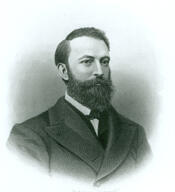
Here you will find contact information for Representative William Farrand Prosser, including email address, phone number, and mailing address.
| Name | William Farrand Prosser |
| Position | Representative |
| State | Tennessee |
| District | 5 |
| Party | Republican |
| Status | Former Representative |
| Term Start | March 4, 1869 |
| Term End | March 3, 1871 |
| Terms Served | 1 |
| Born | March 16, 1834 |
| Gender | Male |
| Bioguide ID | P000550 |
About Representative William Farrand Prosser
William Farrand Prosser (March 16, 1834 – September 23, 1911) was an American politician, Civil War officer, and civic leader who served as a Republican Representative from Tennessee in the United States Congress from 1869 to 1871 and later became a prominent figure in the early political and historical development of Washington State. He was born on March 16, 1834, in Williamsport, Pennsylvania, the son of David and Rachel Williams Prosser, Welsh immigrants. When he was very young, his family moved to Johnstown, Pennsylvania, where he received a limited formal education. Despite these modest beginnings, he taught school and studied law, although he never entered legal practice. In 1854 he moved west to California, where he engaged in mining during the height of the Gold Rush era.
With the outbreak of the American Civil War in 1861, Prosser returned to Pennsylvania to enter the Union Army. Over the course of the conflict he was promoted through the ranks to the grade of colonel and served throughout the war. He saw action in numerous major engagements, including the Battle of Shiloh, the Battle of Stones River, and the Siege of Knoxville, and he was briefly held as a prisoner of war in 1862. His wartime service established his reputation as a committed Union officer and provided the foundation for his later public career.
After the war, Prosser settled on a farm near Nashville, Tennessee, where he entered state politics during the Reconstruction era. He was elected to the Tennessee House of Representatives, serving from 1867 to 1869. As a member of the Republican Party, he was then elected to the Forty-first United States Congress and represented Tennessee in the U.S. House of Representatives from March 4, 1869, to March 3, 1871. During this single term in Congress, he participated in the legislative process at a critical moment in American history, representing the interests of his Tennessee constituents as the nation grappled with the political, social, and economic consequences of the Civil War and Reconstruction.
Following his congressional service, Prosser remained active in public and civic affairs in Tennessee. He served as postmaster of Nashville from 1872 to 1875 and became a director of the Tennessee, Edgefield & Kentucky Railroad, reflecting his engagement with the region’s commercial and transportation development. In 1872 he was appointed one of the state commissioners to the Centennial Exposition at Philadelphia, and in 1873 he was sent on a special mission to assist in arranging the participation of European countries in that international celebration of American independence and industrial progress. He also entered the field of journalism, publishing the Nashville Republican for several years, thereby contributing to the political and public discourse of the period.
In 1879, Prosser’s career took him to the Pacific Northwest when President Rutherford B. Hayes appointed him special agent of the United States Department of the Interior for Oregon, Washington, and Idaho. He moved to Washington Territory that same year. On April 6, 1880, he married Flora Louise Thornton in Seattle, and in 1882 he settled in the Yakima River valley, where he founded the town that would bear his name, Prosser, Washington. He and his wife had three children: William Thornton Prosser, Margaret Helen Prosser, and Mildred Cyrenia Prosser. As a community founder and federal official, he played a significant role in the early development of the region.
Prosser became an important figure in the political life of what would become the State of Washington. He was a delegate to the first Washington State Constitutional Convention in 1889, participating in the framing of the state’s fundamental law as it prepared for admission to the Union. He was one of the founders of the Washington State Historical Society and served for a time as its president, helping to institutionalize the preservation and study of the region’s past. In 1903 he authored a two-volume work, A History of the Puget Sound Country, which reflected his deep interest in and knowledge of the history and growth of the Pacific Northwest.
In addition to his historical and literary work, Prosser held several important municipal and state positions in Washington. He served as chairman of the state harbor line commission, contributing to the regulation and development of Washington’s waterways and ports. He was mayor of North Yakima from 1890 to 1903, guiding the city through a period of growth and consolidation, and later served as city treasurer of Seattle from 1908 to 1910, overseeing key aspects of the city’s financial administration during a time of rapid urban expansion.
William Farrand Prosser died on September 23, 1911, at the age of 77. He was interred at Lake View Cemetery in Seattle, Washington. His life spanned the era from antebellum America through the Civil War, Reconstruction, and the settlement and statehood of the Pacific Northwest, and his career encompassed service as a Union colonel, Tennessee legislator and congressman, federal official, town founder, municipal officer, and historian.