Representative William Stuart Reyburn
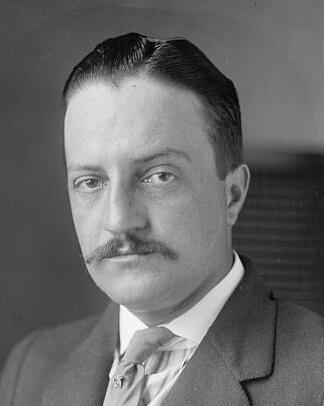
Here you will find contact information for Representative William Stuart Reyburn, including email address, phone number, and mailing address.
| Name | William Stuart Reyburn |
| Position | Representative |
| State | Pennsylvania |
| District | 2 |
| Party | Republican |
| Status | Former Representative |
| Term Start | April 4, 1911 |
| Term End | March 3, 1913 |
| Terms Served | 1 |
| Born | December 17, 1882 |
| Gender | Male |
| Bioguide ID | R000169 |
About Representative William Stuart Reyburn
William Stuart Reyburn (December 17, 1882 – July 25, 1946) was an American politician and lawyer who served as a Republican member of the U.S. House of Representatives from Pennsylvania’s 2nd congressional district from 1911 to 1913. He also served in the Pennsylvania House of Representatives for Philadelphia County from 1909 to 1911, contributing to the legislative process at both the state and federal levels during a significant period in American political history.
Reyburn was born on December 17, 1882, in Philadelphia, Pennsylvania, to Margaret (née Crozier) and John E. Reyburn. His father was a prominent Republican politician who served as a U.S. Representative and later as mayor of Philadelphia, placing William Stuart Reyburn in a family deeply engaged in public life. Raised in this politically active environment, he received his early education at The Hill School in Pottstown, Pennsylvania, a well-regarded preparatory institution that served as a foundation for his subsequent academic and professional pursuits.
Reyburn pursued higher education at Yale University, enrolling in the Sheffield Scientific School and graduating in 1904. While at Yale, he was a member of the St. Anthony Hall society, reflecting his participation in the social and intellectual life of the university. After graduation, he spent a year traveling abroad and was a member of President William Howard Taft’s party that visited the Philippines, Japan, and China, an experience that exposed him to international affairs and the expanding global role of the United States in the early twentieth century.
Following his travels, Reyburn undertook legal studies in several prominent institutions. He studied law at Columbia University for two years and then continued his legal education at the University of Pennsylvania Law School, from which he graduated in 1907. He also completed work in the law department of Georgetown University in Washington, D.C. Reyburn was admitted to the bar in 1908 and commenced the practice of law in both Philadelphia, Pennsylvania, and Washington, D.C., establishing himself professionally before entering elective office.
Reyburn’s political career began in the Pennsylvania House of Representatives, where he served as a Republican member representing Philadelphia County. He served in the state legislature from 1909 to 1911, and, according to contemporary accounts, he held the seat in two nonconsecutive terms from 1909 to 1910 and from 1911 to 1912, resigning on May 25, 1911. During his tenure in the Pennsylvania House, he supported measures such as the Pension Bill, which provided state funds to veterans of the American Civil War from Pennsylvania, demonstrating an interest in veterans’ welfare and public support for those who had served.
On May 23, 1911, Reyburn was elected as a Republican to the Sixty-second Congress to fill the vacancy caused by the death of Representative Joel Cook, thereby beginning his service in the U.S. House of Representatives. He represented Pennsylvania’s 2nd congressional district from May 23, 1911, to March 3, 1913, serving one full term in Congress. As a member of the House of Representatives during a period marked by progressive-era reforms and shifting national priorities, Reyburn participated in the democratic process and represented the interests of his Philadelphia constituents. He declined to be a candidate for renomination in 1912, concluding his federal legislative career after a single term.
In his personal life, Reyburn married Georgie Fontaine Maury on June 10, 1911, and the couple had two sons. Their marriage ended in 1918 when Georgie obtained a divorce on the grounds of “intolerable cruelty.” Reyburn later married Martha Gardner. He was an Episcopalian and took part in the social and civic life of his era through membership in organizations such as the Racket Club in Philadelphia, the Freemasons, and the Union League, affiliations that reflected his standing in Philadelphia’s professional and political circles.
After leaving Congress, Reyburn retired from active business pursuits rather than returning to an extensive public career. He eventually settled in Aiken, South Carolina, and later moved to his estate, “Black Hill,” in Old Lyme, Connecticut. William Stuart Reyburn died on July 25, 1946, in New Haven, Connecticut. He was interred at Laurel Hill Cemetery in Philadelphia, Pennsylvania, returning in death to the city that had shaped his upbringing, legal practice, and political service.