Representative William Francis Rhea
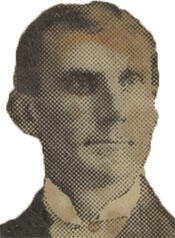
Here you will find contact information for Representative William Francis Rhea, including email address, phone number, and mailing address.
| Name | William Francis Rhea |
| Position | Representative |
| State | Virginia |
| District | 9 |
| Party | Democratic |
| Status | Former Representative |
| Term Start | December 4, 1899 |
| Term End | March 3, 1903 |
| Terms Served | 2 |
| Born | April 20, 1858 |
| Gender | Male |
| Bioguide ID | R000183 |
About Representative William Francis Rhea
William Francis Rhea (April 20, 1858 – March 23, 1931) was a U.S. Representative from Virginia, a Virginia state court judge, and a member of the Virginia State Corporation Commission. A Democrat, he served two terms in the United States House of Representatives from 1899 to 1903, representing a district in southwestern Virginia during a significant period in American political and economic development.
Rhea was born on a farm near Bristol, Virginia, in Washington County. He was educated in rural and private schools in the area, reflecting the limited but improving educational opportunities available in post–Civil War southwestern Virginia. Seeking further education, he attended King College in Bristol, Tennessee, from which he graduated in 1878. He then studied law, and after completing his legal training was admitted to the bar in 1879. Rhea commenced the practice of law in Bristol, Virginia, establishing himself professionally in the border community that linked Virginia and Tennessee.
Rhea’s public career began at an early age in the judicial system of his native region. He served as judge of the county court for Washington County, Virginia, from 1880 to 1885, a position that placed him at the center of local legal and administrative affairs during a period of regional rebuilding and modernization. In 1885 he was elected to the Senate of Virginia, where he served until 1888, participating in state-level legislative deliberations as Virginia continued to adjust to the political and economic realities of the post-Reconstruction era. After his service in the state senate, he became judge of the Corporation Court for the City of Bristol, Virginia, further solidifying his reputation in judicial and civic matters. He resigned this judgeship in 1895 and resumed the private practice of law in Bristol.
Rhea entered national politics at the close of the nineteenth century. He was elected as a Democrat to the Fifty-sixth and Fifty-seventh Congresses, serving from March 4, 1899, to March 3, 1903. In both elections he defeated the incumbent, James A. Walker, in a district where partisan competition between Democrats and Republicans was intense. Walker contested the result of both elections, reflecting the contentious nature of politics in southwestern Virginia at the time. During proceedings related to the 1898 election contest, a deposition led to a violent confrontation in which a shootout occurred and Walker was wounded, an episode that underscored the high stakes and personal animosities involved in these campaigns. The contest of the 1900 election ended with Walker’s death in 1901. Throughout his two terms, Rhea participated in the legislative process as a member of the House of Representatives, representing the interests of his constituents and contributing to congressional deliberations during a period marked by industrial expansion, the aftermath of the Spanish-American War, and debates over economic and regulatory policy.
Rhea was an unsuccessful candidate for reelection in 1902 to the Fifty-eighth Congress, losing to Republican Campbell Slemp. Following his defeat, he returned to the practice of law in Bristol, Virginia, continuing his legal career in the community where he had long been active. His experience in both state and national office, as well as in the judiciary, positioned him as an influential figure in regional legal and political circles.
In 1908, Rhea’s career shifted back toward public service when he was appointed a member of the Virginia State Corporation Commission, the powerful regulatory body overseeing railroads, public utilities, and corporate activities within the Commonwealth. He moved to Richmond, Virginia, upon his appointment and served on the Commission until 1925, participating in the regulation of key sectors of Virginia’s economy during a period of rapid modernization and growth. In Richmond he made his home across the street from the Robert E. Lee camp for Confederate veterans; the house he occupied, built in 1922 on Grove Avenue, later became known as the “Museum District Bed and Breakfast,” located near the Virginia Museum of Fine Arts.
William Francis Rhea died in Richmond on March 23, 1931. He was interred in Hollywood Cemetery, the historic burial ground for many of Virginia’s political and military leaders. His papers from his years in Congress, preserved in collections such as those at the Library of Virginia and the University of Virginia, document his role as a legislator, jurist, and regulator who helped shape public life in Virginia from the late nineteenth century into the early twentieth century.