Senator William Cabell Rives
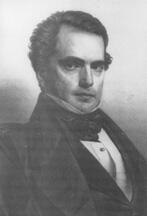
Here you will find contact information for Senator William Cabell Rives, including email address, phone number, and mailing address.
| Name | William Cabell Rives |
| Position | Senator |
| State | Virginia |
| Party | Whig |
| Status | Former Representative |
| Term Start | December 1, 1823 |
| Term End | March 3, 1845 |
| Terms Served | 7 |
| Born | May 4, 1793 |
| Gender | Male |
| Bioguide ID | R000285 |
About Senator William Cabell Rives
William Cabell Rives (May 4, 1793 – April 25, 1868) was an American lawyer, planter, politician, and diplomat from Virginia who served in both houses of the United States Congress and twice as United States Minister to France. Initially aligned with Andrew Jackson and the Democratic Party and later a member of the Whig Party, he was a prominent figure in Virginia and national politics in the antebellum era and a member of the First Families of Virginia. Over the course of his national career, he served in the U.S. House of Representatives, in the United States Senate from 1823 to 1845, and, during the American Civil War, as a delegate to the Provisional Confederate Congress and the Confederate House of Representatives.
Rives was born at “Union Hill,” the James River plantation estate of his grandfather, Colonel William Cabell, in what was then Amherst County, Virginia, and is now Nelson County. He was the son of Robert Rives (1764–1845), originally of Sussex County, and Margaret Cabell (c. 1770–1815). His father had served in the patriot army during the Yorktown campaign of the American Revolution and afterward became a successful commission merchant, first as Robert Rives and Company and later as Brown, Rives and Company, counting Thomas Jefferson among his clients. In 1802, Robert Rives established Oak Ridge Plantation in Nelson County, where both he and his wife were later buried. At his death in 1845, Robert Rives’s personal estate was valued at about $100,000 (approximately $3.19 million in 2024), including lands in Albemarle, Buckingham, Campbell, and Nelson Counties. The family produced several legislators, including William Cabell Rives and his brothers Robert Rives Jr. (1798–1869) and future Virginia Court of Appeals and U.S. District Judge Alexander Rives. A distant nephew, Alexander Brown, later wrote notable works on early Virginia history, including The Cabells and Their Kin.
Educated by private tutors in keeping with his family’s status, Rives attended Hampden–Sydney College and then the College of William & Mary in Williamsburg. He subsequently studied law under Thomas Jefferson at Monticello. During the War of 1812 he joined the local militia that helped defend Virginia, gaining early exposure to public service in a time of national crisis. In 1814 he was admitted to the bar at Richmond and began practicing law in Nelson County. His legal training and family connections quickly propelled him into public life.
In 1819, Rives married Judith Page Walker (1802–1882), daughter of Francis Walker and likewise a member of the First Families of Virginia. After their marriage he moved his residence to her family estate, Castle Hill, near Cobham in Albemarle County, which remained his primary home for the rest of his life. The couple had several children who continued the family’s prominence in law, diplomacy, engineering, and letters. Their eldest son, Francis Robert Rives (1821–1891), became a lawyer and diplomat and, after returning from foreign service in 1845, married Matilda Antonia Barclay, granddaughter of Thomas Henry Barclay; they lived in Manhattan and Dutchess County, New York, and their son George Lockhart Rives (1849–1917) also became a lawyer and diplomat, though he did not own slaves. Their second son, William C. Rives Jr. (1826–1890), pursued a legal career and operated Virginia plantations using enslaved labor, including the Cobham Park Estate near Charlottesville; his son, also William Cabell Rives (1850–1938), later donated the Peace Cross and supported construction of the Washington National Cathedral. Another son, Alfred Landon Rives, became a prominent engineer, working on the U.S. Capitol and later for railroads, and his granddaughter Amélie Rives achieved literary fame as a novelist, best known for The Quick or the Dead? (1888). The Rives daughters included Grace Rives (b. 1822), Amelia Rives Sigourney (1832–1873), and Emma Rives (1835–1892). Like his father and many of his contemporaries, William Cabell Rives operated his plantations with enslaved labor; the 1830 federal census recorded him as owning 26 enslaved men and 26 enslaved women in Albemarle County, rising to 54 enslaved people in 1850 and 68 in 1860, while his son William Jr. owned 24 enslaved people and his brother or nephew Robert Rives Jr. owned 43 in 1850 and 70 a decade later.
Rives’s political career began in state politics. He first came to public notice as one of Nelson County’s delegates to the Virginia constitutional convention of 1816. He then won election to the Virginia House of Delegates as one of Nelson County’s representatives, serving from 1817 to 1819. After moving to Albemarle County, he was elected one of its delegates in 1822; during that session his younger brother, Robert Rives Jr., simultaneously served as one of Nelson County’s delegates. Initially identified with the Jacksonian Democrats, Rives gained a reputation as a capable legislator and advocate of Virginia interests. He did not seek re-election to the House of Delegates because, in November 1822, voters in Virginia’s 10th congressional district, which included both Nelson and Albemarle Counties, elected him to the United States House of Representatives.
Rives served in the U.S. House from 1823 to 1829, participating in the Twenty-third through Twenty-fifth Congresses during a formative period in the nation’s political realignment. In Congress he aligned with Andrew Jackson’s supporters and took part in debates over internal improvements, tariffs, and the evolving role of the federal government. In 1829 President Jackson nominated him as United States Minister to France, marking the beginning of his diplomatic career. When Rives arrived in Paris, relations between the United States and France were strained over long-standing American claims for compensation for ships and cargoes seized during the Napoleonic Wars. The French Navy had captured American vessels and sent them to Spanish ports, holding their crews without formal charges and compelling them to labor. Secretary of State Martin Van Buren regarded the situation as nearly hopeless, but Rives successfully negotiated a reparations treaty signed on July 4, 1831, under which France agreed to pay 25,000,000 francs (about $5,000,000) to the United States for spoliation claims. Although internal financial and political difficulties in France delayed payment, persistent American pressure eventually secured fulfillment of the agreement in February 1836. Rives’s success in this matter enhanced his national standing, and in 1835 he was put forward as a candidate for the Democratic vice-presidential nomination, though the party ultimately chose Richard M. Johnson despite Martin Van Buren’s preference for Rives.
After his return from France, Rives entered the United States Senate, where he would serve, with interruptions, from the early 1830s until 1845. Virginia legislators elected and twice re-elected him to the Senate, initially as a Jacksonian Democrat and later as a Whig. He first entered the Senate to succeed conservative Senator Littleton Tazewell. In 1834, however, Rives resigned his seat because he opposed the proposed senatorial censure of President Jackson for removing federal deposits from the Bank of the United States, a central controversy of the Jacksonian era. The next Virginia legislature again elected him to the Senate, this time to replace John Tyler, so that he did not technically succeed himself. Over the course of seven terms in Congress—combining his House and Senate service—Rives contributed to the legislative process during a period of intense partisan conflict and institutional development. By his third Senate term he had joined the Whig Party and supported the successful effort to expunge the earlier censure of Jackson from the Senate’s records. Throughout his Senate career, from 1823 to 1845, he represented Virginia’s interests in debates over banking, tariffs, and sectional issues, and he was regarded as a moderate voice seeking compromise during an increasingly polarized era.
In addition to his congressional and diplomatic duties, Rives was active in Virginia’s intellectual and educational life. He served on the Board of Visitors of the University of Virginia from 1834 to 1849, helping guide the institution founded by his former mentor, Thomas Jefferson. He was for many years president of the Virginia Historical Society, promoting the study and preservation of the Commonwealth’s past. In 1831 he was elected a member of the American Philosophical Society, reflecting his standing in the broader American intellectual community. Rives also wrote extensively, publishing works such as Life and Character of John Hampden (1845), Ethics of Christianity (1855), and the four-volume Life and Times of James Madison (Boston, 1859–68), a major contribution to the historiography of the early republic. His wife, Judith, likewise published several volumes, including The Canary Bird (1835), Tales and Souvenirs of a Residence in Europe (1842), Epitome of the Holy Bible (1846), and Home and the World (1857).
Rives returned to diplomatic service in 1849, when he again accepted appointment as United States Minister to France. Confirmed by the Senate, he served in Paris until 1853, representing American interests during the early years of the Second French Empire under Napoleon III. After this second mission he returned to his plantations in Virginia, resuming the life of a planter and man of letters. As sectional tensions mounted in the 1850s, he sought to avert disunion. In 1860 he endorsed the call for a Constitutional Union Party convention and received most of Virginia’s first-ballot votes for president at that gathering, reflecting his reputation as a Unionist conservative. In early 1861 he served as one of Virginia’s unofficial delegates to the Peace Conference in Washington, D.C., which attempted unsuccessfully to forestall civil war through constitutional compromise designed in part to preserve slavery.
Although Rives spoke against secession, he remained loyal to Virginia after it left the Union. During the American Civil War he served as a delegate to the Provisional Confederate Congress from 1861 to 1862 and later in the Second Confederate Congress from 1864 to 1865, sitting in the Confederate House of Representatives. In these roles he participated in the legislative affairs of the Confederate government while the war devastated much of the South, including Virginia. After the collapse of the Confederacy, he retired from public life to Castle Hill. William Cabell Rives died there on April 25, 1868, and was buried in the family cemetery on the estate. His legacy endured in Virginia politics, in American diplomatic history, and in the institutions and writings he helped shape. The town of Rivesville, West Virginia, was named in his honor.