Senator William Henry Roane
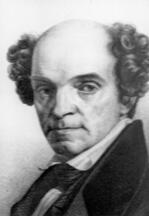
Here you will find contact information for Senator William Henry Roane, including email address, phone number, and mailing address.
| Name | William Henry Roane |
| Position | Senator |
| State | Virginia |
| Party | Democratic |
| Status | Former Representative |
| Term Start | December 4, 1815 |
| Term End | March 3, 1841 |
| Terms Served | 2 |
| Born | September 17, 1787 |
| Gender | Male |
| Bioguide ID | R000293 |
About Senator William Henry Roane
William Henry Roane (September 17, 1787 – May 11, 1845) was a Virginia politician who served in the Virginia House of Delegates, the United States House of Representatives, and the United States Senate. A member of a prominent political family, he was the son of Judge Spencer Roane, a leading jurist and Jeffersonian Republican, and the grandson of Founding Father and orator Patrick Henry. Born in Virginia, Roane grew up in an environment steeped in law, politics, and public affairs, which helped shape his later career in state and national government.
Roane pursued preparatory studies as a young man in Virginia, receiving the education customary for members of the state’s political elite in the early nineteenth century. Although specific details of his formal schooling are not extensively documented, his subsequent legislative and congressional service reflected the grounding in law, rhetoric, and public policy that he likely absorbed both through his family connections and his early studies.
Roane began his public career in the Virginia House of Delegates, where he served from 1812 to 1815. Entering politics during the War of 1812, he participated in state legislative deliberations at a time when Virginia was grappling with questions of national defense, economic disruption, and the balance between state and federal authority. His service in the House of Delegates marked his emergence as a figure in Virginia’s Jeffersonian Republican political tradition, following in the footsteps of his father and grandfather.
In 1814, Roane was elected as a Democratic-Republican to the United States House of Representatives. He served in the Fourteenth Congress from 1815 to 1817, representing Virginia during the immediate post–War of 1812 period, when the nation was addressing issues of war finance, military establishment, and westward expansion. Although he served only a single term and was not a candidate for reelection in 1816, his time in the House placed him within the national legislative arena at a formative moment in the early republic. After leaving the House of Representatives, Roane returned to state service as a member of the executive council of Virginia, an important advisory body to the governor that played a role in the administration of state affairs.
Roane later resumed national office in the United States Senate. A member of the Democratic Party, he was elected as a Democrat to the Senate to fill a vacancy and served as a Senator from Virginia in the United States Congress from 1837 to 1841. His Senate tenure thus encompassed one full term in office during a significant period in American history, including the presidencies of Martin Van Buren and the economic turmoil surrounding the Panic of 1837. While in the Senate, Roane was chairman of the Committee on the District of Columbia from 1837 to 1839, where he participated in overseeing legislative matters affecting the federal capital. As a member of the Senate, William Henry Roane contributed to the legislative process, participated in the democratic process, and represented the interests of his Virginia constituents. After an unsuccessful bid for reelection, his service in the Senate concluded in 1841.
Following his departure from Congress, Roane withdrew from national politics and engaged in agricultural pursuits in Virginia. He spent his later years managing his estate and remaining part of the planter class that formed a central element of Virginia’s social and economic structure in the antebellum period. William Henry Roane died on May 11, 1845, at Tree Hill, Virginia. He was interred at Lyons Family Cemetery in Hanover County, Virginia, closing the life of a public servant who had carried forward the political legacy of one of Virginia’s most distinguished families through service at both the state and national levels.