Representative William Erigena Robinson
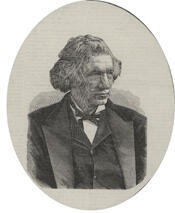
Here you will find contact information for Representative William Erigena Robinson, including email address, phone number, and mailing address.
| Name | William Erigena Robinson |
| Position | Representative |
| State | New York |
| District | 2 |
| Party | Democratic |
| Status | Former Representative |
| Term Start | March 4, 1867 |
| Term End | March 3, 1885 |
| Terms Served | 3 |
| Born | May 6, 1814 |
| Gender | Male |
| Bioguide ID | R000355 |
About Representative William Erigena Robinson
William Erigena Robinson (May 6, 1814 – January 23, 1892), often referred to by his pseudonym “Richelieu,” was an Irish-American journalist, lawyer, and Democratic politician from New York. He represented Brooklyn as a member of the United States House of Representatives for a total of three terms, serving from 1867 to 1869 and again from 1881 to 1885. Over the course of his congressional service, which spanned critical years in the post–Civil War and Gilded Age eras, he participated in the legislative process and represented the interests of his constituents in New York.
Robinson was born on May 6, 1814, in Unagh, near Cookstown, County Tyrone, on the island of Ireland, which at that time formed part of the United Kingdom. He received his early education at the classical school in Cookstown, where he studied the traditional curriculum of languages and the liberal arts. In 1834 he attended Belfast College, furthering his academic preparation before deciding to seek broader opportunities abroad. In November 1836 he emigrated to the United States and settled in New York City, joining the growing Irish immigrant community that was beginning to shape the political and cultural life of the city.
Pursuing higher education soon after his arrival, Robinson enrolled at Yale College in New Haven, Connecticut. He graduated from Yale in 1841, an achievement that distinguished him among Irish immigrants of his generation. Following his graduation, he remained associated with the institution, lecturing for two years with the Yale Law School. This experience deepened his knowledge of law and public affairs and helped prepare him for his later dual career in journalism and legal practice.
Robinson’s professional life first came to prominence in the field of journalism. In 1843 he became assistant editor of the New York Tribune, one of the leading newspapers of the era. That same year he was appointed the Tribune’s only Washington correspondent, a role in which he reported on national politics from the capital and wrote under the pen name “Richelieu.” His Washington correspondence, prepared not only for the Tribune but also for other newspapers, established him as a well-known political observer and commentator. While continuing his journalistic work, he studied law and was admitted to the New York bar in 1854. He then commenced the practice of law in New York City, combining legal work with his ongoing interest in public affairs.
During the Civil War period, Robinson entered federal service in an administrative capacity. In 1862 President Abraham Lincoln appointed him assessor of internal revenue for the third district of New York, a position created as part of the Union government’s effort to finance the war through new federal taxation. His work as assessor of internal revenue further acquainted him with the machinery of government and the complexities of public finance at a time of national crisis.
Robinson’s formal political career began with his election to Congress as a Democrat. In 1866 he was elected to represent Downtown Brooklyn in the United States House of Representatives, defeating Republican Simeon B. Chittenden. He served in the Fortieth Congress from 1867 to 1869, a significant period in American history marked by Reconstruction and the redefinition of federal and state relations in the aftermath of the Civil War. As a member of the House of Representatives, William Erigena Robinson participated in the democratic process and contributed to the legislative work of the chamber while representing the interests of his Brooklyn constituents. At the conclusion of this first term in 1869, he resumed the practice of law in New York City.
Robinson remained active in politics throughout the 1870s and 1880s. In 1872 he ran for Congress as an independent Democrat but finished third, reflecting the factional divisions within the Democratic Party and the competitive political environment in Brooklyn. In 1880 he returned to the Democratic fold and was again nominated by the party for Congress. That year he defeated incumbent Daniel O’Reilly, an independent Democrat, and reclaimed a seat in the House of Representatives. He served in the Forty-seventh and Forty-eighth Congresses from 1881 to 1885 and was re-elected in 1882. Over these additional two terms, he continued to take part in the legislative process during a period characterized by rapid industrialization, urban growth, and contentious debates over economic and social policy. In total, William Erigena Robinson served three terms in Congress between 1867 and 1885, all as a member of the Democratic Party.
After completing his final term in 1885, Robinson again returned to private life and the practice of law, but he did not entirely withdraw from electoral politics. He sought a return to Congress twice more, running as an independent Democrat in 1888 and then as a Republican in 1890. These later campaigns were unsuccessful, illustrating both his enduring personal ambition and the shifting partisan alignments of the late nineteenth century. Despite these defeats, his long engagement with journalism, law, and public office left a distinct mark on the political life of Brooklyn and New York.
William Erigena Robinson died in Brooklyn, New York, on January 23, 1892. He was interred in Green-Wood Cemetery in Brooklyn, a resting place for many of the city’s prominent nineteenth-century figures. His career, spanning immigration from Ireland, higher education at Yale, influential work as a Washington correspondent, federal administrative service, and three terms in the United States House of Representatives, reflected the opportunities and challenges faced by Irish-American politicians in the decades following the Civil War.