Representative William R. Roy
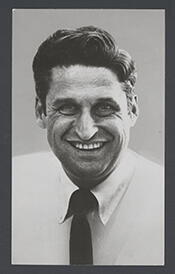
Here you will find contact information for Representative William R. Roy, including email address, phone number, and mailing address.
| Name | William R. Roy |
| Position | Representative |
| State | Kansas |
| District | 2 |
| Party | Democratic |
| Status | Former Representative |
| Term Start | January 21, 1971 |
| Term End | January 3, 1975 |
| Terms Served | 2 |
| Born | February 23, 1926 |
| Gender | Male |
| Bioguide ID | R000484 |
About Representative William R. Roy
William Robert Roy (February 23, 1926 – May 26, 2014), also known as Bill Roy, was a United States Representative from Kansas, a physician, attorney, and columnist for The Topeka Capital-Journal. A member of the Democratic Party, he served two terms in the U.S. House of Representatives from 1971 to 1975 and was the Democratic nominee for the United States Senate from Kansas in the 1974 and 1978 elections, though he was unsuccessful in both races. His congressional service occurred during a significant period in American history, and he participated actively in the legislative process while representing the interests of his Kansas constituents.
Roy was born in Bloomington, Illinois, and raised in nearby Lexington, where he attended the public schools. He pursued higher education at Illinois Wesleyan University, earning a Bachelor of Science degree in 1945. He then entered Northwestern University Medical School in Chicago, receiving a Bachelor of Medicine in 1948 and a Doctor of Medicine (M.D.) in 1949. After medical school, he completed a residency in obstetrics and gynecology at Detroit Receiving Hospital, preparing for a career as a specialist in women’s health.
Following his medical training, Roy entered military service during the early years of the Cold War. He served in the United States Air Force from 1953 to 1955 as a medical officer, stationed at Forbes Air Force Base in Topeka, Kansas. He was discharged with the rank of captain. After leaving the Air Force, he settled permanently in Topeka, where he practiced medicine as an obstetrician-gynecologist from 1955 to 1970. During these years he became well known in the community as a physician and civic figure, and he developed a growing interest in public policy and politics.
Roy’s political career took shape at the end of the 1960s. Originally a Republican, he changed his party registration in 1970 to run as a Democrat for Congress. That same year he also completed legal studies, earning a Juris Doctor (J.D.) from Washburn University School of Law in Topeka in 1970, adding legal training to his medical background. In the 1970 elections he was elected as a Democrat to the Ninety-second Congress, and he was reelected to the Ninety-third Congress, serving from January 3, 1971, to January 3, 1975. As a member of the House of Representatives, William Robert Roy contributed to the legislative process during his two terms in office, participating in debates and votes during a period marked by the Vietnam War, the Nixon administration, and the unfolding Watergate scandal.
In 1974 Roy chose not to seek reelection to the House and instead ran for the United States Senate from Kansas. In a bitter and closely watched race, he challenged incumbent Republican Senator Bob Dole. Roy lost by only a few thousand votes, the narrowest margin of Dole’s congressional career. Reflecting on his decision to run for the Senate in a 1996 interview with PBS, Roy stated that he was “far from an admirer of Bob Dole” and viewed Dole as “pretty much a hatchet man, both in Kansas, and as far as President Nixon was concerned,” and that he saw the race as “a wonderful opportunity to take him out of politics,” which he believed was important at that time. Roy again became the Democratic nominee for the U.S. Senate in 1978, but he was defeated by Republican candidate Nancy Kassebaum.
After his 1974 and 1978 Senate campaigns, Roy resumed the practice of medicine in Topeka, continuing as a physician until 1989. He remained politically engaged and sought a rematch with Senator Kassebaum in 1990. He won the Democratic primary that year but subsequently withdrew from the race, citing personal issues; the Democratic nomination then passed to the primary runner-up, Dick Williams. In addition to his electoral efforts, Roy served as a member of the Kansas Board of Regents, contributing to the oversight and governance of the state’s public higher education system.
Beginning in 1989, Roy embarked on a long second career as a writer and commentator. He became a regular columnist for The Topeka Capital-Journal, where his columns, often reflecting a liberal perspective, addressed state and national politics, health policy, and social issues. He was an outspoken supporter of abortion rights and a critic of many policies of President George W. Bush. Roy also wrote for The Topeka Metro News, and his 2001–2002 columns there helped rally public sentiment against the proposed sale of Kansas Blue Cross Blue Shield to Anthem of Indianapolis, contributing to the defeat or reconsideration of that transaction. His commentary further established him as an influential voice in Kansas public life well after his formal political career ended.
William Robert Roy died in Topeka, Kansas, on May 26, 2014, of congestive heart failure. Through his work as a physician, legislator, Senate candidate, regent, and columnist, he played a notable role in Kansas civic and political affairs over the course of several decades.