Representative Bill Sarpalius
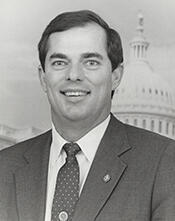
Here you will find contact information for Representative Bill Sarpalius, including email address, phone number, and mailing address.
| Name | Bill Sarpalius |
| Position | Representative |
| State | Texas |
| District | 13 |
| Party | Democratic |
| Status | Former Representative |
| Term Start | January 3, 1989 |
| Term End | January 3, 1995 |
| Terms Served | 3 |
| Born | January 10, 1948 |
| Gender | Male |
| Bioguide ID | S000066 |
About Representative Bill Sarpalius
William Clarence Sarpalius (born January 10, 1948) is an American politician and lobbyist who served as a Representative from Texas in the United States Congress from 1989 to 1995. A member of the Democratic Party, he represented Texas’s 13th congressional district, a large, predominantly rural tract of land stretching from the Texas Panhandle eastward to Wichita Falls. Over the course of three terms in office, Sarpalius contributed to the legislative process during a significant period in American history, participating in the democratic process and representing the interests of his constituents in the U.S. House of Representatives.
Sarpalius was born in 1948 and spent his early years in Texas, where he experienced a modest upbringing that would later inform his political outlook and commitment to public service. Growing up in a region shaped by agriculture, ranching, and the oil industry, he became familiar with the economic and social issues facing rural communities in the Panhandle and North Texas. These formative experiences helped shape his understanding of the challenges confronting working families and small communities, and they later influenced his priorities as a legislator.
As a young man, Sarpalius pursued his education in Texas, preparing for a career that would eventually lead him into public life. His educational path, combined with his early work experiences, provided him with exposure to both the private and public sectors. This background helped him develop an appreciation for the interplay between government policy and local economies, particularly in areas such as agriculture, transportation, and regional development, which were central concerns in his home district.
Before his election to Congress, Sarpalius built a career that combined elements of public service, political engagement, and advocacy. He became active in Democratic Party politics in Texas, aligning himself with the concerns of rural and small-town voters and gaining experience in the practical workings of government and campaigns. Through this involvement, he developed a reputation as a representative voice for his region, which positioned him to seek higher office and to bring local issues to the national stage.
In 1988, Sarpalius was elected to the United States House of Representatives as a Democrat from Texas’s 13th congressional district and took office on January 3, 1989. He served three consecutive terms, remaining in Congress until January 3, 1995. During this period, which spanned the final years of the Cold War and the early post–Cold War era, he participated in debates and votes on a wide range of national issues, including economic policy, defense, and domestic programs. Representing a district that encompassed the Texas Panhandle and extended eastward to Wichita Falls, he focused particular attention on matters affecting agriculture, rural infrastructure, and regional economic development, working to ensure that the needs of his constituents were reflected in federal policy.
Sarpalius’s tenure in Congress coincided with significant political and economic transitions in both Texas and the nation. As a member of the House of Representatives, he engaged in the legislative process through committee work, floor debates, and constituent services, seeking to balance local priorities with broader national concerns. His service from 1989 to 1995 placed him at the center of discussions over budgetary policy, trade, and the evolving role of the federal government in supporting rural communities and key industries in his district.
After leaving Congress in 1995, Sarpalius continued his involvement in public affairs as a lobbyist and consultant, drawing on his legislative experience and knowledge of federal policymaking. In this capacity, he worked to represent the interests of clients before governmental bodies, particularly on issues related to the sectors and regions he had long served. His post-congressional career reflected a continued engagement with the political process and an ongoing connection to the policy areas that had defined his years in office.