Representative William Lawrence Scott
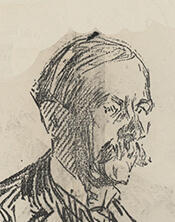
Here you will find contact information for Representative William Lawrence Scott, including email address, phone number, and mailing address.
| Name | William Lawrence Scott |
| Position | Representative |
| State | Pennsylvania |
| District | 27 |
| Party | Democratic |
| Status | Former Representative |
| Term Start | December 7, 1885 |
| Term End | March 3, 1889 |
| Terms Served | 2 |
| Born | July 2, 1828 |
| Gender | Male |
| Bioguide ID | S000188 |
About Representative William Lawrence Scott
William Lawrence Scott (July 2, 1828 – September 19, 1891) was a Democratic member of the U.S. House of Representatives from Pennsylvania, a prominent railroad executive, and a noted horse breeder and horse racer. Over the course of a varied and influential career in business and politics, he became one of the wealthiest and most powerful figures in northwestern Pennsylvania, while also attaining national prominence through his work in the railroad industry and his service in Congress.
Scott was born on July 2, 1828, and came of age at a time when the rapid expansion of railroads and industry was transforming the American economy. He settled in Erie, Pennsylvania, which became the center of his business and political life. Through energy, shrewd investment, and a keen understanding of transportation and commerce, he rose from relatively modest beginnings to become a leading figure in the region’s economic development. His early immersion in business laid the foundation for his later prominence as a railroad executive and investor.
By the middle of the nineteenth century, Scott had established himself as a major railroad magnate, closely associated with the development and management of key lines in and around Erie. He became particularly influential in the affairs of the Erie and Pittsburgh Railroad and related enterprises, helping to shape transportation routes that were critical to the movement of goods and passengers across Pennsylvania and the broader Great Lakes region. His success in railroads brought him substantial wealth and influence, and he extended his interests into other ventures, including the breeding and racing of horses, where he gained a reputation as a leading figure in that field as well.
Scott’s prominence in business and local affairs naturally led to a role in public life. A committed member of the Democratic Party, he became active in party politics and was eventually elected to the United States House of Representatives as a Democrat from Pennsylvania. William Lawrence Scott served as a Representative from Pennsylvania in the United States Congress from 1885 to 1889, contributing to the legislative process during two terms in office. His service in Congress occurred during a significant period in American history, marked by debates over tariffs, industrial regulation, labor, and the role of the federal government in a rapidly modernizing economy. As a member of the House of Representatives, Scott participated in the democratic process and represented the interests of his constituents, drawing on his extensive experience in commerce and transportation to inform his views on national policy.
During his congressional tenure, Scott was regarded as a businessman-legislator whose practical knowledge of railroads and industry gave him particular insight into issues of infrastructure, commerce, and economic development. Although his time in the House was relatively brief compared with his long business career, it solidified his standing as a national figure and allowed him to advocate for policies that he believed would foster growth and stability, both in Pennsylvania and across the country. After leaving Congress in 1889, he returned his primary attention to his extensive business interests, continuing to exert considerable influence in railroad affairs and other enterprises.
Scott’s private life reflected both his wealth and his close ties to the railroad world. He and his wife had several children, including Mary Scott, who died in 1931 and married Richard H. Townsend (1850–1902), the president of the Erie and Pittsburgh Railroad, thereby reinforcing the family’s deep connection to the rail industry. Another daughter, Annie Wainwright Scott (1859–1928), married Charles Hamot Strong (1853–1936), grandson of Pierre Simon Vincent Hamot, in 1881. Demonstrating both his affection for his family and the scale of his fortune, Scott built the couple a 46-room mansion, which was completed in 1893, two years after his death.
In his later years, Scott divided his time between Erie and various other locales frequented by the wealthy of his era. He died from heart failure on September 19, 1891, in Newport, Rhode Island, then a prominent resort community. His body was returned to Pennsylvania and buried at Erie Cemetery, where he was interred in a mausoleum designed by Erie architect E. L. Pelton. Completed in 1889 at a cost of $40,000 (equivalent to $1,399,852 today), the mausoleum reflected both his status and the architectural tastes of the Gilded Age.
At the time of his death, Scott’s wealth was widely reported and estimated at between $15,000,000 (equivalent to $524,944,444 today) and $25,000,000 (equivalent to $874,907,407 today), placing him among the richest men in the country. Subsequent assessments in December 1891 valued the estate at no more than $7,000,000 (equivalent to $244,974,074 today), all of which was left to his family. Through his fortune, his role in the railroad industry, his activities in horse breeding and racing, and his service in the U.S. House of Representatives from 1885 to 1889, William Lawrence Scott left a lasting imprint on both the economic development of Pennsylvania and the political life of the United States in the late nineteenth century.