Senator William Henry Seward
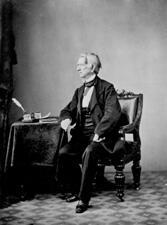
Here you will find contact information for Senator William Henry Seward, including email address, phone number, and mailing address.
| Name | William Henry Seward |
| Position | Senator |
| State | New York |
| Party | Republican |
| Status | Former Representative |
| Term Start | December 3, 1849 |
| Term End | March 3, 1861 |
| Terms Served | 2 |
| Born | May 16, 1801 |
| Gender | Male |
| Bioguide ID | S000261 |
About Senator William Henry Seward
William Henry Seward served as a Senator from New York in the United States Congress from 1849 to 1861. A member of the Republican Party, William Henry Seward contributed to the legislative process during 2 terms in office.
William Henry Seward’s service in Congress occurred during a significant period in American history. As a member of the Senate, William Henry Seward participated in the democratic process and represented the interests of constituents.
William Henry Seward (; May 16, 1801 – October 10, 1872) was an American politician who served as United States Secretary of State from 1861 to 1869, and earlier served as governor of New York and as a United States senator. A determined opponent of the spread of slavery in the years leading up to the American Civil War, he was a prominent figure in the Republican Party in its formative years, and was praised for his work on behalf of the Union as Secretary of State during the Civil War. He also negotiated the treaty for the United States to purchase the Alaska Territory. Seward was born in 1801 in the village of Florida, in Orange County, New York, where his father was a farmer and owned slaves. He was educated as a lawyer and moved to the Central New York town of Auburn. Seward was elected to the New York State Senate in 1830 as an Anti-Mason. Four years later, he became the gubernatorial nominee of the Whig Party. Though he was not successful in that race, Seward was elected governor in 1838 and won a second two-year term in 1840. During this period, he signed several laws that advanced the rights of and opportunities for black residents, as well as guaranteeing jury trials for fugitive slaves in the state. The legislation protected abolitionists, and he used his position to intervene in cases of freed black people who were enslaved in the South. After many years of practicing law in Auburn, he was elected by the state legislature to the U.S. Senate in 1849. Seward’s strong stances and provocative words against slavery brought him hatred in the South. He was re-elected to the Senate in 1855, and soon joined the nascent Republican Party, becoming one of its leading figures. As the 1860 presidential election approached, he was regarded as the leading candidate for the Republican nomination. Several factors, including attitudes to his vocal opposition to slavery, his support for immigrants and Catholics, and his association with editor and political boss Thurlow Weed, worked against him, and Abraham Lincoln secured the presidential nomination. Although devastated by his loss, he campaigned for Lincoln, who appointed him Secretary of State after winning the election. Seward did his best to stop the southern states from seceding; once that failed, he devoted himself wholeheartedly to the Union cause. His firm stance against foreign intervention in the Civil War helped deter the United Kingdom and France from recognizing the independence of the Confederate States. He was one of the targets of the 1865 assassination plot that killed Lincoln and was seriously wounded by conspirator Lewis Powell. Seward remained in his post through the presidency of Andrew Johnson, during which he negotiated the Alaska Purchase in 1867 and supported Johnson during his impeachment. His contemporary Carl Schurz described Seward as “one of those spirits who sometimes will go ahead of public opinion instead of tamely following its footprints”.