Senator William Joyce Sewell
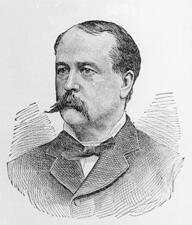
Here you will find contact information for Senator William Joyce Sewell, including email address, phone number, and mailing address.
| Name | William Joyce Sewell |
| Position | Senator |
| State | New Jersey |
| Party | Republican |
| Status | Former Representative |
| Term Start | December 5, 1881 |
| Term End | March 3, 1901 |
| Terms Served | 2 |
| Born | December 6, 1835 |
| Gender | Male |
| Bioguide ID | S000262 |
About Senator William Joyce Sewell
William Joyce Sewell (December 6, 1835 – December 27, 1901) was an American Republican Party politician, merchant, and military officer who served as a United States senator from New Jersey for two non-consecutive terms, from 1881 to 1887 and again from 1895 until his death in 1901. Over the course of his public career he was a prominent figure in New Jersey politics, a decorated Union officer in the American Civil War, and a participant in national affairs during a significant period in American history.
Sewell was born on December 6, 1835, in Castlebar, County Mayo, Ireland. He immigrated to the United States in 1851 as a young man, settling first in Chicago, Illinois. There he entered the merchant trade, gaining experience in business and commerce that would later inform his public and political life. In 1860 he moved to Camden, New Jersey, which became his long-term home and the base of his political and military career. His rise from Irish immigrant to senior political leader reflected the broader patterns of mid-nineteenth-century immigration and integration into American civic life.
With the outbreak of the American Civil War, Sewell entered the Union Army from Camden, New Jersey, and served with distinction. He became colonel of the 5th New Jersey Infantry and saw extensive combat. On May 3, 1863, during the Battle of Chancellorsville in Virginia, he assumed command of a brigade under intense fire. Rallying around his colors a mass of men from various regiments, he led them through several hours of desperate conflict. Though wounded, he remained in command and inspired his troops by his presence and the gallantry of his personal example. For these actions he was later awarded the Medal of Honor, with the citation formally issued on March 25, 1896. His Civil War service established his reputation for courage and leadership and helped launch his subsequent political career in New Jersey during the Reconstruction era.
After the war, Sewell settled more firmly into public life in New Jersey. He became active in Republican Party politics and served as a Reconstruction Era state senator, participating in the reordering of state and national affairs in the decades following the conflict. He also commanded the Second Brigade of the National Guard of New Jersey, maintaining a formal connection to military affairs and the organization of the state militia. His prominence in both political and military circles made him a leading Republican figure in New Jersey and a natural candidate for higher office.
Sewell was elected as a Republican to the United States Senate from New Jersey and served his first term from 1881 to 1887. During this period he contributed to the legislative process at a time of rapid industrialization and political realignment in the United States, representing the interests of his New Jersey constituents in national debates. His service in Congress occurred during a significant period in American history, and as a member of the Senate he participated in the democratic process and helped shape federal policy. He was an unsuccessful candidate for reelection in 1887, and further attempts to return to the Senate in 1889 and 1893 were also unsuccessful.
Between his Senate terms, Sewell remained an influential public figure. In 1893 he served as one of the national commissioners for New Jersey to the World’s Columbian Exposition in Chicago, a major international fair that showcased American industrial, cultural, and technological achievements. He was also appointed a member of the Board of Managers of the National Home for Disabled Volunteer Soldiers, reflecting his ongoing commitment to veterans and the welfare of former soldiers. These roles underscored his continued engagement with national issues and his standing as a respected Republican leader even while out of federal office.
Sewell returned to the United States Senate after being elected again in 1895, and he served from 1895 until his death in 1901. During this second Senate tenure he chaired the Committee on Enrolled Bills from the Fifty-fourth Congress through the Fifty-seventh Congress, overseeing the final preparation of legislation passed by Congress before it was sent to the President. In this capacity he played a key procedural role in the legislative process, ensuring the accuracy and integrity of enacted laws. His second term coincided with a period of American expansion and the aftermath of the Spanish–American War, during which he continued to represent New Jersey’s interests at the national level.
William Joyce Sewell died in office on December 27, 1901, while still serving as a U.S. senator from New Jersey. His career spanned military service, state and national politics, and civic leadership. The community of Sewell, New Jersey, was named in his honor, commemorating his long association with the state and his contributions as a merchant, soldier, and senator.