Representative William Brainerd Spencer
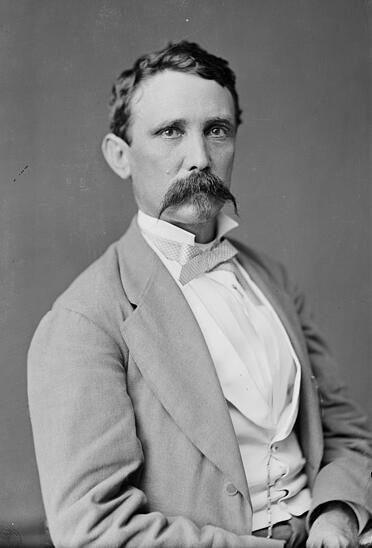
Here you will find contact information for Representative William Brainerd Spencer, including email address, phone number, and mailing address.
| Name | William Brainerd Spencer |
| Position | Representative |
| State | Louisiana |
| District | 5 |
| Party | Democratic |
| Status | Former Representative |
| Term Start | December 6, 1875 |
| Term End | March 3, 1877 |
| Terms Served | 1 |
| Born | February 5, 1835 |
| Gender | Male |
| Bioguide ID | S000731 |
About Representative William Brainerd Spencer
William Brainerd Spencer (February 5, 1835 – April 29, 1882) was an American attorney, planter, and Democratic politician who represented Louisiana in the United States House of Representatives from 1875 to 1877 and later served as an associate justice of the Louisiana Supreme Court. His congressional service, which lasted for one term during the turbulent Reconstruction era, occurred at a time of intense political realignment in Louisiana and the broader South, as Democrats sought to regain control from Republican-led Reconstruction governments.
Spencer was born on “Home Plantation” in Catahoula Parish, Louisiana, on February 5, 1835, into a slaveholding family of the planter class. He received his early education from private tutors, reflecting the educational opportunities available to affluent white families in the antebellum South. He pursued higher education at Centenary College in Jackson, Louisiana, from which he was graduated in 1855. He then studied law at the law department of the University of Louisiana at New Orleans (now Tulane University), receiving his law degree in 1857. Around this period he married Henrietta Elam, whose brother, Joseph Barton Elam, would later also serve in the United States Congress, further linking Spencer to a prominent political family in Louisiana.
Admitted to the bar in 1857, Spencer commenced the practice of law in Harrisonburg, Louisiana. With the outbreak of the Civil War, he entered the Confederate States Army and served with the rank of captain. In 1863 he was captured and subsequently held as a prisoner of war at Johnson’s Island, Ohio, a Union prison camp for Confederate officers, where he remained until the close of the war in 1865. Following his release and the end of hostilities, Spencer returned to Louisiana and, in 1866, resumed the practice of law in Vidalia, Concordia Parish, rebuilding his professional life in the altered legal and political landscape of Reconstruction.
Spencer’s entry into national politics came as the Democratic Party in Louisiana was mounting a determined challenge to Republican dominance. A member of the Democratic Party, he successfully contested as a Democrat a special election against Republican Representative Frank Morey for a seat in the U.S. House of Representatives. The election was contested and ultimately decided in his favor and against the Republican candidate. He was elected to the Forty-fourth Congress and served from June 8, 1876, to January 8, 1877, representing Louisiana during a significant period in American history, as Reconstruction neared its end and the Democratic Party regained control of the Louisiana state legislature in 1876. During his single term in office, Spencer participated in the legislative process in the House of Representatives and represented the interests of his Louisiana constituents as federal authority in the South was being renegotiated.
Spencer resigned his seat in Congress on January 8, 1877, upon receiving a judicial appointment. On January 9, 1877, he was appointed associate justice of the Louisiana Supreme Court, marking his transition from legislative to judicial service. He held this position until his resignation on April 3, 1880. His tenure on the state’s highest court coincided with the consolidation of Democratic control in Louisiana and the rollback of many Reconstruction-era policies, although the specific opinions and decisions he authored are less well documented in standard biographical sources. After leaving the bench, Spencer again resumed the practice of law, this time in New Orleans, Louisiana, continuing his legal career in one of the state’s principal commercial and legal centers.
In his later years, Spencer’s professional activities remained centered on the law until his death abroad. According to his tombstone, he died in Córdoba, Mexico, on April 29, 1882. He was interred later that year in Magnolia Cemetery in Baton Rouge, Louisiana. His career, encompassing service as a Confederate officer, practicing attorney, United States Representative, and associate justice of the Louisiana Supreme Court, reflected the trajectory of many Southern political figures who navigated the upheavals of the Civil War, Reconstruction, and the restoration of Democratic rule in the postwar South.