Senator William Spong
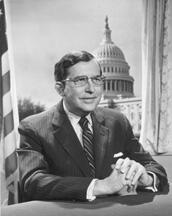
Here you will find contact information for Senator William Spong, including email address, phone number, and mailing address.
| Name | William Spong |
| Position | Senator |
| State | Virginia |
| Party | Democratic |
| Status | Former Representative |
| Term Start | December 31, 1966 |
| Term End | January 3, 1973 |
| Terms Served | 4 |
| Born | September 29, 1920 |
| Gender | Male |
| Bioguide ID | S000739 |
About Senator William Spong
William Belser Spong Jr. (September 29, 1920 – October 8, 1997) was an American Democratic Party politician and a United States Senator who represented the state of Virginia from 1966 to 1973. A member of the Democratic Party, he served in the Senate during a significant period in American history and contributed to the legislative process during two terms in office, participating in the democratic process and representing the interests of his constituents.
Spong was born in Portsmouth, Virginia, where he attended the public schools. He pursued higher education at Hampden–Sydney College in Hampden Sydney, Virginia, the University of Virginia in Charlottesville, and the University of Edinburgh in Scotland. During World War II, he served in the United States Army Air Corps, Eighth Air Force, from 1942 to 1945. After the war, he studied law and was admitted to the bar in 1947, commencing the practice of law in Portsmouth soon thereafter. From 1948 to 1949 he was a lecturer in law and government at the College of William and Mary, marking the beginning of a long association with legal education in Virginia.
Spong entered elective office as a member of the Virginia House of Delegates, serving from 1954 to 1955. He then served in the Virginia State Senate from 1956 to 1966. During his decade in the state senate, he became chairman of the Virginia Commission on Public Education from 1958 to 1962, a role that placed him at the center of debates over public education in the Commonwealth during the era following school desegregation decisions. His work in state government helped establish his reputation as a capable legislator and positioned him for higher office.
In 1966, Spong was personally recruited by President Lyndon B. Johnson to challenge long-serving U.S. Senator A. Willis Robertson in the Democratic primary. Johnson, angered by Robertson’s opposition to the Civil Rights Act and the Voting Rights Act, sought a candidate more supportive of his administration’s policies. Spong defeated Robertson in one of the biggest upsets in Virginia political history and then won easily in the general election in November. Robertson resigned on December 31, 1966, and Governor Mills Godwin appointed Spong to fill the vacancy, giving him higher seniority than other senators elected that November. His primary victory is widely regarded as marking the beginning of the end of the Byrd Organization’s long dominance of Virginia politics. During his Senate tenure from 1966 to 1973, Spong served through a turbulent national period marked by the Vietnam War, the civil rights movement, and significant social and political change. His Senate colleague from Virginia, Harry F. Byrd Jr., became an independent in 1970, underscoring the shifting political landscape in which Spong served.
Spong’s Senate career, however, was relatively short-lived. In 1972 he was narrowly defeated for reelection by Representative William L. Scott of Virginia’s 8th Congressional District. His loss ended his federal legislative service, and he would be the last Democrat elected to the U.S. Senate from Virginia until Charles S. “Chuck” Robb’s victory in 1988. Nonetheless, his years in the Senate left a legacy as part of the broader transformation of Virginia politics away from the conservative Democratic machine that had dominated mid‑twentieth‑century state affairs.
After leaving the Senate, Spong returned to the practice of law and reengaged with legal education. He joined the faculty of the Marshall–Wythe School of Law at the College of William and Mary and served as its dean from 1976 to 1985. Also in 1976, he served as president of the Virginia Bar Association, reflecting his prominence within the state’s legal community. In 1988 he was appointed interim president of Old Dominion University, further extending his public service into higher education administration. Throughout these years he remained a resident of Portsmouth, maintaining close ties to his hometown.
Spong’s public profile also included a lighter, often-cited anecdote connected to his unusual surname. A popular Internet joke later claimed that he and Senator Hiram Fong of Hawaii had sponsored a bill recommending the mass ringing of church bells to welcome the U.S. Table Tennis Team to Hong Kong after its tour of Communist China, supposedly titled the “Spong-Fong Hong Kong Ping Pong Ding Dong Bell Bill.” In fact, Senator Spong never sponsored such legislation. However, soon after his arrival in Washington he did playfully address the National Press Club, explaining that his first act as a senator would be to introduce a bill to protect the rights of songwriters in Hong Kong, to be co-sponsored by Senators Russell Long of Louisiana and Hiram Fong of Hawaii, and that together they would present the “Long Fong Spong Hong Kong Song Bill.” According to his cousin, the Rt. Rev. John Shelby Spong, this humorous introduction ensured that members of the media never mispronounced his name.
Spong married Virginia Wise Galliford, and the couple had two children, Martha and Tom. He continued to live in Portsmouth until his death on October 8, 1997, at the age of 77. He is interred at the University of Virginia Cemetery in Charlottesville, Virginia, closing a life that combined military service, state and national legislative leadership, and significant contributions to legal education and the bar in Virginia.