Representative William McKendree Springer
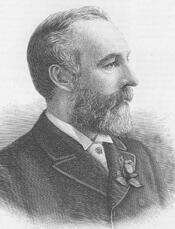
Here you will find contact information for Representative William McKendree Springer, including email address, phone number, and mailing address.
| Name | William McKendree Springer |
| Position | Representative |
| State | Illinois |
| District | 13 |
| Party | Democratic |
| Status | Former Representative |
| Term Start | December 6, 1875 |
| Term End | March 3, 1895 |
| Terms Served | 10 |
| Born | May 30, 1836 |
| Gender | Male |
| Bioguide ID | S000757 |
About Representative William McKendree Springer
William McKendree Springer (May 30, 1836 – December 4, 1903) was an American attorney, legislator, and jurist who represented Illinois in the United States House of Representatives from 1875 to 1895 and later served as a judge of the United States Court for the Indian Territory. A member of the Democratic Party, he served ten consecutive terms in Congress during a significant period in American history and played an influential role in territorial policy, fiscal legislation, and the legal framework governing Native American lands.
Springer was born near New Lebanon, Sullivan County, Indiana, on May 30, 1836. In 1848 he moved west with his parents to Jacksonville, Illinois, where he continued his early education in the local public schools, having first attended public schools in New Lebanon. He enrolled at Illinois College in Jacksonville, where he was a member of the Phi Alpha Literary Society. While at Illinois College he became an outspoken defender of Senator Stephen A. Douglas and the Kansas–Nebraska Act; the controversy surrounding his defense contributed to his decision to leave the college before completing a degree there. Springer subsequently attended Indiana University at Bloomington, from which he received a master’s degree in 1858.
After completing his formal education, Springer worked as a journalist while reading law, and he was admitted to the bar—variously reported as in 1859 or 1861. He established his legal practice in Springfield, Illinois, the state capital, where he quickly became involved in Democratic politics. At the age of twenty-six he briefly served as assistant secretary of the Illinois Senate. During the American Civil War he was secretary of the Illinois state constitutional convention that met in 1862. He ran unsuccessfully for the Illinois Legislature in 1860 and again in 1864, but remained an active figure in state political life. During this period he also challenged the constitutionality of the federal income tax, a dispute that ultimately led to the United States Supreme Court case Springer v. United States. Between 1868 and 1871 he traveled in Europe, returning to Illinois to resume his law practice and political career. He was elected to the Illinois House of Representatives, serving in Springfield in 1871 and 1872.
Springer entered national politics when he was elected as a Democrat in November 1874 to the Forty-fourth Congress. He took the oath of office on March 4, 1875, and was subsequently reelected to nine additional two-year terms, serving continuously in the U.S. House of Representatives from March 4, 1875, to March 3, 1895. Throughout his twenty years in Washington he participated actively in the legislative process and represented the interests of his Illinois constituents during a transformative era that encompassed Reconstruction’s aftermath, industrial expansion, and contentious monetary and tariff debates. Within the House he rose to a series of important committee chairmanships. He chaired the Committee on Expenditures in the Department of State during the Forty-fourth and Forty-fifth Congresses, the Committee on Elections in the Forty-sixth Congress, the Committee on Expenditures in the Department of Justice in the Forty-eighth Congress, the Committee on Claims in the Forty-ninth Congress, and the Committee on Territories in the Fiftieth Congress. In the Fifty-second Congress he served on the powerful Committee on Ways and Means, and in the Fifty-third Congress he chaired the Committee on Banking and Currency, placing him at the center of debates over federal finance and economic policy.
Springer’s congressional career was marked by involvement in several nationally significant issues. He participated in the investigation of election fraud arising from the disputed 1876 United States presidential election, a controversy that tested the constitutional and political mechanisms for resolving contested electoral votes. As chairman of the Committee on Territories, he became a principal architect of federal policy toward the western territories. He framed the bills that organized the Oklahoma Territory in 1889 and 1890 and played a key role in the creation of the United States Court for the Indian Territory. He drafted a crucial amendment to the Indian Appropriations Act of 1890, known as the Springer Amendment, which initiated the process of placing the former Unassigned Lands of the Indian Territory into the federal public domain, paving the way for their later distribution to homesteaders. His work in this area helped shape the legal and administrative framework under which large portions of the Indian Territory were opened to non-Native settlement.
After two decades in Congress, Springer’s career in elective office ended when he was defeated for reelection in 1894, a loss influenced in part by divisions within the Democratic Party between Gold Democrats and Silver Democrats during the heated monetary controversies of the 1890s. In recognition of his long service and his expertise in territorial and Indian affairs, President Grover Cleveland appointed him as a judge for the Northern District of the United States Court for the Indian Territory. In this judicial capacity he helped administer federal law in a region undergoing rapid demographic and legal change as tribal lands were increasingly subjected to allotment and non-Native settlement.
Springer resigned from the bench in 1899 and returned to private practice, establishing law offices in both Chicago, Illinois, and Washington, D.C. In addition to his private clientele, he became a lobbyist in the nation’s capital for the National Livestock Association, a position through which he became closely acquainted with the grasslands of the Kiowa Indian reserve and broader issues surrounding western land use. He also served as legal representative for the Muscogee (Creek) Nation and the Cherokee Nation, extending his long-standing involvement with Native American legal and political questions.
In 1901 Springer undertook what became one of the most consequential Indian law cases of the era when he was retained by numerous members of the Kiowa, Comanche, and Apache tribes to represent them in the litigation that culminated in Lone Wolf v. Hitchcock, 187 U.S. 553 (1903). The case arose from the Jerome Agreement, under which the tribes of the Kiowa, Comanche, and Apache Reservation ceded most of their lands to the United States, which in turn planned to allot parcels to tribal members and open the surplus to white settlers pursuant to a 1900 Act of Congress. Springer assisted in drafting a memorial to President Theodore Roosevelt protesting the Act, arguing that the tribes had been fraudulently induced to sign the agreement and that many signatories, including the principal plaintiff Lone Wolf, did not fully understand its provisions because they did not speak English and relied on interpreters. He contended that the Jerome Agreement had not been approved by three-fourths of the adult male tribal members, as required by the Medicine Lodge Treaty, noting that the 1900 census showed 639 adult males on the reservation and that the agreement fell short of the necessary three-quarters majority. He further argued that the tribes had protested the agreement from the outset and that the version ratified by Congress had been significantly altered from what had been presented to the tribes, with the changes never resubmitted for their consent.
On July 22, 1901, Springer, joined by attorneys Hays McMeehan, William C. Reeves, and Charles Porter Johnson, filed in federal court for a temporary restraining order and a permanent injunction to halt the cession of tribal territories and the opening of surplus lands after individual allotments had been made. U.S. Judge Clinton F. Irwin denied the request for a restraining order. Springer and his colleagues appealed to the Supreme Court of the District of Columbia, where Justice Andrew Coyle Bradley on June 21, 1901, again denied the application for a temporary injunction. Springer then appealed to the U.S. Court of Appeals for the District of Columbia, which on December 4, 1901, through Chief Justice Richard H. Alvey, affirmed the lower court’s decision. Finally, with the assistance of attorney Hampton Carson, retained by the Indian Rights Association, Springer brought the case before the United States Supreme Court. On January 5, 1903, the Court unanimously affirmed the lower courts and upheld the congressional action. The justices rejected the argument that Congress’s actions constituted an unconstitutional taking under the Due Process Clause of the Fifth Amendment. Writing for the Court, Justice Edward Douglass White described Native Americans as “wards of the nation” and held that matters involving Indian lands lay within the plenary power of Congress, which could unilaterally abrogate treaty provisions. Justice John M. Harlan concurred in the judgment. The decision in Lone Wolf v. Hitchcock confirmed and reinforced the doctrine of congressional plenary power over Native American tribes and their treaty rights, despite the protests advanced by Springer and his clients.
William McKendree Springer died of pneumonia at his home in Washington, D.C., on December 4, 1903, at the age of sixty-seven. His death was noted in obituaries and notices in newspapers across the country, reflecting his prominence as a long-serving congressman and a significant figure in the legal history of the Indian Territory and Native American affairs. He was buried in Oak Ridge Cemetery in Springfield, Illinois, the state capital where he had begun his legal and political career.