Representative William Leon St. Onge
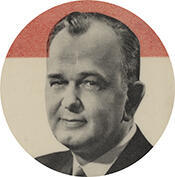
Here you will find contact information for Representative William Leon St. Onge, including email address, phone number, and mailing address.
| Name | William Leon St. Onge |
| Position | Representative |
| State | Connecticut |
| District | 2 |
| Party | Democratic |
| Status | Former Representative |
| Term Start | January 9, 1963 |
| Term End | January 3, 1971 |
| Terms Served | 4 |
| Born | October 9, 1914 |
| Gender | Male |
| Bioguide ID | S000769 |
About Representative William Leon St. Onge
William Leon St. Onge (October 9, 1914 – May 1, 1970) was a Democratic member of the United States House of Representatives from Connecticut who served four consecutive terms in Congress from 1963 until his death in 1970. Over the course of his legislative career, he represented the interests of his constituents during a significant period in American history, contributing to the national legislative process amid the social and political changes of the 1960s.
St. Onge was born in Putnam, Windham County, Connecticut, where he attended the local secondary schools. His early involvement in public affairs began before World War II, reflecting a long-standing commitment to civic life in his hometown and state. From 1939 to 1941 he served as a member of the Putnam board of education, marking his first formal role in public service and local governance.
He pursued higher education at Tufts University, from which he graduated in 1941. With the onset of World War II, St. Onge enlisted in the United States Army in 1942 and served in the Army Air Corps in the North African and European theaters. During his military service he worked as a flight engineer, a role he held until his discharge in September 1945. Following the war, he continued his education in law, attending the University of Connecticut School of Law at Hartford. He was admitted to the bar in 1948 and that same year commenced the practice of law in his native Putnam.
St. Onge’s political and legal career in Connecticut advanced steadily in the 1940s and 1950s. Even before his military service, he had served in the Connecticut State House of Representatives from 1941 to 1942, gaining early legislative experience at the state level. After becoming an attorney, he was appointed judge of the probate court in Putnam in 1948, a position he held until 1962. He also served as prosecutor of the city court of Putnam from 1949 to 1951. In 1955 he became judge of the city court of Putnam, serving in that capacity until 1961. Beyond the courts, he played a key role in local development as chairman and executive director of the Putnam redevelopment agency from 1956 to 1958, and he was elected mayor of Putnam, serving from 1961 to 1962. These overlapping roles in legislative, judicial, and executive capacities at the local and state levels established him as a prominent public figure in northeastern Connecticut.
In 1962 St. Onge was elected as a Democrat to the Eighty-eighth Congress and was subsequently reelected to the three succeeding Congresses. He served in the U.S. House of Representatives from January 3, 1963, until his death on May 1, 1970. During his four terms in office, he participated actively in the work of the House, contributing to the legislative process at a time marked by the civil rights movement, the Great Society programs, and the Vietnam War. As a member of the House of Representatives, William Leon St. Onge represented his Connecticut district’s interests in national debates and helped shape federal policy affecting both his constituents and the country at large.
St. Onge’s congressional service ended abruptly when he died in office from a heart attack in Groton, Connecticut, on May 1, 1970. His death placed him among the members of the United States Congress who died in office between 1950 and 1999. He was interred in St. Mary’s Cemetery in Putnam, Connecticut, returning to the community where he had been born, educated, and had built his legal and political career. Following his death, he was succeeded in the House of Representatives by Robert H. Steele.