Representative William A. Steiger
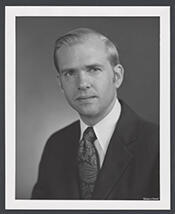
Here you will find contact information for Representative William A. Steiger, including email address, phone number, and mailing address.
| Name | William A. Steiger |
| Position | Representative |
| State | Wisconsin |
| District | 6 |
| Party | Republican |
| Status | Former Representative |
| Term Start | January 10, 1967 |
| Term End | January 3, 1978 |
| Terms Served | 6 |
| Born | May 15, 1938 |
| Gender | Male |
| Bioguide ID | S000847 |
About Representative William A. Steiger
William Albert Steiger (May 15, 1938 – December 4, 1978) was a Republican member of the United States House of Representatives from Wisconsin who served from January 3, 1967, until his death in office on December 4, 1978. Over the course of six terms in Congress, he represented Wisconsin’s 6th congressional district and played an active role in major legislative initiatives involving tax policy, occupational safety and health, education, and environmental protection. His congressional service occurred during a significant period in American history, and he consistently participated in the democratic process on behalf of his constituents.
Steiger was born in Oshkosh, Winnebago County, Wisconsin, on May 15, 1938. As a youth, he showed an early interest in public affairs and leadership. In 1955 he attended Badger Boys State, a prominent Wisconsin youth government and leadership program, where he was elected Governor. He subsequently represented Wisconsin at Boys Nation, further sharpening his interest in politics and public service. These formative experiences helped shape his commitment to civic engagement and laid the groundwork for his later political career.
Steiger pursued higher education at the University of Wisconsin–Madison, one of the state’s leading public institutions. He graduated in 1960, completing his studies just as he was beginning to move into both business and politics. After college, he entered the private sector in his hometown of Oshkosh, becoming a part owner of the Oshkosh Motor Lodge. He later served as president of Steiger-Ratke Development, gaining experience in business management and local economic development that would inform his legislative priorities. On August 10, 1963, he married Janet Dempsey, who would later have her own prominent public career, including service as chair of the Federal Trade Commission.
Steiger’s formal political career began soon after his graduation from college. In 1960, he made his first run for elected office and was elected to the Wisconsin State Assembly, where he served from 1961 to 1965. During his tenure in the Assembly, he built a reputation as a young, energetic Republican legislator with a strong interest in economic issues, education, and governmental reform. His work at the state level helped establish his political base in northeastern Wisconsin and prepared him for national office.
In 1966, Steiger was elected as a Republican to the 90th Congress as the representative of Wisconsin’s 6th congressional district. He took office on January 3, 1967, and was subsequently re-elected to the next six Congresses. His service in the House of Representatives extended through the 90th to the 95th Congresses, and he was elected to the 96th Congress but died before that term began, resulting in his overall service running from January 3, 1967, to December 4, 1978. While in Congress, he employed a number of young staffers and interns, including, in 1969, a then-unknown future Vice President of the United States, Dick Cheney.
As a member of the House, Steiger was a strong supporter of tax cuts as a means of stimulating economic growth. He is particularly noted for sponsoring the Steiger Amendment of 1978, which reduced the capital gains tax and reflected his broader commitment to encouraging investment and economic expansion. He also played a key role in major social and regulatory legislation. Steiger sponsored the Williams-Steiger Occupational Safety and Health Act, enacted in 1970, which established the Occupational Safety and Health Administration (OSHA) and significantly expanded federal protections for workplace safety and health. He was involved in legislation related to education and employment, including work on the Older Americans Act of 1965, the Elementary and Secondary Education Act, and the Manpower Act, reflecting his concern for both educational opportunity and workforce development.
Environmental protection was another area in which Steiger made a lasting impact. He sponsored the Clear Lakes Bill, which established environmental protections for the Great Lakes, an issue of particular importance to his Wisconsin constituency. Through this legislation, he sought to address pollution and preserve critical freshwater resources in the upper Midwest. His legislative record thus combined fiscal conservatism with support for regulatory measures in areas such as workplace safety and environmental conservation, marking him as an influential figure in several key policy domains during his time in Congress.
Steiger’s career was cut short when he died from a heart attack in Washington, D.C., on December 4, 1978, at the age of 40, while still serving in the House of Representatives. His death created a vacancy in Wisconsin’s 6th congressional district, which was filled by Republican Tom Petri in a subsequent special election. In the years following his death, Steiger’s contributions have been commemorated in several ways. The American Conference of Governmental Industrial Hygienists established the William Steiger Memorial Award, presented annually to individuals in the social or political sphere whose efforts have advanced occupational safety and health, a reflection of his central role in creating OSHA. In his hometown of Oshkosh, he is honored by the William A. Steiger Park, located on the south shore of the Fox River, east and west of the Wisconsin Street Bridge. His legacy in public service has also continued through his family; his son, William R. Steiger, has held various governmental positions, including work for Wisconsin Governor Tommy Thompson and service as Director of the Office of Global Health Affairs and Special Assistant to the Secretary for International Affairs in the U.S. Department of Health and Human Services, where he became a subject of controversy over the politicization of science.