Representative William Jasper Talbert
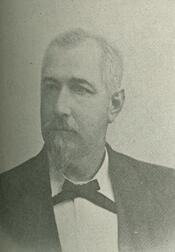
Here you will find contact information for Representative William Jasper Talbert, including email address, phone number, and mailing address.
| Name | William Jasper Talbert |
| Position | Representative |
| State | South Carolina |
| District | 2 |
| Party | Democratic |
| Status | Former Representative |
| Term Start | August 7, 1893 |
| Term End | March 3, 1903 |
| Terms Served | 5 |
| Born | October 6, 1846 |
| Gender | Male |
| Bioguide ID | T000016 |
About Representative William Jasper Talbert
William Jasper Talbert (October 6, 1846 – February 5, 1931) was a Democratic U.S. Representative from South Carolina who served five consecutive terms in the United States Congress from 1893 to 1903. His decade in the House of Representatives coincided with a significant period in American history marked by the aftermath of Reconstruction, the rise of agrarian political movements, and the consolidation of Democratic dominance in the South. Throughout his service, he participated in the legislative process and represented the interests of his constituents from South Carolina.
Talbert was born on October 6, 1846, in Talbert Township near Edgefield County, in what is now McCormick County, South Carolina. He was raised in a rural environment and educated in the common schools of Greenwood, South Carolina. He later attended Due West Academy in Abbeville and went on to graduate from Erskine College in Due West, South Carolina. His early life in an agricultural region and his formal education at a Presbyterian-affiliated institution helped shape his later involvement in farming, local politics, and agrarian reform movements.
During the American Civil War, Talbert served in the Confederate States Army. He first entered service as a substitute for his father, B. M. Talbert, who had been discharged on December 17, 1862. As a private, he served in Company F of the Fifth South Carolina Reserves. He later reenlisted at Richmond, Virginia, on September 15, 1864, as a private in Company B of the Infantry Regiment of Hampton’s Legion of South Carolina. Following the end of the war, he returned to civilian life and engaged in agricultural pursuits near Parksville in what became McCormick County, South Carolina, establishing himself as a farmer and local community figure.
Talbert’s political career began at the state level. He served as a member of the South Carolina House of Representatives from 1880 to 1883, representing his local constituency during a period when the state was redefining its political and economic structures in the post-Reconstruction era. He then served in the South Carolina State Senate from 1884 to 1888. In these roles, he was associated with the interests of farmers and rural communities and became active in the Farmers’ Alliance, holding various positions in that organization as it sought to advance agrarian economic and political reforms. His growing prominence led to his appointment as superintendent of the South Carolina State Penitentiary, a position he held from 1891 to 1893, where he oversaw the administration of the state’s prison system.
By the early 1890s, Talbert had become a significant figure in Democratic Party politics in South Carolina. He served as a delegate to the Democratic National Convention in 1892, participating in the national deliberations of his party at a time when issues such as monetary policy and agricultural distress were at the forefront. Locally, he was elected mayor of Parksville, serving from 1895 to 1900, and he acted as president of the Democratic State convention in 1899, underscoring his influence within the state party apparatus. These roles reflected his dual identity as both a local leader and a statewide political organizer.
Talbert was elected as a Democrat to the Fifty-third Congress and to the four succeeding Congresses, serving in the U.S. House of Representatives from March 4, 1893, to March 3, 1903. Representing South Carolina during this decade, he contributed to the legislative process in Washington and participated in the democratic governance of the nation, advocating for the interests of his largely rural constituency. His tenure in Congress spanned the administrations of Presidents Grover Cleveland, William McKinley, and Theodore Roosevelt, a period marked by debates over tariffs, currency, imperial expansion, and regulatory reforms. Although specific committee assignments and legislative initiatives are less prominently recorded, his repeated reelection attested to his standing among voters in his district. He chose not to be a candidate for renomination in 1902, instead seeking higher office; he entered the second primary for the Democratic nomination for governor of South Carolina that year but was unsuccessful.
After leaving Congress, Talbert returned to his agricultural pursuits near Parksville in McCormick County, resuming the farming life that had anchored his career before and during his political service. He remained a respected figure in his community and continued to embody the agrarian values that had shaped his public life. In 1927 he moved to the town of McCormick, South Carolina, where he lived in retirement during his final years.
William Jasper Talbert died in Greenwood, South Carolina, on February 5, 1931. He was interred in the Parksville Baptist Church Cemetery in Parksville, South Carolina. His life and career reflected the trajectory of many Southern Democratic leaders of his era: Confederate military service, postwar agricultural engagement, ascent through state and local offices, and a decade of service in the United States House of Representatives during a transformative period in American political and social history.