Senator William Allen Trimble
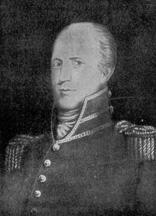
Here you will find contact information for Senator William Allen Trimble, including email address, phone number, and mailing address.
| Name | William Allen Trimble |
| Position | Senator |
| State | Ohio |
| Party | Republican |
| Status | Former Representative |
| Term Start | December 6, 1819 |
| Term End | December 31, 1821 |
| Terms Served | 1 |
| Born | April 4, 1786 |
| Gender | Male |
| Bioguide ID | T000377 |
About Senator William Allen Trimble
William Allen Trimble (April 4, 1786 – December 13, 1821) was a Democratic-Republican politician from Ohio who served as a United States Senator from 1819 until his death in 1821. A member of the Republican (Democratic-Republican) Party, he contributed to the legislative process during one term in office, representing the interests of his Ohio constituents during a formative period in the nation’s early history.
Trimble was born on April 4, 1786, in Woodford County, Kentucky, the son of James Trimble and Jane (Allen) Trimble. Raised on the American frontier in the post-Revolutionary era, he came of age at a time when settlement was rapidly expanding westward into the Ohio Valley. His family background and early environment helped shape his familiarity with frontier conditions and conflicts, experiences that would later inform both his military and political careers.
Trimble pursued higher education at Transylvania College in Lexington, Kentucky, one of the leading institutions of learning in the early West. After completing his studies there, he read law and was admitted to the bar in 1811. That same year he moved to Ohio, where he briefly practiced law in Highland County from 1811 to 1812. His short legal career provided him with grounding in the law and public affairs, but the outbreak of conflict on the frontier soon drew him into military service.
With the onset of the War of 1812 and continuing tensions with Native American nations allied at various times with British forces, Trimble entered military service in Ohio. He first served as a major of the Ohio Volunteers in 1812, participating in campaigns that were part of the broader struggle for control of the Northwest. In 1813 he entered the regular army as a major of the Twenty-sixth United States Infantry. His advancement continued rapidly: in 1814 he was promoted to lieutenant colonel of the First United States Infantry, reflecting both his leadership and the demands of wartime expansion of the Army. In 1815 he was transferred to the Eighth United States Infantry, in which he served through the close of the war and the subsequent frontier campaigns. Throughout these years he took part in operations largely directed against the Pottawatomie and other Native American groups in the Old Northwest, gaining a reputation as an experienced frontier officer.
Trimble remained in the regular army until 1819, when his growing prominence in Ohio led to his election to the United States Senate. He resigned his army commission that year following his election for the senatorial term beginning in 1819. Taking his seat as a Democratic-Republican Senator from Ohio, he entered Congress at a time when the nation was grappling with issues of westward expansion, the balance between free and slave states, and the economic and political realignments that followed the War of 1812. During his service in the Senate from 1819 to 1821, he participated in the democratic process and contributed to the legislative work of the chamber, representing the interests of a rapidly growing Ohio within the broader debates of the Era of Good Feelings.
Trimble’s congressional service was cut short by his untimely death. He remained in office until he died in Washington, D.C., on December 13, 1821, while still a sitting United States Senator. His death placed him among the early members of Congress who died in office during the nineteenth century. He was interred in the Congressional Cemetery in Washington, D.C., where his grave marks the resting place of a frontier soldier-lawyer who rose to represent Ohio in the United States Senate during the early decades of the republic.