Representative William Munford Tuck
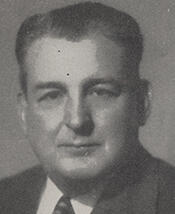
Here you will find contact information for Representative William Munford Tuck, including email address, phone number, and mailing address.
| Name | William Munford Tuck |
| Position | Representative |
| State | Virginia |
| District | 5 |
| Party | Democratic |
| Status | Former Representative |
| Term Start | January 3, 1953 |
| Term End | January 3, 1969 |
| Terms Served | 8 |
| Born | September 28, 1896 |
| Gender | Male |
| Bioguide ID | T000395 |
About Representative William Munford Tuck
William Munford Tuck (September 28, 1896 – June 9, 1983) was an American lawyer, long-serving Virginia public official, and prominent lieutenant in the Byrd Organization who served as the 55th Governor of Virginia from 1946 to 1950 and as a Democratic Representative from Virginia in the United States Congress from 1953 to 1969. Over a public career spanning more than four decades, he became known for his fiscal conservatism, his close alliance with U.S. Senator Harry F. Byrd, and his leading role in Virginia’s Massive Resistance to school desegregation following the Supreme Court’s Brown v. Board of Education decisions.
Tuck was born on September 28, 1896, and grew up in Southside Virginia, a region whose rural and conservative political culture shaped his outlook and later political alliances. After completing his early education in Virginia, he pursued legal studies and was admitted to the Virginia bar, establishing himself as an attorney before entering public life. Upon admission to the bar, he maintained a private legal practice in Halifax, Virginia, for decades, eventually partnering with his stepson, L. L. Dillard. His early legal work in Halifax and the surrounding area provided him with a base of local support and familiarity with the concerns of his constituents that would underpin his political ascent.
Tuck’s formal political career began in 1923, when voters in Halifax County elected him as their delegate to the Virginia House of Delegates, a part-time position in the Virginia General Assembly. He was re-elected once and served until 1929, when he declined to run again, citing the need to expand his legal practice to support his new family. However, when his elected successor died in office, Tuck was drafted back into service in 1930 to complete the remainder of the term. In 1931 he won election to the Virginia Senate, where he would serve through the 1930s and emerge as a key figure in state politics. As a state senator during the New Deal era, Tuck became a close ally and friend of former governor and then U.S. Senator Harry F. Byrd, aligning himself with the conservative Democratic Byrd Organization that dominated Virginia politics. In the Senate, he supported the repeal of Prohibition and sponsored legislation establishing child labor laws, an unemployment compensation system, old-age assistance, and jail reforms, and he played a role in the development of Virginia’s state park system.
In 1941, Tuck sought statewide office, but Senator Byrd and the Byrd Organization slated Colgate Darden as the Democratic candidate for governor. Tuck instead was slated for and won election as the 25th Lieutenant Governor of Virginia. He served in that office from 1942 to 1946 under Governor Darden, gaining visibility across the Commonwealth and consolidating his position within the state’s dominant political machine. In the 1945 gubernatorial election, Tuck defeated Republican S. Floyd Landreth by a two-to-one margin and was elected governor. As governor from 1946 to 1950, he governed as a fiscally conservative Dixiecrat, reorganizing state government and championing a right-to-work law that limited union power. His administration created a state water pollution control agency, supported reforms in public schools and mental hospitals, and oversaw the construction and improvement of roads. Tuck also gained national attention for his handling of labor unrest in Virginia, particularly in the electric power, transportation, and coal industries. In one notable episode, he drafted workers of the Virginia Electric and Power Company into the state’s National Guard to avert a threatened strike amid a unionization drive. Throughout his governorship he worked closely with Senator Byrd to oppose President Harry S. Truman’s policies, especially Truman’s proposal for a permanent Fair Employment Practices Commission.
After leaving the governorship in 1950, Tuck briefly resumed the practice of law in South Boston, Virginia. His return to private practice proved short-lived, as his stature within the Byrd Organization and statewide Democratic politics continued to rise. In 1953 he was elected as a Democrat to the U.S. House of Representatives from Virginia, winning the seat vacated by Thomas Bahnson Stanley, who had resigned to run for governor. Tuck would serve eight consecutive terms in Congress, from 1953 until 1969, representing his Virginia district during a period of profound national change. As a member of the House of Representatives, he participated in the legislative process and represented the interests of his constituents while maintaining his alignment with the conservative, segregationist wing of the Democratic Party. He served on the House Committee on Un-American Activities (HUAC), reflecting his staunch anti-communist views during the Cold War era.
In Congress, Tuck became a militant segregationist and one of the leading Southern opponents of federal civil rights legislation. Following the Supreme Court’s 1954 and 1955 Brown v. Board of Education decisions mandating the desegregation of public schools, he joined Senator Byrd in promising “Massive Resistance” to school integration in Virginia. Tuck helped draft the Stanley Plan, a series of state laws designed to circumvent and delay implementation of Brown, many of which were soon declared unconstitutional by federal and state courts. He was a signatory to the 1956 Southern Manifesto, which denounced the Supreme Court’s desegregation rulings. In the House, he voted against the Civil Rights Acts of 1957, 1960, 1964, and 1968, as well as against the 24th Amendment to the U.S. Constitution, which abolished the poll tax in federal elections, and the Voting Rights Act of 1965. His record placed him firmly among the most consistent congressional opponents of the civil rights movement and federal efforts to dismantle Jim Crow segregation in the South.
Beyond his legislative work, Tuck remained an influential figure within the Democratic Party. He served as a delegate to the Democratic National Conventions of 1948 and 1952, participating in national party deliberations during a period of growing sectional tensions over civil rights and the direction of the Democratic coalition. In 1967, citing health problems, he announced that he would not seek reelection to Congress, and his service in the House concluded in January 1969. Even after leaving elective office, he continued to wield influence as a behind-the-scenes power broker in Virginia politics, drawing on his long association with the Byrd Organization and his extensive network of political allies.
After retiring from Congress in 1969, Tuck returned to South Boston and resumed the practice of law, continuing in active practice for roughly a decade. He maintained his legal work until 1979, when a stroke and declining health forced him to retire completely. Over the course of his post-congressional years, he remained a respected, if controversial, elder statesman within Virginia’s conservative Democratic circles. William Munford Tuck died on June 9, 1983, at the age of 86, closing a career that had begun with his first election in 1923 and had encompassed more than forty years of service in Virginia politics and the United States Congress.